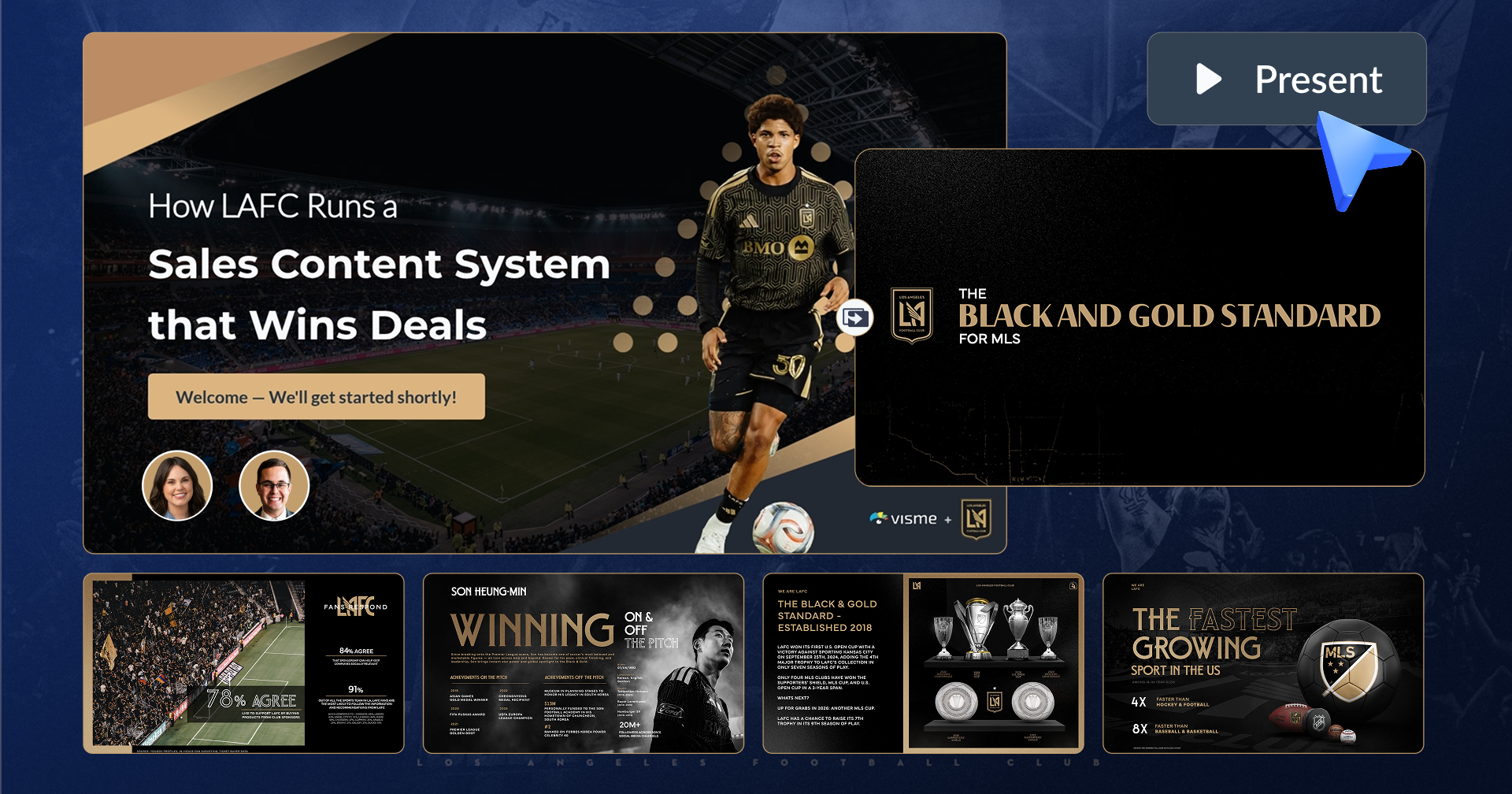




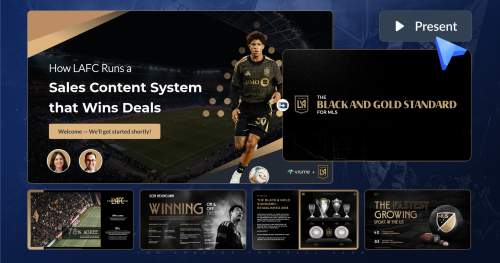
Why LAFC Builds a Personalized Sports Sponsorship Pitch Deck for Every Conversation


A multimedia presentation uses a combination of text, images, video, audio and animation to convey information or support communication.
It can help you stand out, grab attention and leave a stronger impact on your audience.
If you're wondering how to create a multimedia presentation without spending hours editing on PowerPoint, you're at the right place.
In this guide, I'll show you:
We’ll also discuss the steps you can follow to design multimedia presentations with AI.
Sounds good? Let’s get started.
Just a quick tip: take a look at Visme's collection of free presentation templates to help you get started. You can customize them however you want, and the best part is you don't need fancy design skills to make them look great!
If you prefer watching to reading, here’s the video version of this article on creating a multimedia presentation.
A multimedia presentation is a presentation that uses multiple forms of digital communication, such as video, interactive slides, audio clips, music and more, to convey the message.
In short, multimedia presentations go beyond the use of text and images. Including digital media like animation, video, audio, or interactive features like forms, popups and more can help enrich your presentations both visually and content-wise.
I used Microsoft PowerPoint to design hundreds of presentations in college. It handles basic multimedia well, but it can't match newer tools built specifically for richer, more interactive presentations.
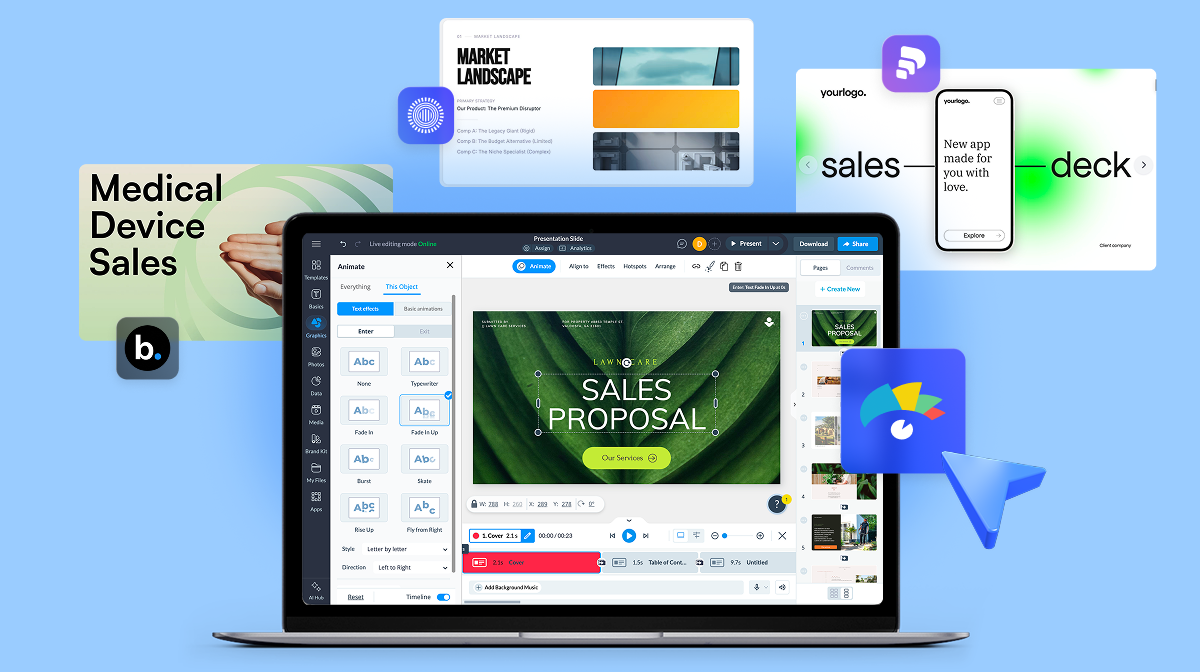
I tried Visme, and I haven’t looked back ever since. Visme's presentation software offers a wide range of tools for creating multimedia presentations. From video embeds to voiceovers to interactive animated features, you'll find it all in one robust platform.
Keep reading to find out how you can create an unforgettable multimedia experience with Visme.
Multimedia, interactive, and animated presentations overlap, but each has a different focus. Multimedia mixes formats, interactive responds to audience input, and animated uses motion.
Most decks blend all three. For example, a multimedia presentation can include interactive charts and animated transitions simultaneously.
| Multimedia Presentation | Interactive Presentation | Animated Presentation | |
|---|---|---|---|
| Definition | Combines text, images, video, audio and animation in one deck | Lets the audience interact with the content through clicks, forms, quizzes or navigation | Uses motion, transitions and animated objects to move a story forward |
| When to Use | When you want to explain a topic using multiple formats and maintain audience attention | When you need self-guided viewing, e-learning, product demos or data the viewer can explore | When you want video-style storytelling, explainers or social media clips |
| Key Tools | Visme, PowerPoint and Google Slides | Visme and Genially | Visme, Powtoon and After Effects |
Used well, multimedia sticks because of how the brain takes it in.
Communication expert Carmine Gallo, author of Talk Like TED, explains that “pictures are processed in several channels instead of one, giving the brain a deeper, more meaningful encoding experience.”
That deeper processing shows up as real advantages when you present. Here's what else multimedia does for your audience and your objectives:
Captures Attention: Combines visuals, audio, and animation to engage your audience right away.
Improves Understanding: Helps explain complex ideas more clearly through charts, videos, and visuals.
Boosts Retention: People remember content better when it’s presented visually and interactively.
Appeals to Different Learning Styles: Supports visual, auditory, and kinesthetic learners with varied formats.
Enhances Professionalism: A polished, multimedia-rich presentation looks more credible and modern.
Encourages Interaction: Interactive elements like clickable content, embedded quizzes, or videos keep audiences engaged.
Saves Time on Follow-Up: When your message is clearer and more memorable, there are fewer questions and less back-and-forth afterward.
Supports Remote Communication: Multimedia presentations are easy to share, embed, or present virtually—perfect for hybrid teams or online learning.
| Type of Media | Purpose | Common Uses | Quick Tips |
|---|---|---|---|
| Text | Delivers core information clearly and directly | Titles, bullet points, captions, explanations | Keep it short, concise and easy to read |
| Images | Supports ideas visually and creates emotional impact | Diagrams, infographics, product photos, illustrations | Use high-quality visuals that enhance understanding |
| Video | Demonstrates, explains, or entertains through motion | Tutorials, testimonials, product demos, animations | Keep it short and relevant |
| Audio | Adds emphasis, tone, or engagement through sound | Voiceovers, sound effects, background music | Ensure clarity and avoid overpowering visuals |
| Graphics & Charts | Simplifies complex data visually | Bar charts, pie charts, timelines, flowcharts | Use clear labels and avoid overloading the visual with text. |
| Animations | Draws attention and illustrates movement or changes | Object transitions, animated diagrams, motion paths | Use sparingly to maintain focus | Interactive Elements | Encourages user participation and engagement | Quizzes, clickable buttons, forms, embedded links | Great for e-learning or product demos |
Creating a multimedia presentation isn’t difficult—you just need the right tools. In fact, it’s as easy as following these five steps for creating a multimedia presentation.


Before you can start creating a multimedia presentation, you need to know exactly what you’ll be presenting about and why.
Jot down some ideas about what you want to achieve with your presentation.
Do you:
You can achieve all of the above with a multimedia presentation.
Just make sure to have all the information you need to present in an orderly fashion so it’s easier when it’s time to create.
Now that you have everything planned out and all your content is ready to be put into a slide deck, it's time to create a presentation outline.
While creating the outline, think of ways that you can improve the story using different mediums.
For example:
If you’re using Visme to design your multimedia presentations, log into your Visme dashboard and find a presentation template that'll be perfect for your project. There are lots of choices, from pre-designed presentations to customizable slide libraries in different styles.
In the case of a multimedia presentation, I recommend you go with one of the slide libraries. Slide libraries can also be referred to as presentation themes.
Visme has three presentation themes:
Each theme comes with a large slide library with hundreds of different options. You can mix and match presentation slides to create your own, unique multimedia presentation.
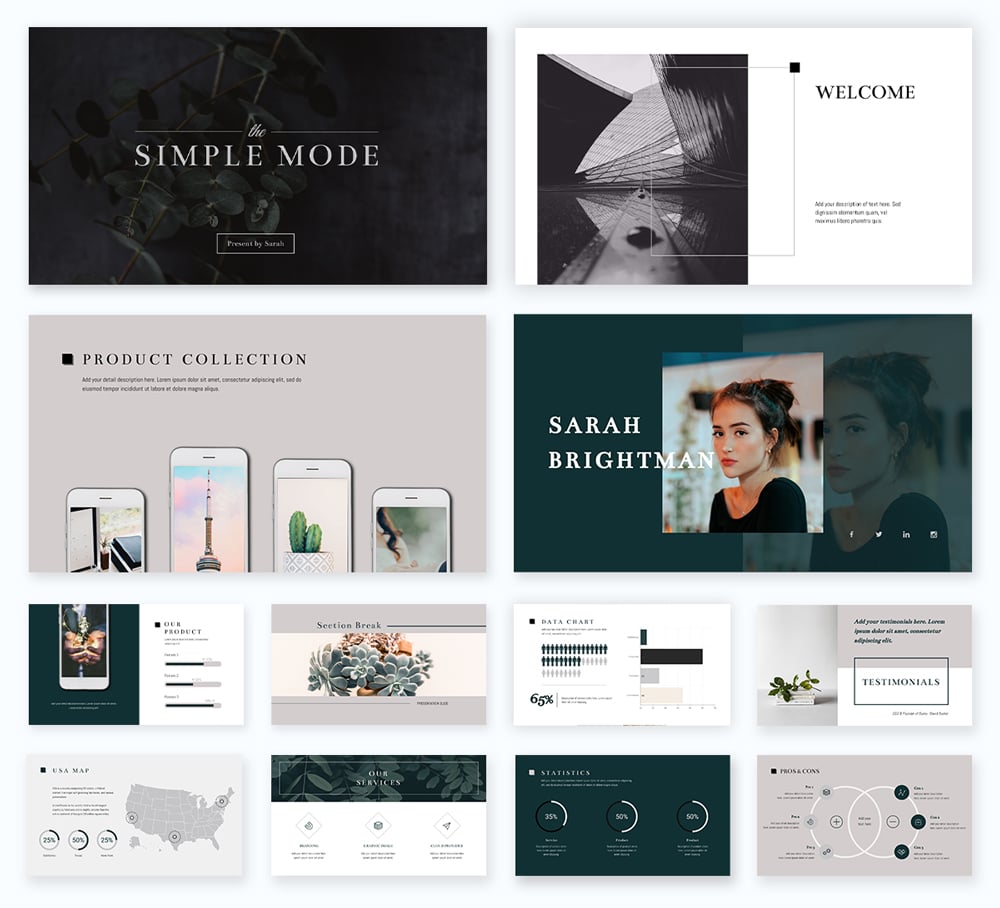
The slides in Visme's presentation themes are organized into groups, such as:
I suggest you add all the blank slides you need by following the outline you made in the previous step. Then, input the general content, images, backgrounds and design assets.
Pro Tip: If you don't have appropriate, high-res images to add to your multimedia presentations, check out Visme’s stock photo and video library to find one.Next, add your logo, brand colors, fonts and branded imagery. When you have a Visme Brand Kit set up, this step takes seconds. Your fonts and colors are already set up in your editor.
Use Dynamic Field to ensure your important data is consistent and updated across all your slides and projects. Once you place your information in the custom field, it will automatically appear on other slides containing the value.
Alternatively, create your presentation from scratch by starting with a blank canvas. Visme also offers content blocks and element groups to help you create a good presentation.
At this stage, your presentation probably already looks great, but there’s one issue — it’s static. Let’s make it interactive by adding unique multimedia presentation tools.
Start adding multimedia content to the slides that need it. Follow your outline and visualization idea notes.

You don’t need to add a different type of media on each slide — that’s overwhelming. Aim for two or three types of media to spread throughout the presentation to maintain balance.
For example:

When you’ve added all your content, both regular and multimedia, it’s time to revise. Click on the “present” button on the top-right of your editor and take a look at your presentation as if you were a viewer.
As you go through every slide, take notes if you spot anything that looks off or unfinished. Then, go back and edit those slides until the presentation is just right.
Multimedia presentations can be presented or shared in several ways. For interactive presentations that include clicking or filling in forms, give your audience the best experience by:

Presentations that don’t require your audience to interact can be downloaded as videos and even editable PowerPoint files.
If you're looking to create an animated PowerPoint but want more advanced design control and interactivity, Visme lets you build dynamic presentations that can still be exported to PowerPoint format, though some animations may be simplified in the process.
When you share a Visme multimedia presentation via a live link, you can track analytics of who watched it, for how long and where. This turns a one-way send into a signal — you know what your audience actually engaged with.
Another option is to upload your presentation to SlideShare, where other people can see your work. SlideShare presentations can easily be shared on social media as well.
When you're short on time, AI can handle the first heavy pass so you're editing a draft right away. But the deck it hands back to you is only as good as the prompt you give it, so a vague request means a generic result you'll spend too much time fixing.
Get the prompt right and the rest of the process moves fast. Here's how to do it in four steps with Visme.
Go to your dashboard, click Create, and choose Generate with AI to open the chat. Describe your presentation in the prompt box.
Give the AI clear details on:
Here's a prompt that hits those marks:
"Create a sales pitch deck for enterprise HR buyers. Cover the problem, our solution, ROI, and a case study. Confident, professional tone, aimed at decision-makers."
If your prompt is missing important information, the AI asks follow-up questions before it builds.

Do you already have the source material? Upload a document or paste a link, then tell the AI how to use it: Verbatim to follow your text closely, Enhance to improve clarity and structure, or Rewrite to rework it while keeping the core message.
If your Brand Kit is set up, you can apply your branding right inside the chat, choosing your brand colors, fonts and logo before the design is finalized. That builds brand consistency from the start instead of fixing it later.
Then pick a visual style from the options. The AI selects matching slides, swaps in royalty-free icons and photos to fit your topic, and then generates the deck. Preview it, regenerate to see another variation or click Edit Design to open the editor.
Would you prefer to start from a template you already like? Use Edit with AI to customize any template in our library. Answer a few short questions and Visme rewrites the template's copy to fit your topic. Refine the rest of the design in the editor.
With the deck generated and on-brand, bring in the media that turns it from a slide deck into a true multimedia presentation. The AI gives you structure and copy, but the videos, audio and interactive elements are what turn a static deck into a deck people will engage with.
Add these where they support your message:

Keep it to two or three media types across the deck so no single slide gets crowded. The rest of this guide goes deep on each of these, with best practices, real examples, and the full tool list, so use this step to add the essentials, then pull specific techniques from the sections below.
With your media in place, Visme's AI suite helps you refine the details.
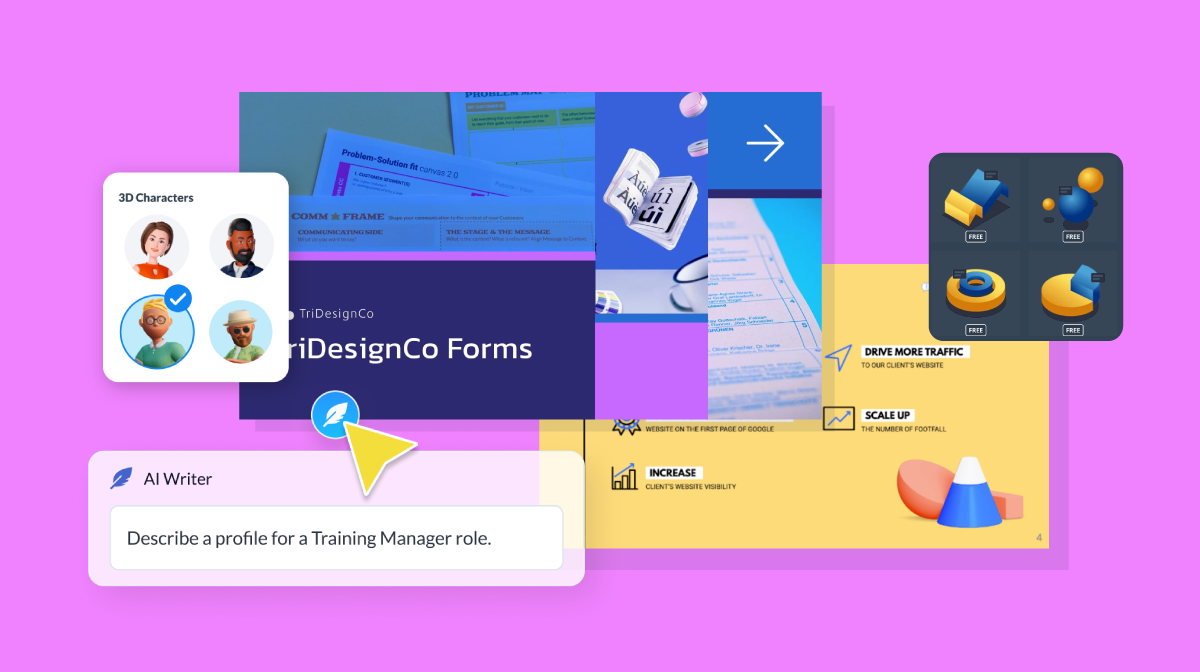
Start with the copy: AI Writer drafts headlines, subheadings, and slide text from a prompt, and can proofread or switch the tone of what's already there.
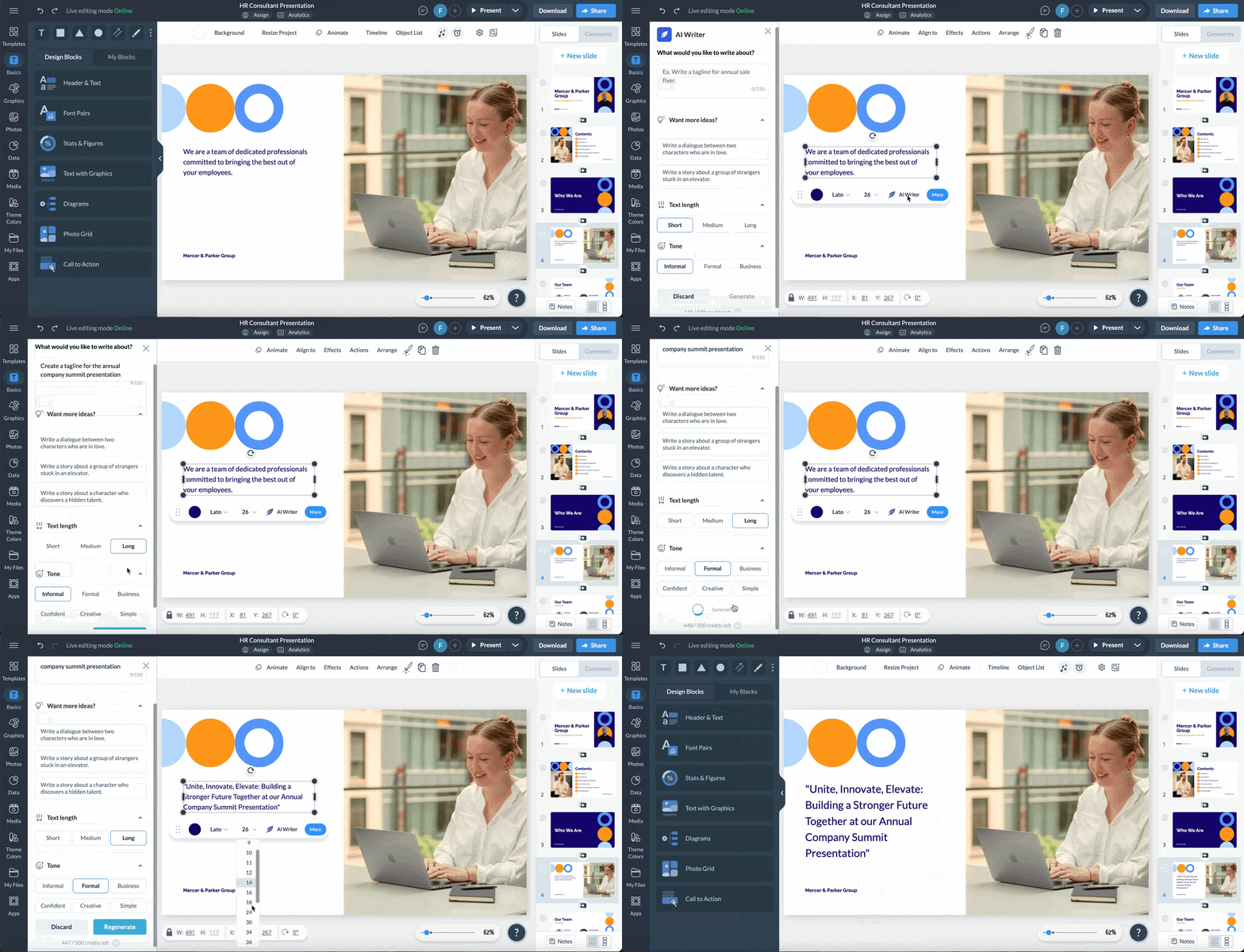
For visuals, AI Image Generator makes original images without leaving the editor, while AI TouchUp Tools erase or replace objects, upscale, unblur, or clear backgrounds on the images you already have.

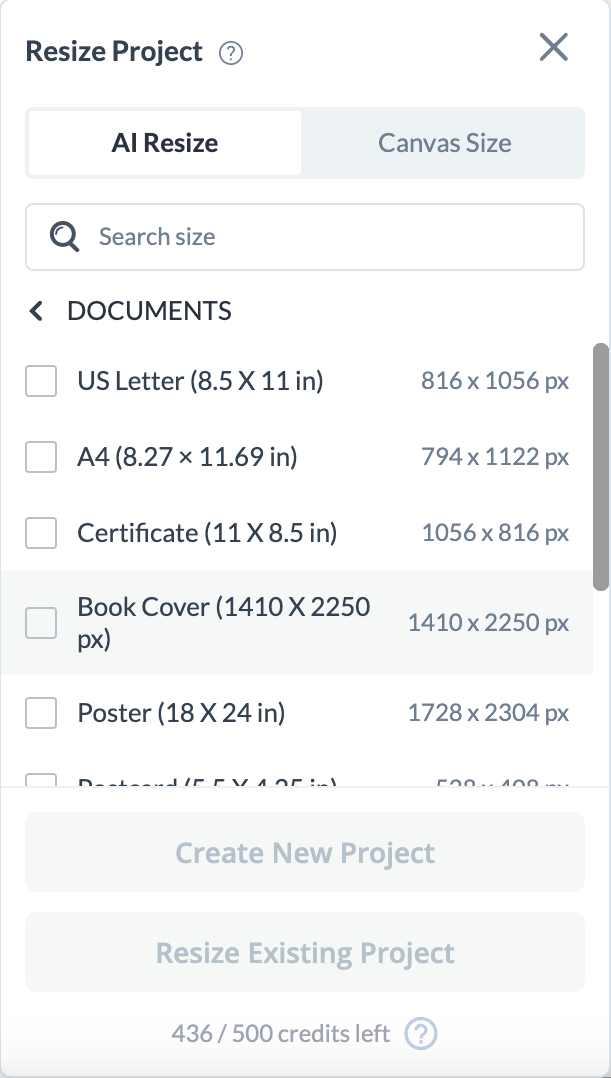
When you need the deck in another format,AI Resize adjusts the canvas and fits your content to the new dimensions in seconds.
For multimedia work, the standout is AI Text-to-Speech. Rather than recording yourself, paste your script and it generates voiceover narration in six voices, detecting the language automatically.
Swapping images is just as quick. Select an image, click Replace, and a Suggested by AI row appears at the top of the Photos menu with options matched to the style, content, and mood of the one you're replacing. Click one to drop it in.
Once the deck is ready, Visme gives you a few ways to get it in front of your audience.
But keep in mind that how you share a multimedia deck matters more than with a static one, because the format you pick decides whether your video, audio, animation and interactive elements carry over.
To keep everything working, share it live. A live link or an HTML5 download preserves the full experience: playable video, audio, animations and clickable elements all stay intact. The live link also gives you performance tracking, so you can see who opened it and how long they stayed.
Downloading to a flat format changes what your audience gets. A video export (MP4) turns the deck into a playable film, so motion and narration carry over but clicks and interactivity don't. PDF and image formats flatten everything, dropping video, audio and interaction entirely, so use these only for a static handout, not the real presentation.
Presenting to a select group? Use private sharing. Invite specific people by email, or set it to anyone with the link and add a password under Advanced Options, so only people with both the URL and the password get in. Private projects also stay out of search engine results, so confidential decks don't surface on Google.

A strong multimedia presentation uses each element to move the message forward.
Presentation expert Nancy Duarte, founder of Duarte Inc. and author of Resonate, makes the point with an interesting metaphor. She says that “dressing up empty slides is like putting lipstick on a pig.” Media has to earn its place.
Follow these best practices on your next multimedia presentation:
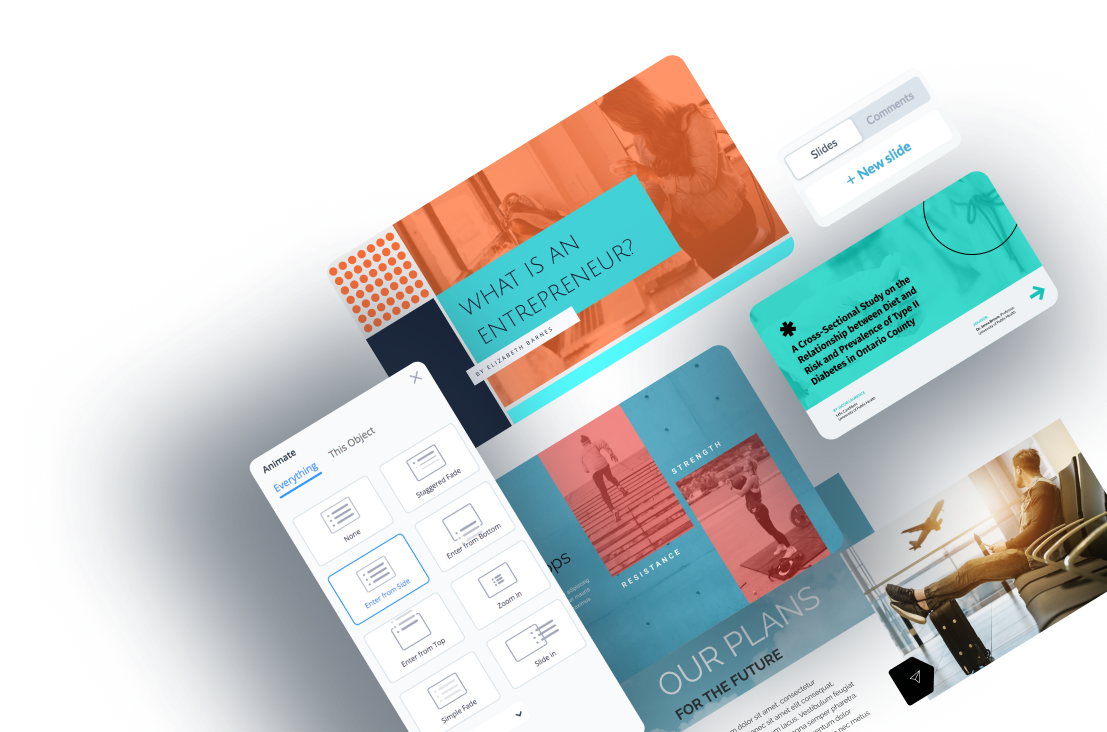
Most multimedia presentations fail for the same reasons. Watch out for these five.
Garr Reynolds, communication professor at Kansai Gaidai University and author of Presentation Zen, points to “simplicity, restraint and harmony” as the design principles that matter most when building slides or other multimedia. Most of the mistakes below come from ignoring one of the three.
"I tell my team all the time: timing is everything when it comes to animation. An element that comes in half a beat too slow, or too fast, breaks the flow of your presentation and becomes a noticeable flaw in the design. Every entrance and transition should feel intentional. Keep that flow smooth for every element; otherwise, the whole thing can end up over-animated, messy or out of sync."
Multimedia can shut people out if it isn't built with accessibility in mind. But when you design with accessibility from the start, your presentation works for the whole room, not just part of it.
Cover these four points to ensure your multimedia presentations are fully accessible.
Before finalizing and sharing, run your presentation through Visme's Accessibility Checker. It flags low-contrast objects and text under 18px, lists images missing alt text and shows the reading order a screen reader will follow. The built-in Visual Simulator lets you preview your slides through different visual impairments, so you can catch problems from the get-go.
Are you ready to create your own multimedia presentation?
Before you get to it, let’s look at some inspiring examples. Below, you’ll find some stunning Visme presentations, some of which are templates that you can customize for your own use.
We have also included some examples of presentations from other sources that we found interesting.
You can quickly create simple and beautiful multimedia presentations with GIFs. At Visme, we regularly create multimedia presentations with GIFs to present new features and updates.
Check out one of our recent ones:
Made with Visme Presentation Maker
We create our custom GIFs, which you can also do using our GIF maker!
If you don’t have the time or resources for that, Visme has a GIPHY integration, which lets you search through millions of GIFs in lots of different styles inside the editor.
Integrate GIFs with content that complements, not competes with it.
Also, don’t overload your presentation with GIFs, especially if they are all different. Stick to one style of GIF throughout to maintain visual consistency.
This is an example of a multimedia presentation that uses animations to liven up the story and the slides.
This is the type of presentation that can be easily turned into a video. Each slide can have animated objects, illustrations, text and design assets.
Impact Radius from Fab Design on Vimeo.
You can create a presentation like this with Visme quite easily.
Simply record your voiceover on each slide and download it as a video. If you already have a voiceover from a project, upload it into your presentation project and trim the audio as needed.
This presentation is on the shorter side. This narrated presentation includes a balanced amount of media, such as images, videos, annotations and animation and charts.
It’s also presented as a video for easy viewing. A multimedia presentation video like this one takes more work than others, as it has a large amount of content.
Multimedia presentations for business reports are more engaging when they include interactive charts. Visme charts are animated by default and also offer on-hover popups that display more information than you can fit on the slide.

Top it all off with a music clip that doesn’t overwhelm or distract from the content of the presentation.
Adding video to presentations is one of the easiest ways to create a multimedia video presentation.
Here's an example of a slide created in Visme that includes a YouTube video. Go ahead and press play to see it in action!
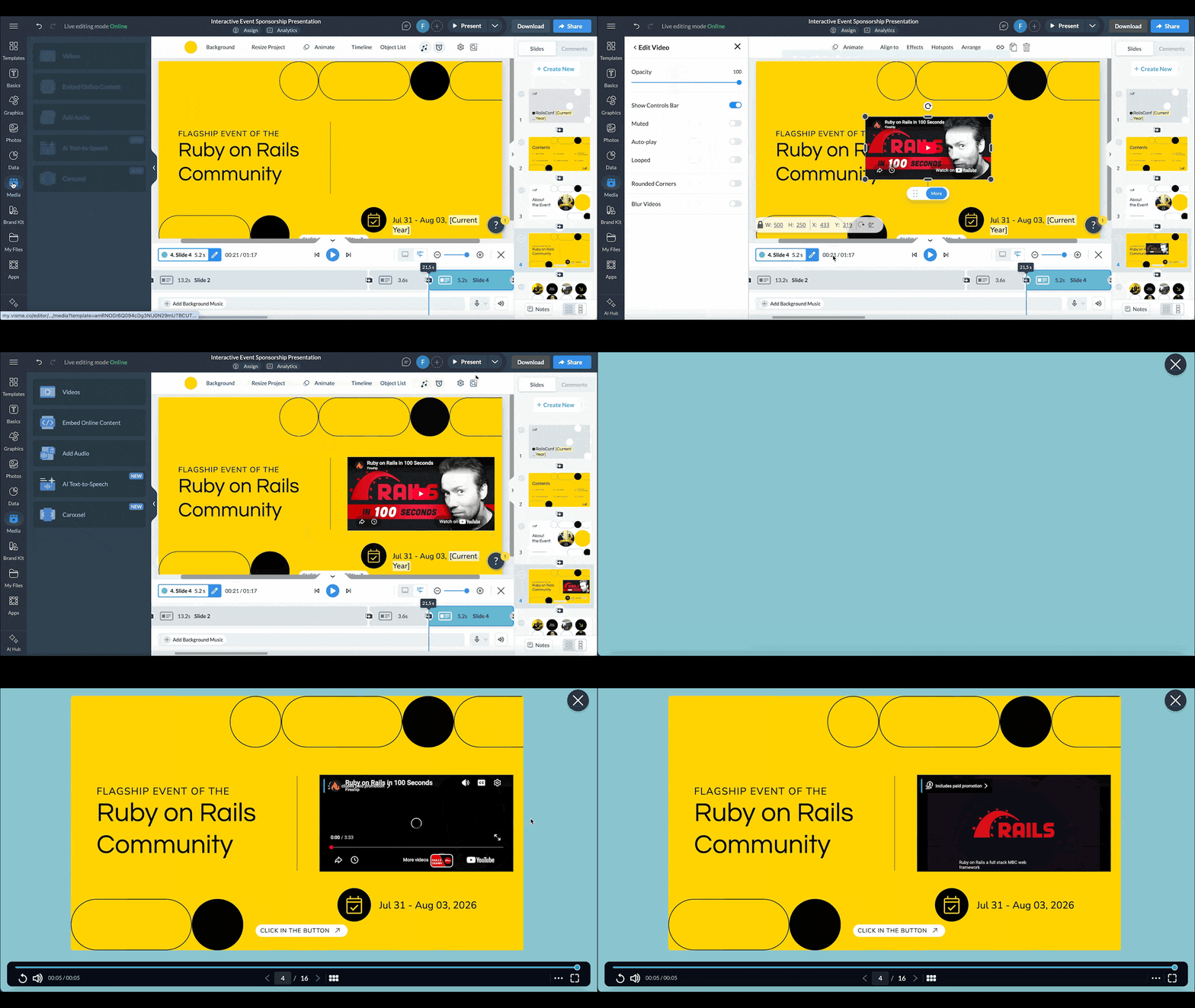
Embed YouTube videos or Vimeo videos easily by simply inputting the video URL.
Upload your own video, use the Visme video editing tools to trim the clip to how you need it. Select from our gallery of video clips to add as backgrounds behind other content.
The last example is a little different. It includes an integrated survey and embedded PDF. This is the perfect multimedia presentation to include in a blog post or on a website.
Made with Visme Presentation Maker
Take a look below at how a survey works inside a presentation and how an embedded PDF can be integrated with other content.
To create multimedia presentations, you need the right tools. In fact, there are many options to consider whether you're building a multimedia presentation from scratch or enhancing an existing one with rich media. A few of these tools include:
Below, we’ll break down the key details of each tool and how they can help you.

The first software on the list is Visme. The varied collection of integrations in our editor is just the right combination to create a multimedia presentation that will make an impact.
Usually, you need more than one software to create an engaging multimedia presentation. But if you're looking for software that does it all, Visme's presentation maker is a great option.
Users have always been able to create multimedia presentations with Visme, especially with videos, animations and voiceovers. And with Visme AI Designer you can create unique multimedia presentations in a matter of minutes rather than hours.
Easily create complete or customizable designs by answering questions or using a single prompt concerning your topic. Once your presentation is generated, edit images, add interactive elements like links, GIFs, surveys, interactive maps, and animation, plus integrate your current tech pack and tools if needed.

HubSpot Clip Creator is a free, AI-powered tool that helps to convert your text into professionally polished videos. You can convert an existing copy within your presentation into a quick video instead. This helps break up text blocks in your presentation that would otherwise bore readers and turn into an engaging video.
Access templates, high-quality, and watermark videos that can be used in your presentation, social media, or websites. You can edit videos to your needs or preferences by adding or adjusting colors, text, images and more!

Multimedia presentations with surveys add an unprecedented level of interactivity.
Use the Typeform or Jotform integration to add surveys to your informative presentations or market research projects.
When you include a survey in a multimedia presentation, you’ll have to share it as a link or embed it on a site. This way, your audience can enter the answers directly in the survey on the slide instead of opening a separate link.

If you're not presenting your multimedia presentation in person, recording a Loom video and embedding it in your slides can be a great alternative for adding a personal touch.
Walk your audience through a tutorial, give a brief overview of a topic, shed light on your company and services, or simply introduce yourself. Loom videos offer tons of opportunities to make your multimedia presentation more interactive.

Include maps in your multimedia presentations to visualize geographic data or location information. Visme has two map creation options: the Map Maker and the Google Maps integration.
The Map Maker lets you create custom maps with color-coding and interactive popups that match your project's design. Import map data from a Google sheet or input it manually.
Add a navigable Google Map in all the default styles. Show specific location coordinates in a customizable box.

Wistia is a video hosting, management and marketing software for businesses that want to have more control over their video content.
Embedding video is one of the quickest ways to create a multimedia presentation. If you're creating your presentation in Visme, you can easily embed Wistia videos in your slides.
You can also add videos to your presentation from YouTube, Vimeo and Vidyard. Check out the full list of Visme integrations here.
Note: When sharing videos that aren’t yours, make sure to include a description that names the creator and explains why you chose to share it.

If your multimedia presentation uses photos, short video clips, music and text, Movavi is one option to consider. It lets you turn those materials into a video presentation, which can work well for event recaps, company stories, classroom projects and simple product presentations.
The program gives you two ways to build a project. You can use the Slideshow Wizard for a faster start or switch to Manual Mode if you want to arrange media, music and titles yourself. It also includes templates, transitions, filters, voice-over support, and export to common formats such as MP4, MOV and AVI.
Here are the steps for creating a multimedia presentation:
Define your presentation’s goal and audience
Choose the right tools to bring your content to life
Organize your content with a clear structure
Incorporate multimedia elements like images, video, and audio
Polish and refine your final presentation for maximum impact
Follow these steps to prepare a multimedia presentation:
The best way to start a multimedia presentation is with a strong hook — use an engaging video, a surprising statistic, a thought-provoking question or a relevant story. Then, clearly state your presentation’s purpose and key takeaways within the first 30 seconds to grab attention and set clear expectations. This approach immediately engages your audience and sets the tone for the rest of your presentation.
To end the presentation, summarize your key points and add a clear CTA — use techniques like thought-provoking questions, relevant quotes, compelling stories or future visions to tie everything together.
Maintaining a balance between multimedia elements and clear messaging is paramount. While interactive features and visual elements boost engagement, they should support rather than overshadow your core message.
A normal presentation typically relies on static text and basic images, whereas a multimedia presentation incorporates multiple digital elements like videos, animations, interactive features and embedded content.
A product demo that combines several media types is a common example. It might combine:
Any deck that combines at least two media types, like audio with video or animation with clickable links, counts as multimedia.
The five core types of multimedia are:
Interactive elements like quizzes, forms, and clickable buttons are often counted as a sixth.
Preparation happens before any design or creation inside a software or app. You’ll need to nail down these actions:
Creation is the actual build of the multimedia presentation. Once your plan is ready, follow these steps:
Design is all about how your multimedia deck looks and holds attention. Focus on these visual actions:
Include a mix of text, visuals, and at least one dynamic element such as video, audio, or animation. Keep it to two or three media types across the deck so each one supports a clear point.
Aim for 10 to 20 slides or about 15 to 20 minutes in most business settings. Match the length to your audience and cut any slide that doesn’t move the message forward.
The right type depends on your goal: interactive for e-learning and demos, animated for storytelling and social clips, and video-based for recorded or async viewing. Most presentations combine more than one.
Now, you’re ready!
It’s time to start creating the best multimedia presentation for your audience.
When you sign up for our presentation software, you’ll find all the tools you need to create an engaging multimedia presentation your audience is likely to remember for a long time.
Create a Brand Kit to stay on brand easier by uploading your logos, color palettes and fonts. Organize your assets and projects into folders to make them easier to find.
At Visme, we're always adding new features and integrations. You can keep an eye on our What's New page to stay updated with all the new cool, new stuff.
If you have a PowerPoint presentation you'd like to enhance, import the file into Visme and add multimedia. The PowerPoint slides will import as editable slides so you have full control of how the final project looks.
Sign up for our presentation software today and start creating slides that nobody can look away from.

Design visual brand experiences for your business whether you are a seasoned designer or a total novice.
Try Visme for free