




How to Speed Up Sales Content Production: Insights From 164 B2B Revenue Teams

![How to Create a Marketing Plan [+20 Free Templates]](https://visme.co/blog/wp-content/uploads/2024/02/REFRESH_-How-to-Write-a-Marketing-Plan.png)
Knowing what you want marketing to achieve is just the start. You’ll need to clearly and confidently share the strategy with your team and stakeholders. That’s why writing it down in a document, with a budget, a timeline and a way to tell whether it worked, is so important.
A marketing plan is that document. It sets your goals, names your audience, lists your channels and tactics and shows how you'll measure results.
In this step-by-step guide, we'll walk you through creating a marketing plan that works for almost any kind of business.
We've also included real-life examples and 20+ free marketing plan templates you can edit in Visme
If you prefer to watch the video, we've got you covered! Here's a complete video guide on how to create an effective marketing plan a market analysis, along with customizable templates to get you started
Here's a short selection of 8 easy-to-edit marketing plan templates you can edit, share and download with Visme. View more below:


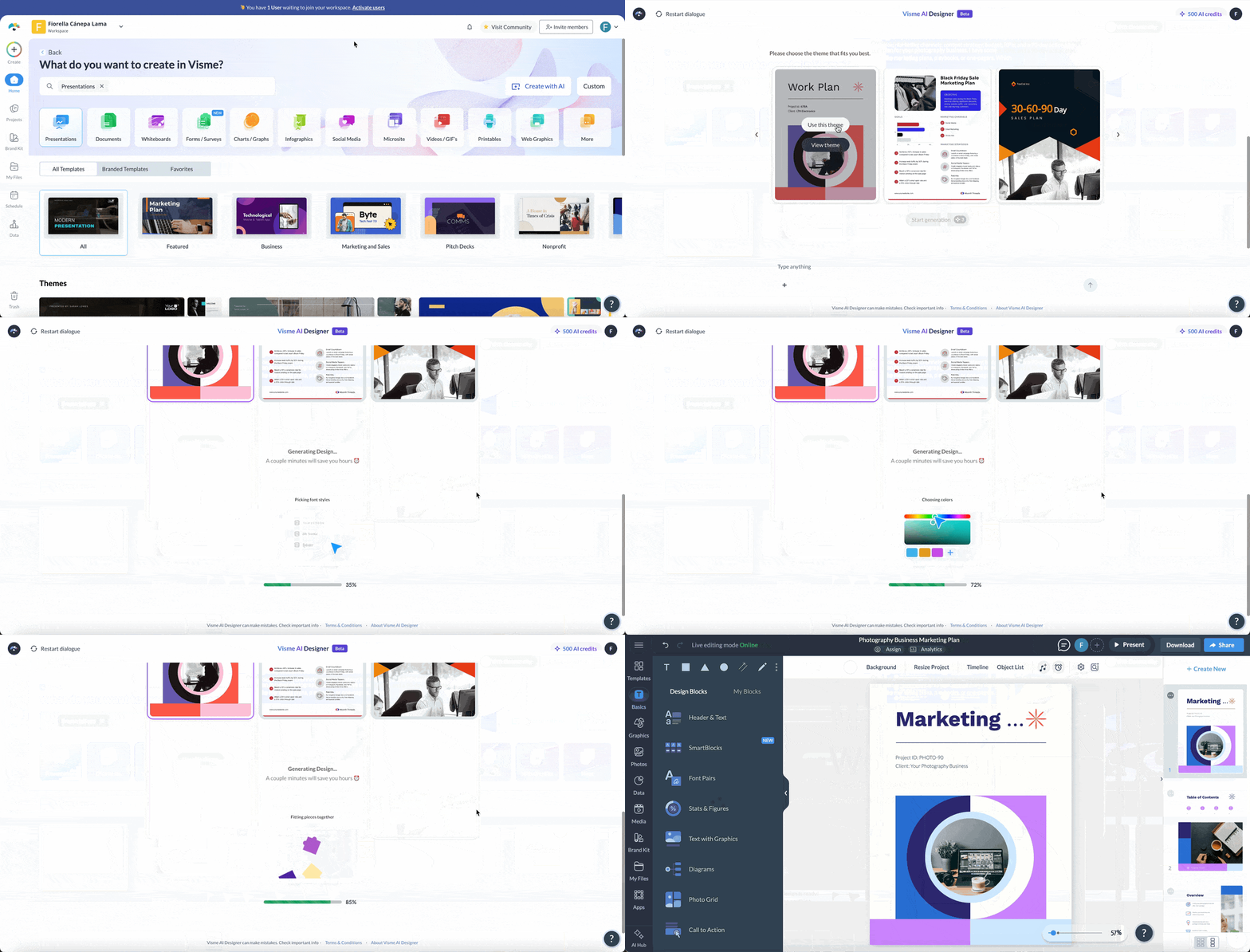
Want to skip the tutorial? Describe your business in the AI Marketing Plan Generator and get a first draft of your plan in minutes. Edit it with your own numbers, then download it as a PDF or share it with a live link. You can also start from one of our marketing plan templates.
A marketing plan is a document that sets your marketing goals, describes your target audience and lays out the strategies, budget and timeline you'll use to reach them. It covers the what, why and how of your marketing for a set period, usually a quarter or a year.
It also gives your marketing team one shared reference for the strategy and tactics, and a way to track whether your campaigns are working.
A marketing plan should ideally include:
Take a look at this one-page marketing plan template as an example.

A more detailed plan can also include:
Most marketing plans are presented as a PDF document, but you can also whip up a more creative version of it. For example, you can create an infographic, presentation and even an interactive web page to share your plan. A single-page plan like the one above works well for small teams and short campaigns.
A business plan covers the whole company, including its products, operations, finances, team and growth goals. The marketing plan is one section inside it, explaining how the business will reach and win customers. When you write a marketing plan for a business plan, keep it to the essentials: target market, positioning, channels, budget and sales goals.
You can also write a marketing plan on its own, for a single campaign, channel or quarter.
To draft a full business plan quickly first, start with the AI Business Plan Generator.
A marketing strategy is the long-term framework for how your company positions itself, reaches ideal customers and creates value for them. It forms the foundation for all your marketing activities.
A marketing plan is the detailed roadmap for carrying out that strategy within a set timeframe. It lists specific objectives, such as increasing sales, improving brand awareness or entering a new market, along with the steps, deadlines and metrics to reach them.
In short, the strategy sets the direction and the plan sets the schedule.
A marketing plan gives your team one direction to follow and a way to check whether it's working. The plan also gets more useful each time you revise it. According to CMI's B2B Content and Marketing Trends report, 74% of B2B marketers who saw their content strategy improve credited refining the strategy itself.
A well-researched marketing plan can help you:
Every marketing plan looks a little different, but the strongest ones share the same core sections. Follow these 9 steps to write yours. If you need extra support, our Marketing Plan Workbook can help.
The executive summary usually goes at the beginning of your marketing plan. It’s basically a short summary or brief overview of your company and the key takeaways from the entire plan.
Here’s an executive summary template you can edit and use for your own business.

The template above is a great example of an executive summary that highlights the key function of a business and the purpose of its marketing plan.
You can also include company achievements and future plans for your business in your summary.
Remember, your executive summary should be concise and to the point. Instead of boring your readers to sleep, it should grab their attention and get them excited about the rest of the plan.
Before you dive into all the marketing content, revisit your company's mission, vision and values before you get into goals and tactics. They put everything in your plan into perspective and explain why you're doing what you're doing.
It answers the question of why you’re doing what you’re doing.
Here’s a neat mission, vision and values template to edit and use.

This section helps anyone reading the plan understand your company's purpose, so the goals and activities that follow make sense.
The next step is to back up all your plans or claims with solid research.
Start with a market analysis of your current market, then study your competitors and look closely at your own company’s strengths and weaknesses.
This market share page from our restaurant marketing plan template can help you visualize that information and share it with your colleagues and stakeholders.

Here’s another cool design to help you present your market research. Use this SWOT analysis template to highlight your company’s strengths, weaknesses, opportunities and threats.

Instead of adding a boring table that no one wants to read, use a well-designed SWOT like the one above to draw attention to your research.
You can also run a SWOT analysis on your competitors. It's a good starting point for a full competitor analysis, where you look at what your competitors do, what works for them and how you can do it better.
Here are a few things to research about your competitors:
Here's a competitive analysis template you can use as well.

Use the template to organize what you learn about your competitors, spot opportunities and set goals.
Knowing the difference between your target audience and target market helps you understand where your business sits in the market.
Therefore, it’s important to identify who your buyer or ideal customer is so you can create more informed and tailored marketing strategies.
Naturally, the target customer for every business is different. But the goal is the same — to increase customer awareness.
You may also have more than one kind of customer. For example, a clothing store could be making products for both teens and older women at the same time.
Check out the target audience page from our social media marketing plan template to visualize your various customer segments. Use it to better understand your potential customers' attitudes and habits.

The pie chart shows which segment makes up the biggest share of your customer base, so you know where to focus most of your marketing.
You can edit this template and use it as part of your plan's layout or presentation. It’s a great way to present the different types of your audience in a way that’s easy to understand.
If you’re looking for a more creative approach, take a look at the buyer persona template below.
This infographic template is a fun way to visualize your buyer’s demographics, habits, and goals, such as whether they're interested in online learning options like digital marketing courses or if they prefer in-person workshops.
Another way to create a customer persona is to design it like a resume. This format fits more information on one page without cluttering up the design.
Here’s a resume-style customer persona template you can edit.

This buyer persona design uses icons and data widgets, like progress bars.
In the end, the goal of creating a buyer persona is to better organize and understand key information about your customer. Use the template that works best for your business.
Whichever format you choose, a buyer persona helps you organize and understand key information about your customer. Pull data from your CRM, such as HubSpot or Salesforce, and work with your sales team to build a more detailed ideal customer profile.
Your positioning explains why your target customer should choose you over the alternatives. It pulls your research from Steps 3 and 4 into one clear message.
The positioning statement will have to answer four questions:
Use this format:
For [target customer] who [need], [brand] is the [category] that [key benefit]. Unlike [competitor], we [key difference].
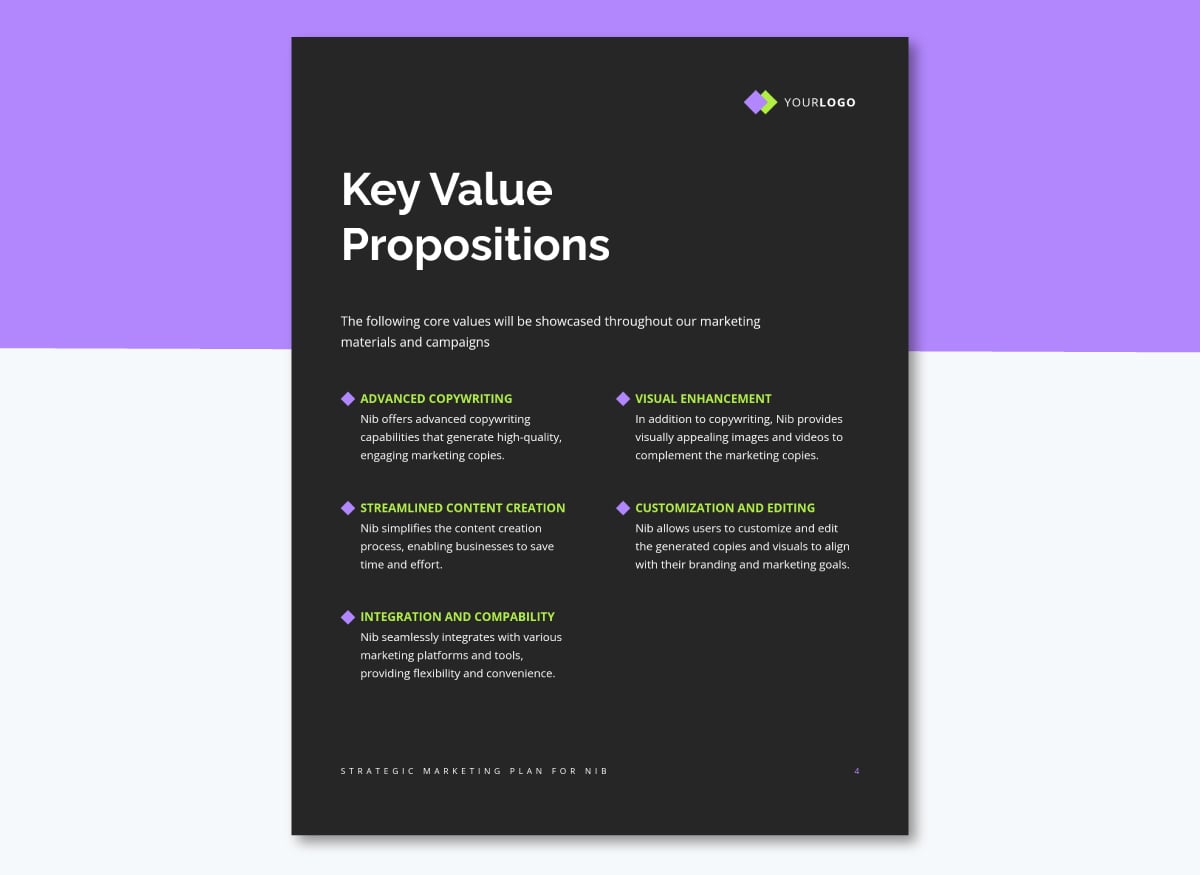
Your positioning statement is the basis for your unique value propositions, the one-line promises or taglines you repeat on your website, in ads and in sales materials.
Keep these value props consistent with your brand identity in terms of messaging and tone, so every campaign in your plan aligns to the same message and your values.
Outline your marketing goals and objectives, and make sure you use actual numbers instead of writing vague statements.
For example, if your goal is to increase website traffic, mention the exact target so you can track to see if you achieved it or not.
Use SMART goals (Specific, Measurable, Attainable, Relevant and Time-Bound). For example, "Increase organic website traffic by 20% by the end of Q3" sets a clear number and a deadline. A goal like "improve our conversion rate from 2% to 3% by December" works the same way.
To share your goals in an infographic format, here's a template you can edit and use for your own plan. It splits your target goals into three phases, which works well for SaaS companies and mobile apps.

Now we get into the actual strategy. For this section, list one or more marketing strategies and the tactics you'll use for each. For every strategy, include:
Decide whether you'll focus on one channel or several, and which stage of the funnel each tactic serves: top of the funnel (awareness), middle (consideration) or bottom (conversion).
This is best presented visually so the entire team can understand each step. You can divide your activities into stages and present them using a marketing strategy template like the one below.

Another way to present your marketing strategy is by attaching deadlines to it. This can be easily done using a timeline or a Gantt chart.

A visual roadmap is another option. It outlines the tactics involved in your overall marketing strategy over time, and can be designed to look similar to a Gantt chart.
Here's a marketing roadmap template you can use for your own business.

If you want to do things differently, use an infographic to visualize your marketing strategy.
An infographic is eye-catching and can be added to any of your presentations and reports. You can even share it on its own with your marketing team or other colleagues.
Here’s a marketing infographic template that divides your execution strategy into four phases.

Whichever format you choose, keep your strategy actionable and detailed. Explain each step clearly, and don't cut information to make the design look cleaner.
Last but not least, detail your marketing budget so you don't lose track of costs during execution.
Marketing can get costly due to hidden and unexpected expenses. So, you need a budget template to lay out your financial projections and expectations.
How much you spend depends on what you sell, who you sell to and how big your company is. According to The CMO Survey's 2026 report, U.S. companies spend an average of 9.0% of revenue on marketing. The share changes by sector:
Smaller companies spend a bigger share. Companies under $10 million in revenue put 13.3% of revenue into marketing, and companies earning $10 million to $25 million put in 17.4%. Mid-sized companies, earning $100 million to $999 million, spend 5.9% to 6.9%.
For large enterprises, Gartner's 2026 CMO Spend Survey puts marketing budgets at 7.8% of company revenue. Most leaders in that survey work at companies earning more than $1 billion a year.
Again, if this is a one-off marketing campaign or you're using what's readily available to you, ensure to leave room for miscellaneous costs in your detailed marketing budget.
This could include hiring the right staff and choosing between paid resources so you don’t exceed a certain amount.
Here’s an editable marketing budget template you can use.

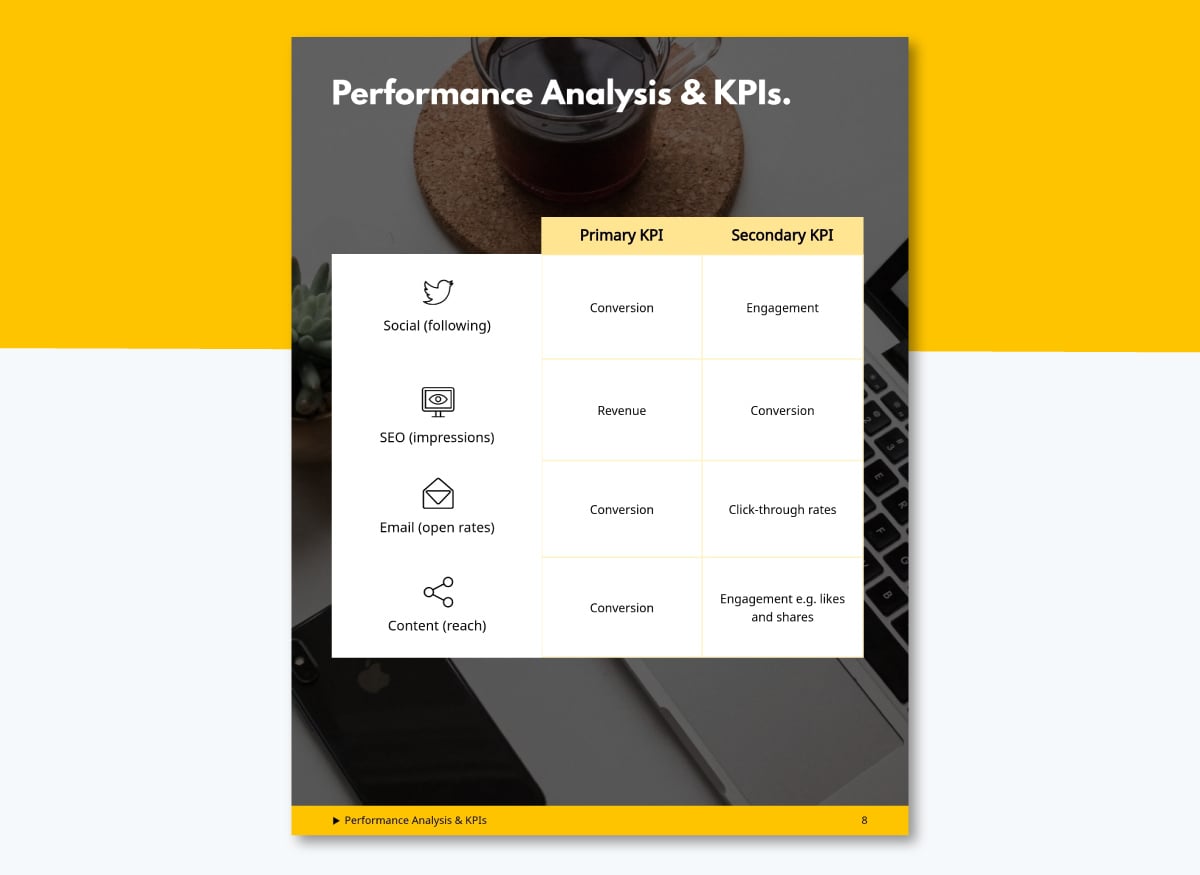
Another critical section in a marketing plan is an explanation of how success will be measured. So, set one KPI for each goal, name the person who owns it and decide how often you'll review it. This is the step many teams skip. According to the same CMI report, 33% of B2B marketers say they struggle to measure how well their content performs.
For each goal from Step 6, write down:
Then set your review schedule. Check campaign metrics weekly or monthly, so you can adjust tactics quickly. Review the whole plan quarterly to see whether your goals, budget and channels still make sense.
This page from our digital marketing plan template includes a table detailing what will be measured during execution.
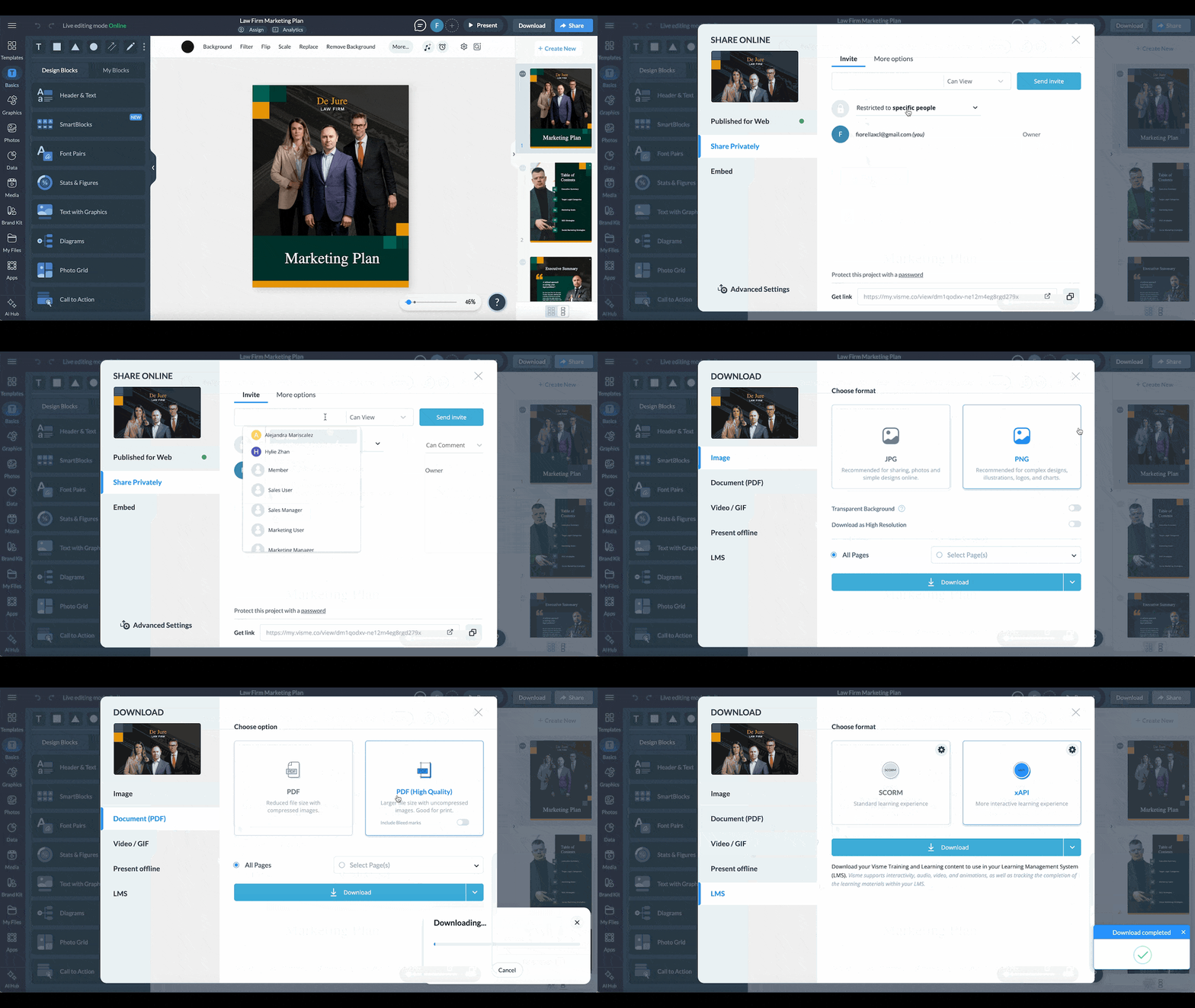
When your plan is ready, share it with your team and stakeholders as a live link, so everyone always sees the latest version.
What does a finished marketing plan look like?
Here are 5 real plans from 2024 to 2026, published by the organizations that wrote them.
For each one, we highlight a different part of the process done well.
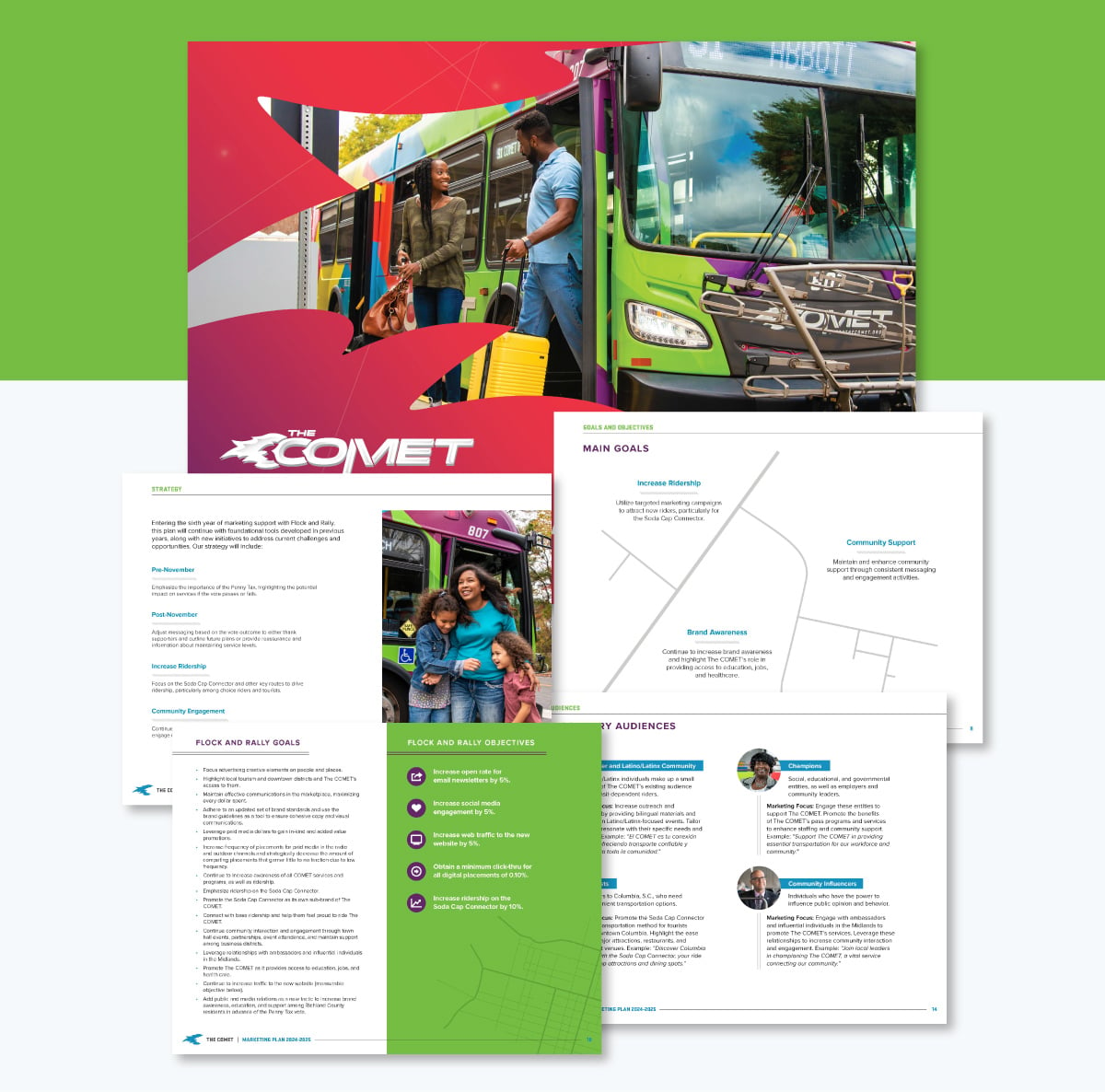
The COMET, the public transit system for South Carolina's Midlands, keeps its plan short and practical. It sets three goals: grow ridership, build brand awareness and keep community support.
Each goal comes with a number, such as 10% ridership growth on one route and a 5% lift in email open rates. The plan also splits its $277,460 budget between agency fees and paid media, then breaks the media spend down by radio, TV, print, digital and outdoor.
The plan uses The COMET's magenta-to-purple brand gradient on several bold section divider pages, and incorporates faint route-map lines as background. These subtle nods to their essence as a transportation company are right on point.
Each audience page pairs a photo of a real rider with the segment's needs and a sample message written for them. The budget shares a single donut chart, and the creative campaigns section shows finished mockups, such as the "Her Seat Is Saved" campaign for the Sarah Mae Flemming anniversary.
What to borrow: Attach a measurable number to every goal, and show exactly where each dollar goes, be specific about your target audience and share mockups of your intended campaigns.
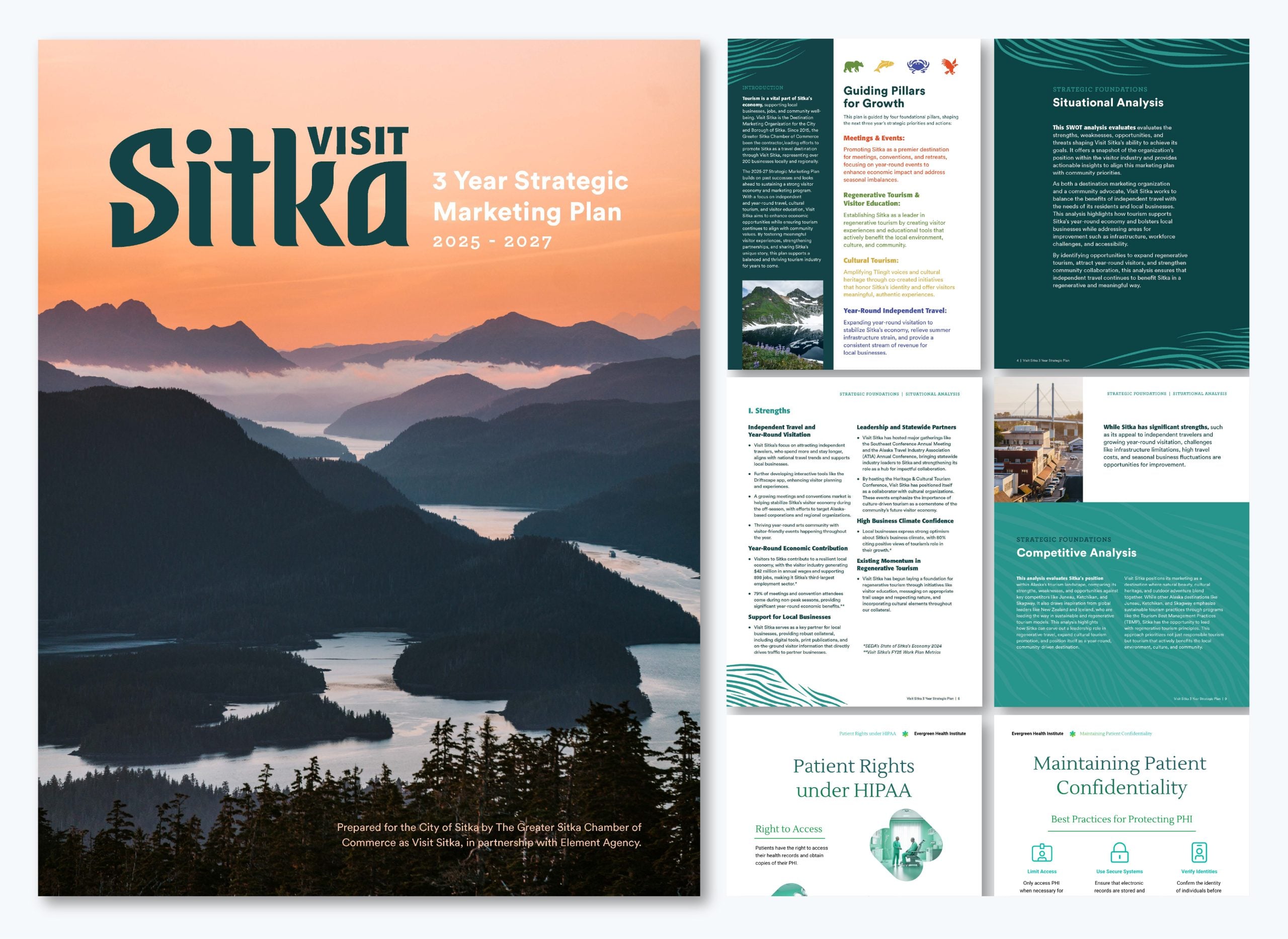
The marketing plan for Visit Sitka covers three years compounded into one document. Each year has a clear theme: build, share and sustain. It opens with a SWOT analysis, a competitive analysis and seven visitor personas, from adventure seekers to convention planners.
The strategy then sits under four pillars, including year-round travel and cultural tourism centered on the Tlingít community. An action plan table ties each pillar to specific projects.
Informative pages are made engaging by including full-width imagery of Sitka, Alaska. Each pillar is color-coded and maintains that style throughout the plan, making the messaging easy to grasp and connect.
What to borrow: Group your tactics under a few strategic pillars, so every action links back to a bigger goal. Use design techniques like color coding to align messaging throughout the plan.
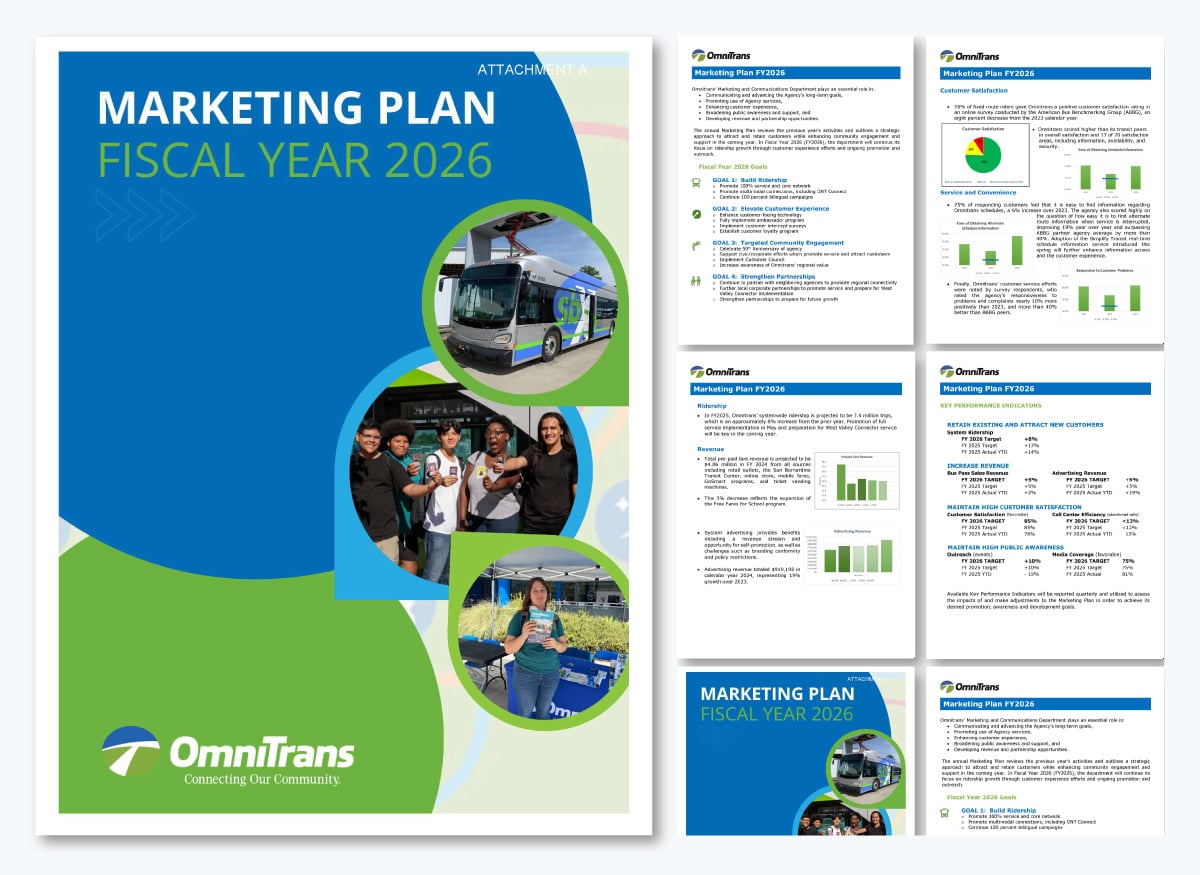
Omnitrans opens its FY2026 plan with a look back at previous achievements. So, before setting new goals, it reports how last year's promotion, student outreach and customer service work performed, including advertising revenue that beat its target.
The new plan then sets four goals: build ridership, improve the customer experience, deepen community engagement and strengthen partnerships. It also plans campaigns around the agency's 50th anniversary.
At six pages, this is the shortest plan on the list. It sticks to the Omnitrans blue and green, gives each of the four goals its own icon and bullet list, and puts all the KPIs on one page. Each KPI shows three numbers side by side: this year's target, last year's target and last year's actual result. The simplicity helps keep the plan tight and easy to read.
What to borrow: Start your next plan with a short review of the last one, so your new targets build on real results. Make the document as short as possible so that it’s easy to grasp. You can add interactive hyperlinks and pop-ups to include more information.
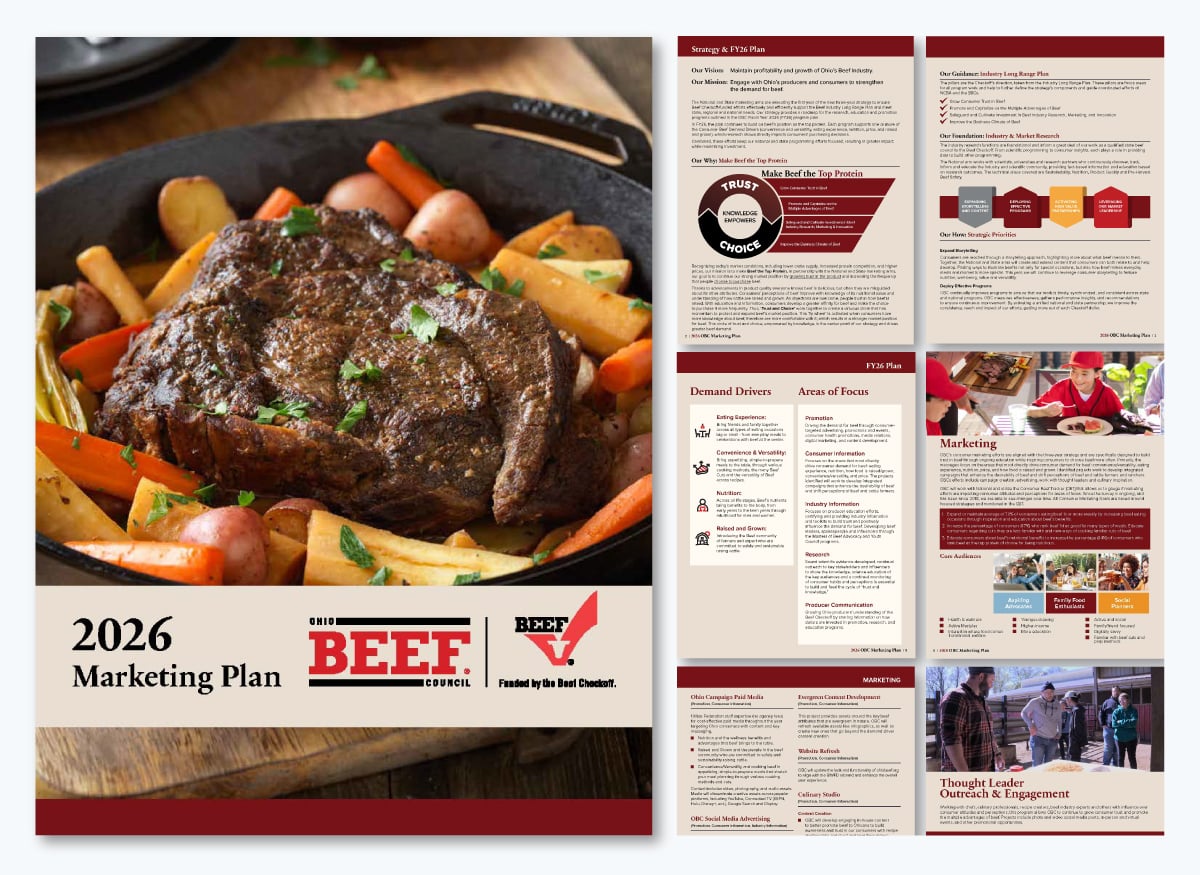
The Ohio Beef Council's plan is built around one vision: make beef the top protein. Its goals are tied to consumer research, such as keeping 70% of consumers eating beef every week, and it tracks progress with an ongoing consumer survey.
The $780,000 budget covers consumer, health professional and producer audiences. Channels range from YouTube and connected TV to partnerships with the Columbus Blue Jackets, the Ohio State Fair and food influencers.
Regarding the design, they use warm food photography, a cream background and deep red headers to give the plan a magazine feel. The strategy page uses a circular "Trust and Choice" diagram to show how knowledge builds trust and drives purchase decisions. Simple icons label each demand driver, and the budget appears as a clean horizontal bar chart by program area.
What to borrow: When sharing your strategies, group them by topic, channel or purpose. Propose several types to reach as many people as possible.
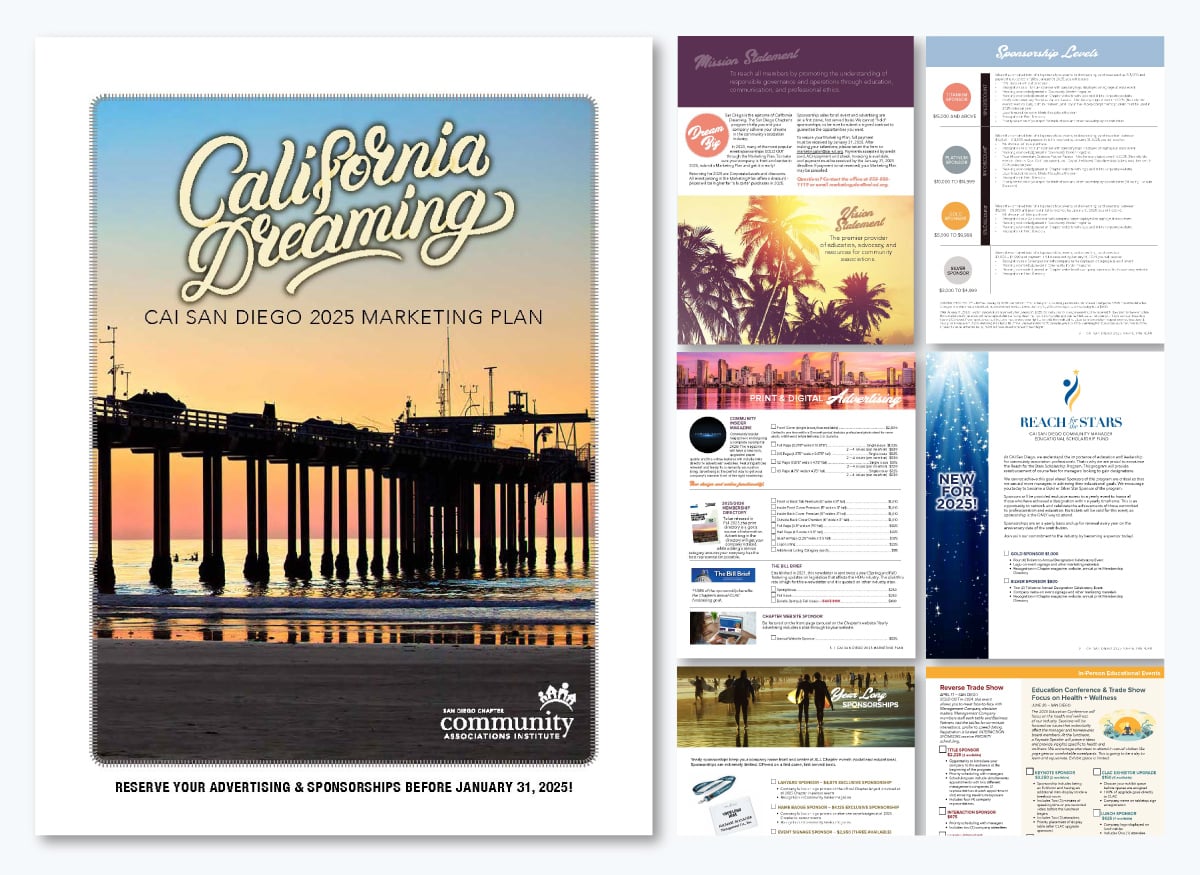
The San Diego chapter of the Community Associations Institute takes a different approach. They write a marketing plan for their advertisers. It lays out a full year of events, ads and sponsorships, so the companies that serve its members, such as property managers, attorneys and contractors, can plan their own marketing with the chapter for the year.
The plan offers four sponsorship tiers based on total spend, from Silver to Titanium, with discounts of 5% to 10% at the higher tiers. Members can also buy ads in the chapter's magazine and directory or sponsor education and social events. The audience is clearly defined: community association managers, homeowner board members and service providers.
A "California Dreaming" theme runs through the whole plan, from the sunset pier on the cover to the San Diego skyline photos and script headlines. The sponsorship page shows the four tiers as colored circles, with the price range and discount next to each. Price lists come with checkboxes, and the plan ends with a response form, so sponsors can choose and order in one document.
What to borrow: If partners or sponsors help fund your marketing, write a version of the plan for them. Show what each spend level gets them, reward bigger commitments with better benefits, and let them sign up in the same document.
Made with Visme Infographic Maker
Just as there are several types of marketing strategies, there are numerous types of marketing plans. Let’s take a look at some of them.
| Type | Purpose | Best For | Visme Template |
|---|---|---|---|
| Quarterly or Annual Marketing Plan | Sets the high-level goals and activities for the next quarter or year. Smaller plans for each strategy branch off from it. | Leadership and marketing teams setting direction for the year | Annual marketing plan template |
| Social Media Marketing Plan | Covers social goals, campaigns, guidelines for each channel and who on the team owns what. | Social media teams and brands growing an audience on social | Social media marketing plan template |
| Content Marketing Plan | Lists your content pillars, the content types for each pillar, a publishing roadmap and goals. | Content, SEO and SaaS marketing teams | Content marketing plan template |
| New Product Launch Plan | Breaks a launch into pre-launch, launch and post-launch tasks for each team. | Product and marketing teams preparing a launch | Product launch plan template |
| Growth Marketing Plan | Lays out the strategies you'll use to grow your brand online, locally or both. | Startups and businesses in a growth phase | Growth marketing plan template |
| Influencer Marketing Plan | Lists the types of influencers you'll work with, what you'll ask of them and the goals for each partnership. | Consumer brands and e-commerce businesses | Influencer Partnership Creative Brief |
| Market Penetration Marketing Plan | Focuses on increasing sales of existing products in your current market through tactics such as promotions, stronger positioning or increased customer usage. | Established businesses growing share in a market they already serve | Market penetration plan template |
| Market Development Marketing Plan | Maps out how you'll take existing products into new markets, customer segments, niches or geographic regions. | Businesses expanding into new markets | Market Entry Strategy Proposal |
| Product Development Marketing Plan | Plans how you'll introduce new or improved products to customers and markets you already serve. | Companies with a loyal customer base and a new offer | Sample Product Development Plan |
| Diversification Marketing Plan | Outlines how you'll enter a new market with a new product, making it the most ambitious and typically highest-risk of the four growth strategies. | Companies ready to enter a new category | Software Brand Go-To-Market Strategy Plan |
Pro Tip: Use the Visme AI Writer to help you overcome writers block and brainstorm ideas. Open a text box and click on AI Writer to prompt the content for that section of your plan.
Here are 10 marketing plan templates for different types of businesses. Pick the one closest to your industry and start customizing it right away.
Swap the colors, fonts, text, images and icons in a few clicks. Use dynamic fields to update repeating details, like your company name or dates, across every page at once. You can also add stock photos, animated characters and illustrations from the built-in library.
If you’re still on the fence about using Visme for your marketing plans, look at what one of our users has to say:
“I feel that for anyone who wants to improve efficiency and effectiveness at the workplace, VISME gives you the extra edge to take things forward. It's an apt tool for quickly converting your thought process into a unique communication.” - Autumn | Finance Manager
Startups and small teams often don't have time for a 20-page plan. A one-page marketing plan puts your target audience, USP, strategy and channels on a single page.
Use it to align your team at a kickoff meeting, or as the summary page of a longer plan.
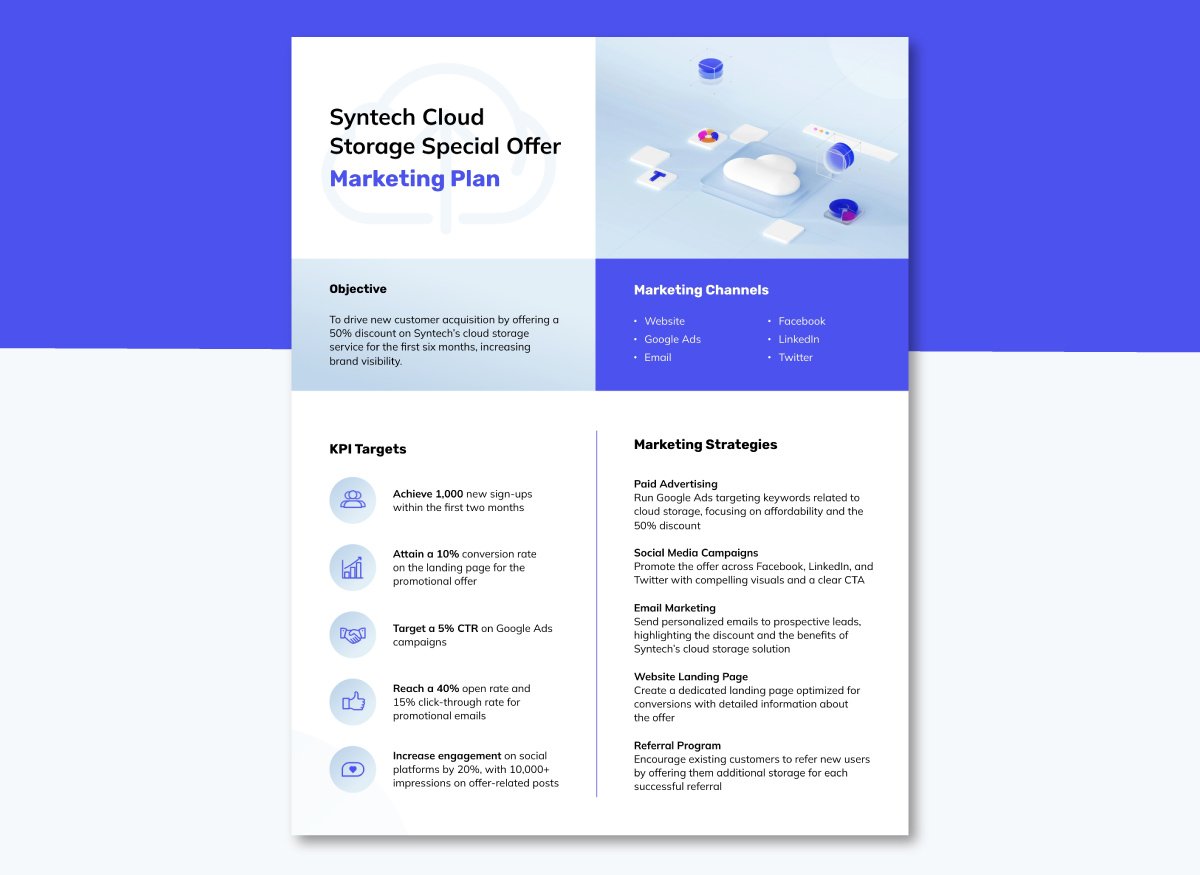
A good social media strategy needs a marketing plan of its own, which is why this template is a must-have for any business trying to win at this game.
Customize this social media marketing plan template to lay out your goals for the next year or quarter, and outline the key points of your strategy for each social channel.
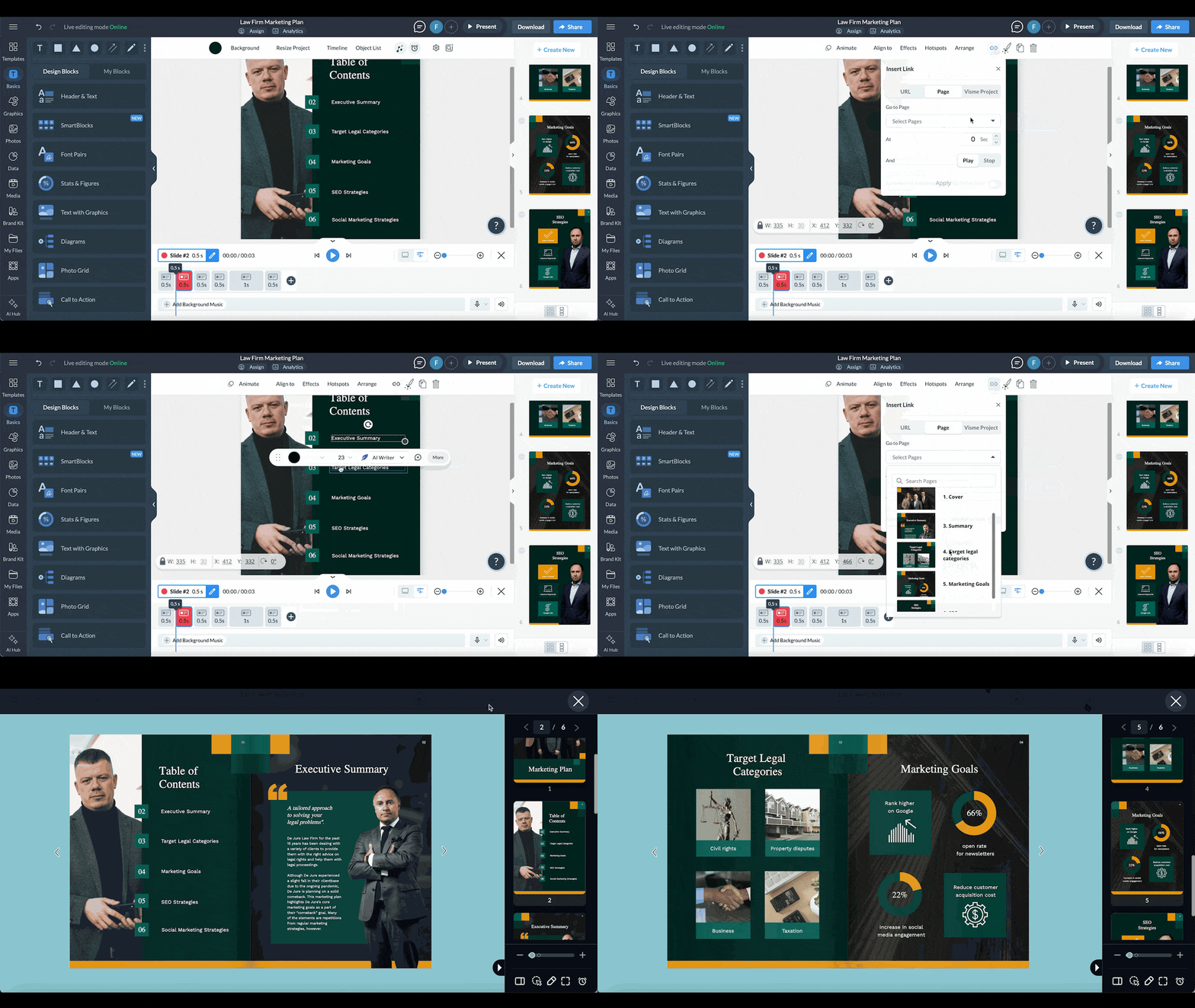
Add a dose of interactivity by creating a clickable menu or building an interactive table of contents. Interactive plans make a positive impression on team members and stakeholders, improving work satisfaction and productivity.
Consistency is key to ensuring that your social media strategy hits all the marks. Posting regularly helps keep your brand visible, but manually posting across multiple channels can be overwhelming and time-consuming.
This is where a cost-effective social media management tool like SocialPilot helps. SocialPilot can simplify your social media management and ensure consistent posting.
Here’s how SocialPilot’s scheduling feature can benefit your strategy:
These abilities are especially beneficial for agencies, SMBs, and multilocational brands to improve their social media impact and streamline their efforts with SocialPilot. Try it free now and experience how easy it is to schedule, manage, and track your social media campaigns!

Create an actionable plan covering your digital channels with this detailed template.
This digital marketing plan has a classy design and layout, and features key headings like an executive summary, a SWOT analysis, key performance indicators and even a nice table of contents.

Creating an effective product marketing plan requires in-depth research of your target market, company strengths and weaknesses, as well as an effective design.
This product marketing plan template covers all those basics, along with a detailed budget planner that you can edit with your own financial data.

Hiring someone to help build a powerful personal brand?
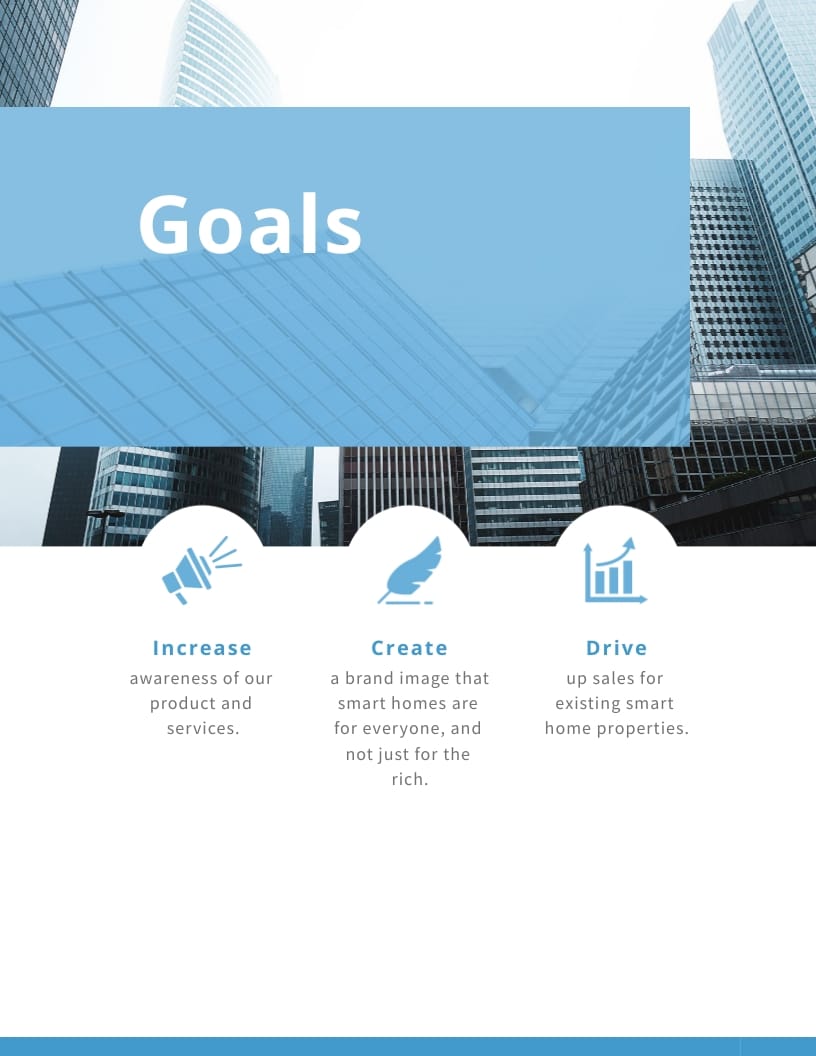
This template is a great example. It’s a simple, three-page document with a professional resume detailing skills and experience, followed by a goals page.
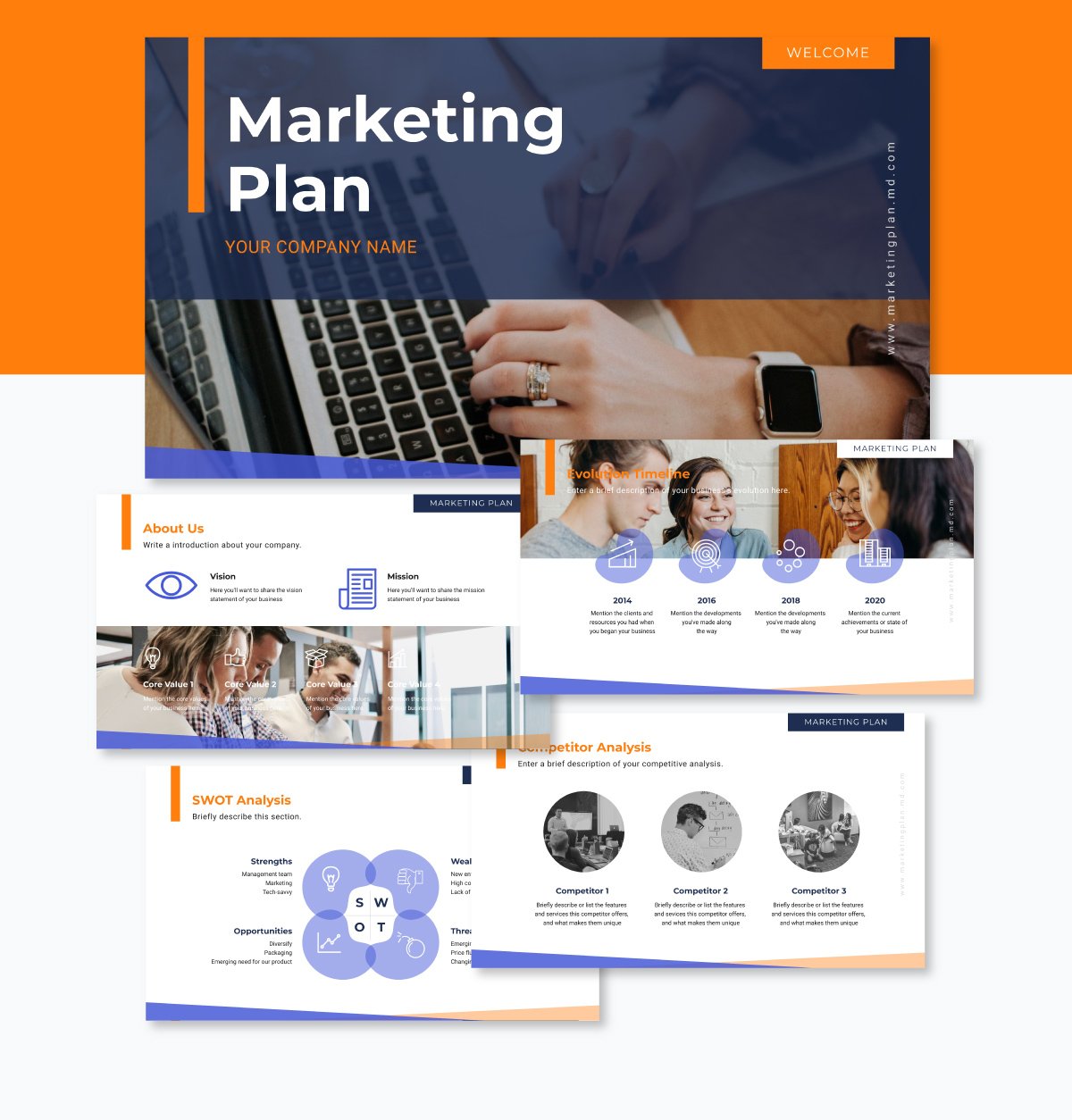
This presentation template is a great way to share your marketing goals, SWOT, strategy, timeline, deliverables and more with your team and the management.
You can easily get the slides printed later and share the copies with your team. Edit this marketing plan presentation online in Visme and create a slideshow that's powerful and effective.
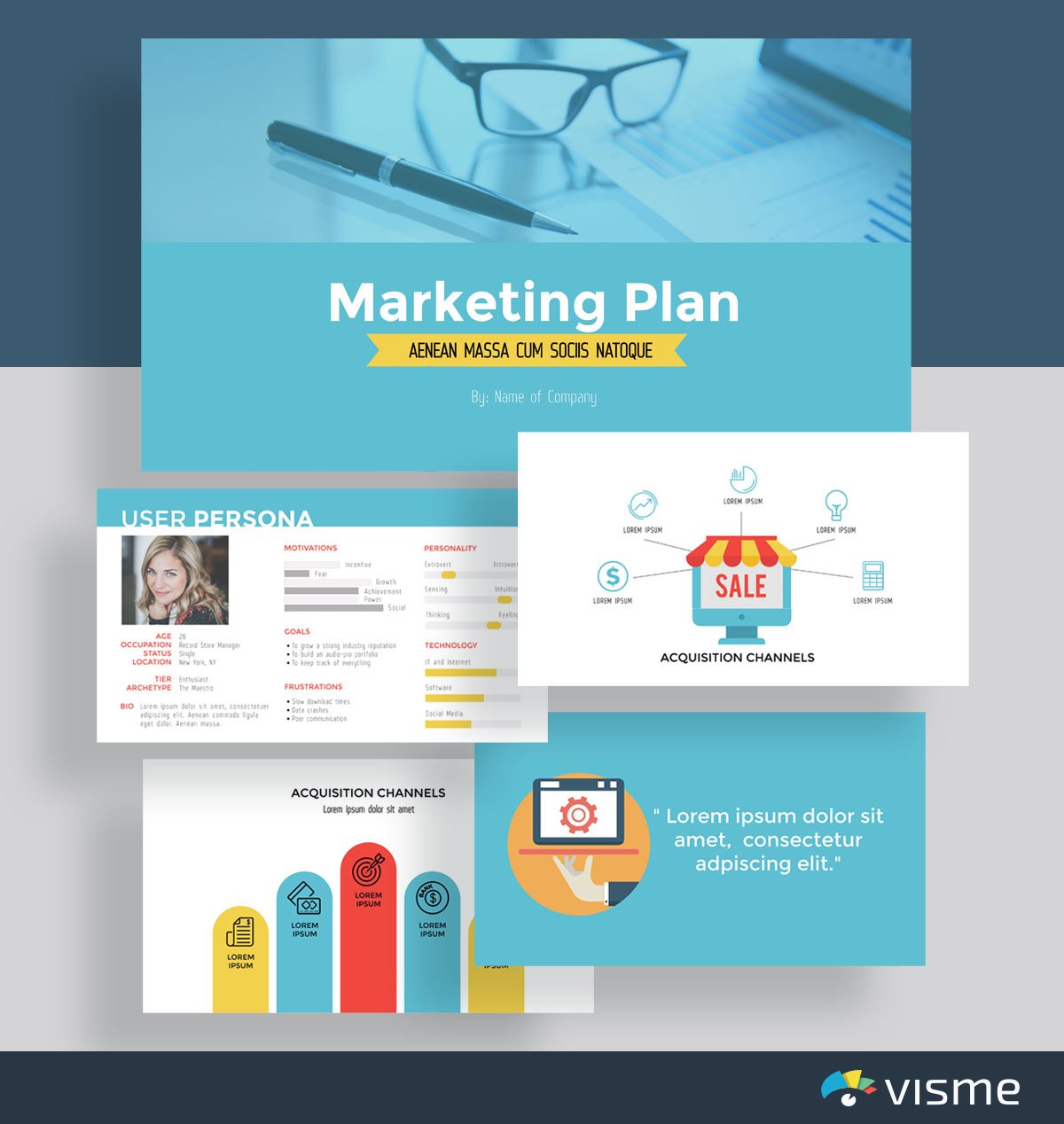
Here is another presentation template you can use. This presentation template is especially relevant and useful if you're in the retail business.
Customize this template online and download it in PDF or PowerPoint format, or save the slides separately in image format. You can also present this presentation online using a link — no downloads needed!

Designing a marketing plan doesn’t have to be daunting. With this template, you can create a comprehensive marketing plan for your food business, whether it’s a small cafe, a big fancy restaurant or a fast food joint.
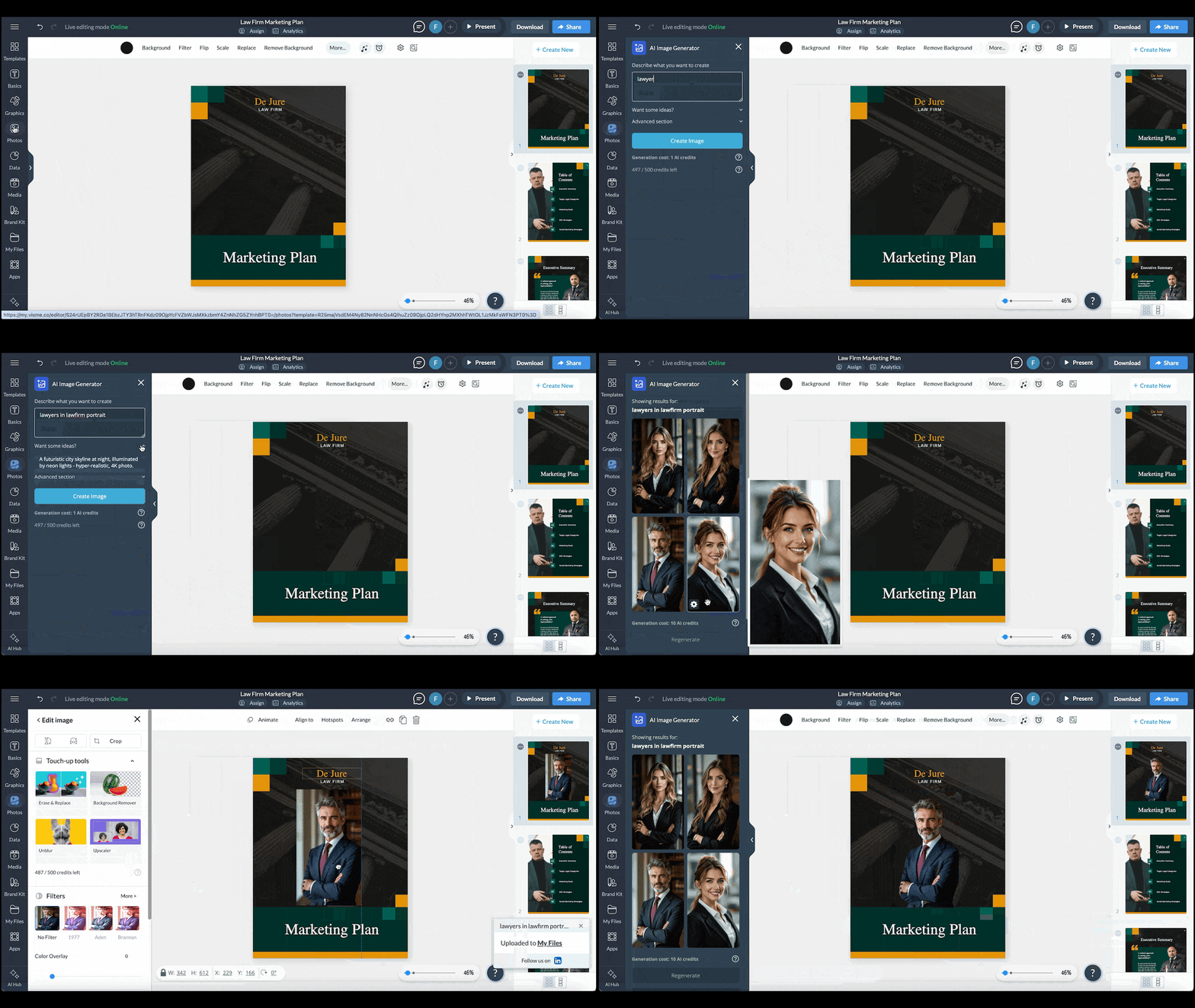
This example features stock photos of food that you can replace with your own. Additionally, you can edit any images with the AI Edit Tools to remove backgrounds or unwanted objects or upscale/unblur less than perfect photos.
This template also has a versatile design that can be tailored to your own brand style and even an entirely different industry.
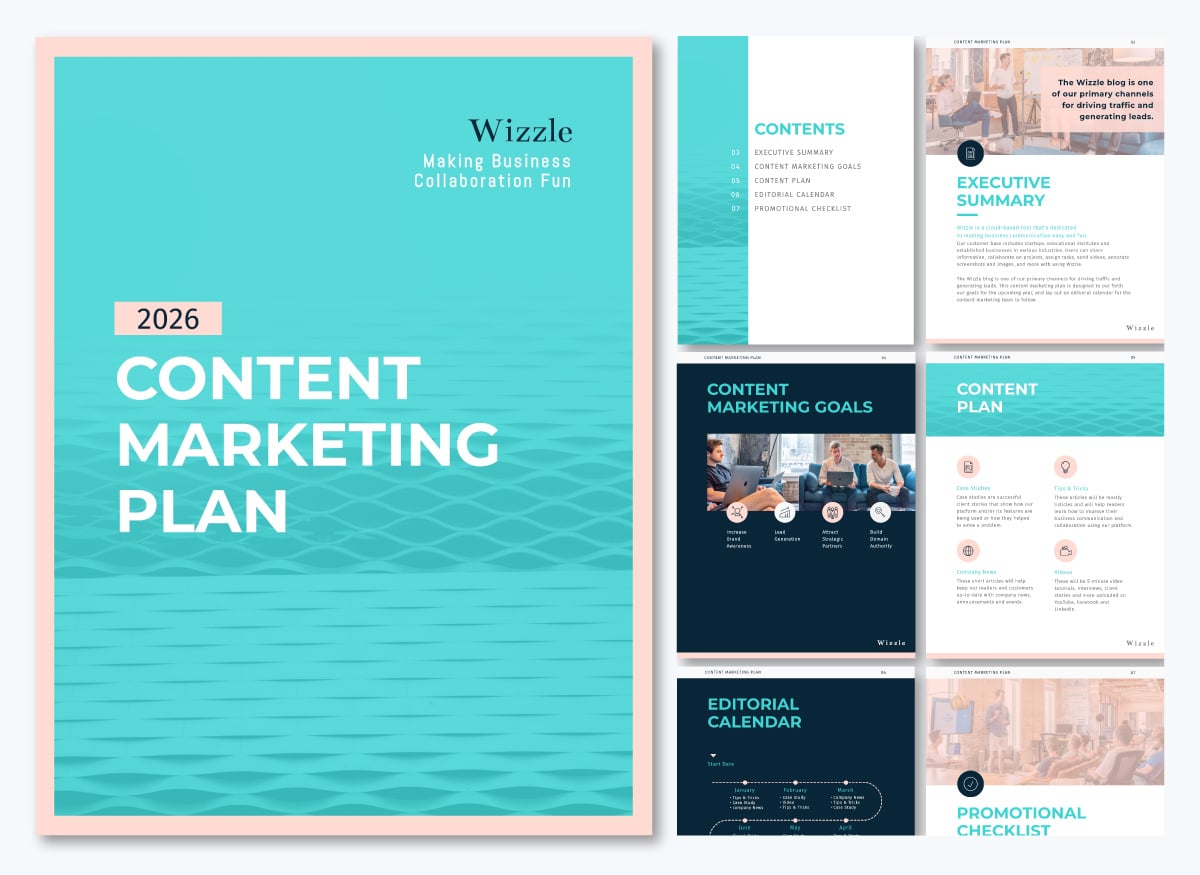
Content is a key element of inbound marketing. This content marketing plan template is carefully designed to match the needs of SaaS and other businesses that want to focus on taking their content strategy to the next level.
If your marketing goals are to drive traffic, generate leads and grow sales through publishing insightful content, this template will help you organize your editorial calendar.
Take advantage of the fact that you’re already logged in to Visme, and use the resources at your disposal to execute a strong content plan.
Design blog graphics, infographic visuals, social media content and videos right inside your Visme editor. Share and schedule posts to social media directly from the integrated social media calendar.
Another great option for managing your content workflow is Planable. It’s a collaboration platform built specifically for social media teams, allowing you to plan, preview, and approve posts in a single shared workspace.
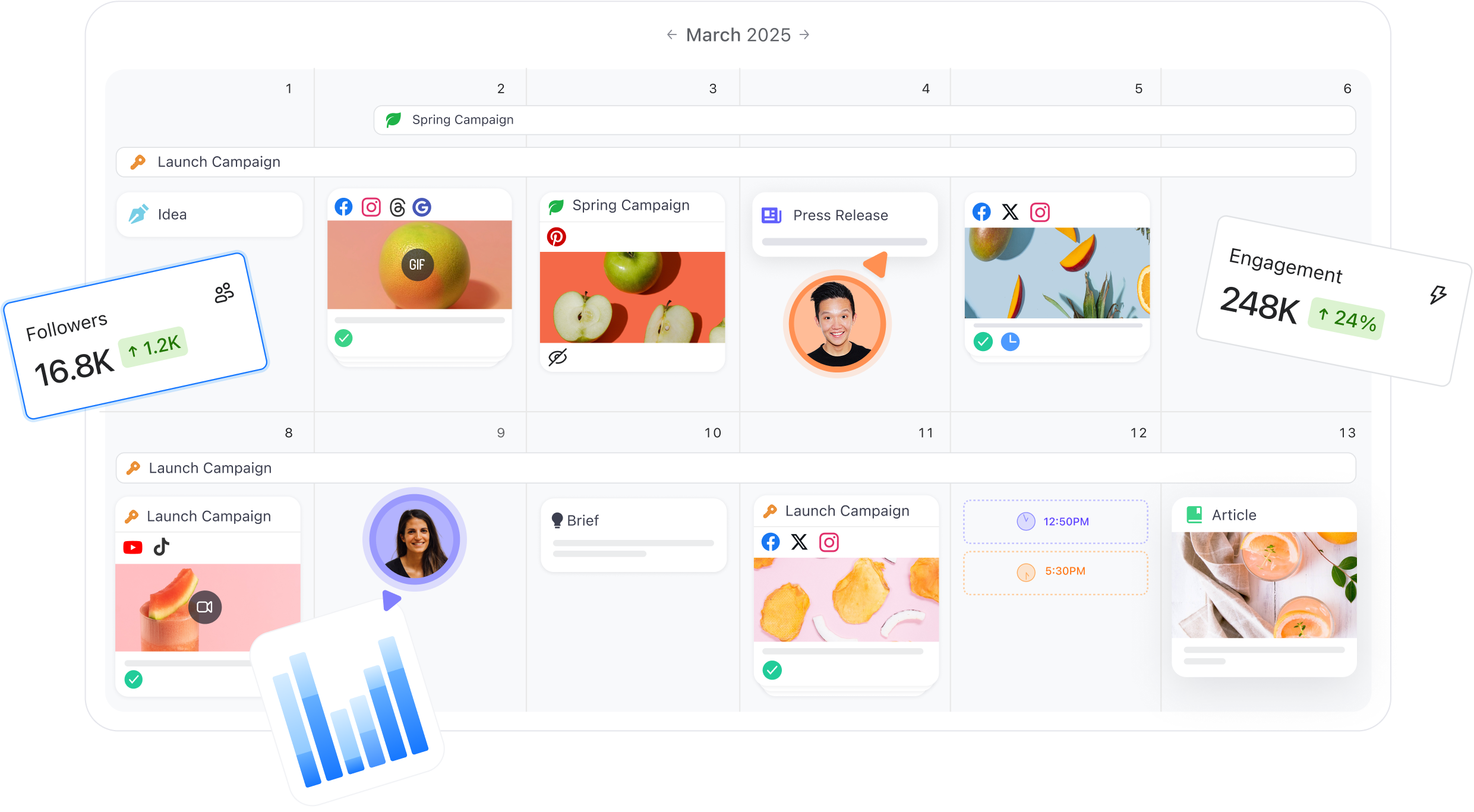
With features like real-time feedback, visual post mockups, and multi-platform scheduling, Planable makes it easier for teams and clients to stay aligned and keep content production moving smoothly.
Here’s a quick rundown of Planable’s main features:
This tailored marketing plan template is perfect for all kinds of real estate and property businesses, complete with a professional “About” section and SWOT analysis.
It has a modern feel to it with a clean layout and corporate color scheme. You can easily switch it out for your own brand colors if you want.
And there you have it — 10 marketing plan templates to kickstart your campaigns. If you still feel like these weren’t enough, you can find more through HubSpot’s Business Templates, an ample library of 130+ templates spanning across various industries, departments, and formats.
Here are answers to common questions about writing a marketing plan.
A marketing plan template is a customizable document with placeholder content that can help you get started quickly. Creating a marketing plan from scratch takes too much time. Using a template not only sets up you for faster designing but it also inspires creativity.
Beautiful internal communications inspire delight in coworkers, making it more enjoyable to check off lists and follow processes. Marketing plans on plain white documents just get lost in email threads.
The executive summary in a marketing plan is a superpowered table of contents. In an executive summary page or slide, you share the notable points to be discussed in the subsequent content of the plan in question. An executive summary is comparable to the Quick Read section at the top of our articles.
A top-down marketing strategy is a traditional strategy with a broad target and brand messaging. Think of the marketing funnel and how at the top it’s wide open. Top down marketing strategies work up there, catching as many people as possible with a message that appeals to a wide audience.
A bottom-up marketing strategy is a targeted strategy for a product or service that meets the needs of a specific audience. Bottom-up marketing strategies are more common in small businesses and startups that don’t yet have large audiences.
The 4C’s of marketing are:
These four are called the “marketing mix. Another marketing mix you should know is the 4 Ps or the Four Principles of Marketing.
For a marketing plan to be good, it doesn’t take much. But for a marketing plan to be great, make sure you check off this checklist:
The most important part of a marketing plan is the targeted consumer, specifically their needs and wants. The entirety of your plan serves the purpose of how your company will use marketing strategies to sell solutions to the customer.
With Visme, you can create marketing plans collaboratively in a number of ways. Brainstorm and strategize the plan together in the infinite whiteboard and then design together in the editor. The Visme whiteboard can have multiple pages to control brainstorming iterations and organize meeting results.
Invite members to the whiteboard or workspace by clicking the person+ icon on the top right. They’ll need to have their own Visme account to access the editor or whiteboard you’re inviting them to.
You can also use the workflow feature to assign entire projects or specific tasks to different team members and work on a project together. Keep track of what’s being worked on, leave feedback comments and support each other through the process.
A marketing plan template is a pre-designed document with placeholder sections for your goals, audience, strategy and budget. You replace the sample content with your own, which saves time and gives your plan a consistent, professional look.
The 7 P’s of marketing are seven elements you control when bringing a product or service to market. The first four are the 4 P’s of the marketing mix, introduced by marketing professor E. Jerome McCarthy in 1960:
In 1981, marketing researchers Bernard Booms and Mary Jo Bitner added three more for service businesses, where customers judge the experience as well as the product:
The 70/20/10 rule is a guideline for splitting your marketing budget. It protects what already works while leaving room to test new ideas.
A good marketing plan has four things:
The best plans are living documents that the team reviews and updates as results come in.
The most common marketing plan mistakes are setting vague goals, skipping audience research, trying to be everywhere at once and failing to review performance.
Tie every marketing goal to measurable KPIs and set a regular review cadence. Quarterly reviews are a useful baseline for the overall plan, while individual campaigns and channels may need to be evaluated more frequently.
For most businesses, operating without a solid marketing plan results in ineffective campaigns, reduced ROI and unexpected costs. And nobody wants that.
A custom marketing plan helps you align your marketing objectives and activities with your overall business goals and brings entire teams together on the same page.
Ready to create a professional marketing plan of your own? Try Visme today and see how you can take charge of your next marketing campaign or goals.
Design visual brand experiences for your business whether you are a seasoned designer or a total novice.
Try Visme for free