B2B Sales Content Statistics for 2027: 40+ Data Points

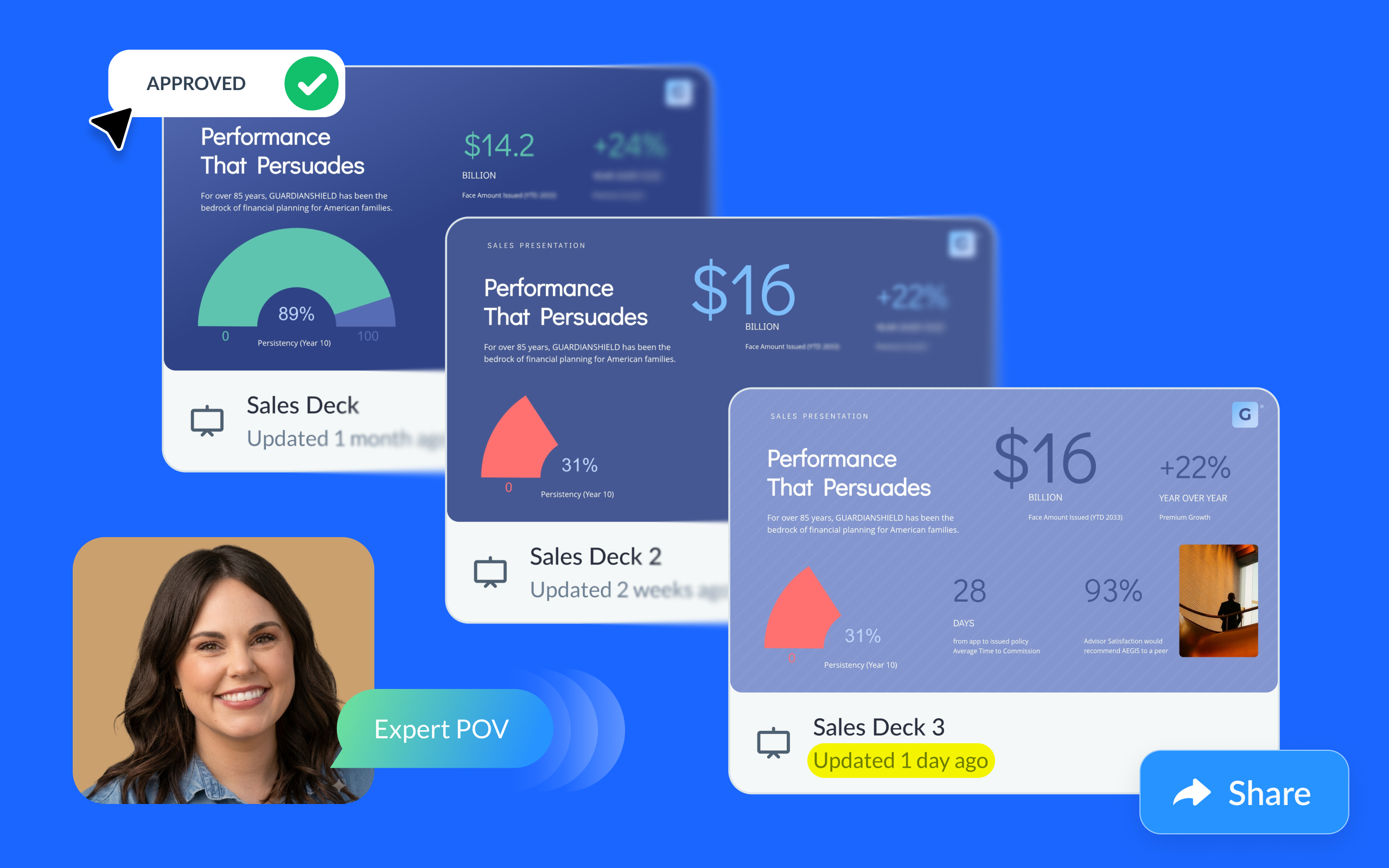
The lifecycle of a sales deck follows the same process every time. Somebody on the team creates the deck, it passes through several hands until it’s fully approved and signed off to go to the client.
But then, at some point, a rep uses it and tailors it for a new prospect. Since that rep doesn’t have strict guardrails to keep the deck intact, an unapproved version reaches the potential buyer.
You’ve likely watched this play in your company or sales team. It’s frustrating, because at the end of the day, we need to close deals. But we also have brand and marketing we need to do right by, making sure the content that goes out looks and says the right things.
Visme's survey of 164 B2B sales and content leaders shows that it's just how most sales orgs work. But it doesn’t have to be that way. Below, I’ll walk you through the problem first, then the solution: how to protect the facts that can’t change and track every deck after you send it.
First, what exactly happens to a sales deck after it's approved?
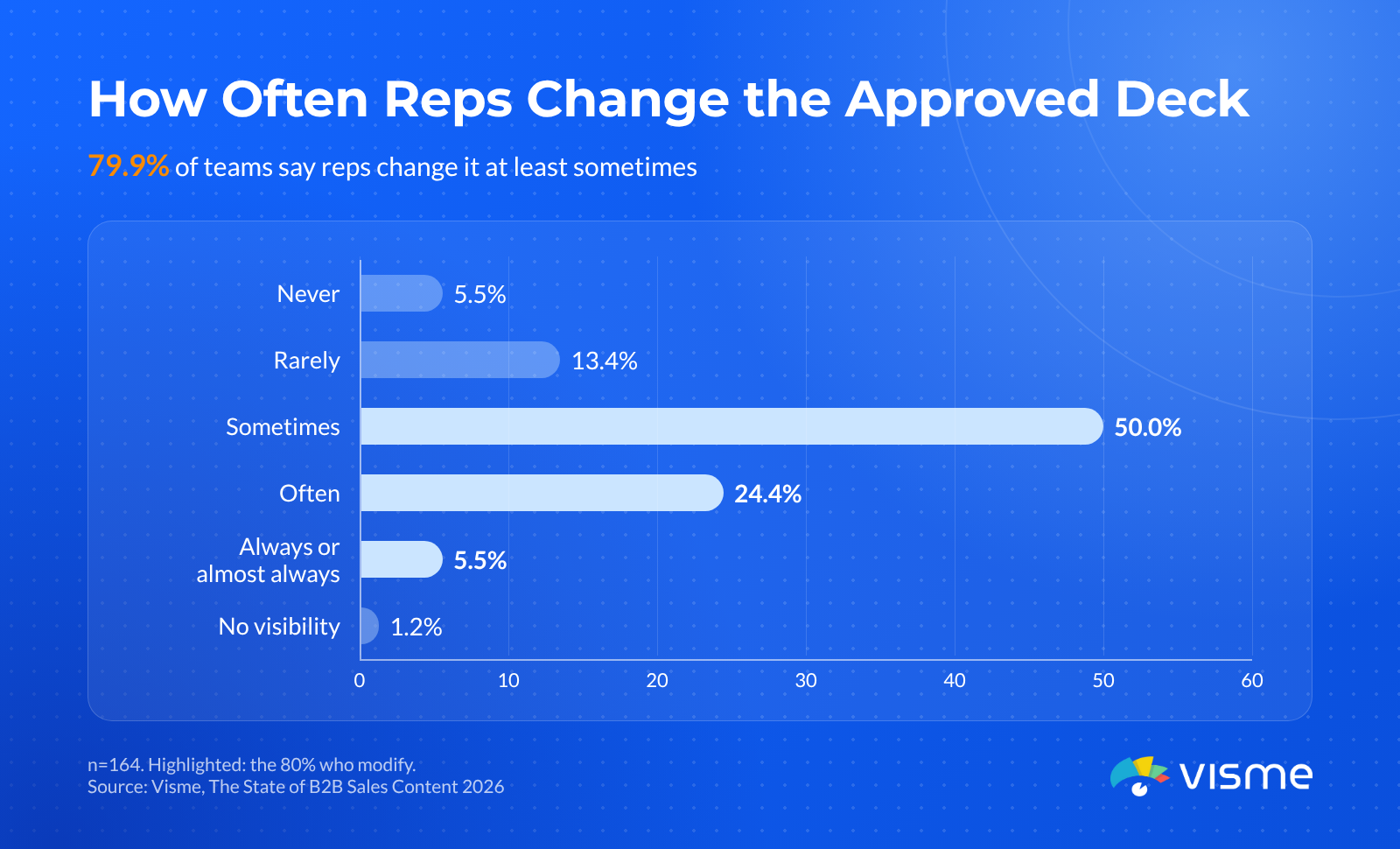
According to our research 79.9% of teams say reps change the approved deck at least sometimes. Then the deck goes out, and half of the teams can't see what the buyer does with it. That just sounds like a royal waste of time.
In 2027, I just don't want to see teams selling like this anymore. Sales deserves to know what matters, and frankly, I think your buyers love when they can work with informed reps. It makes the experience positive for everyone.
Reps change approved decks most of the time for new clients or renewals. Visme's State of B2B Sales Content 2026 report highlights that,
Only about one team in five sends the approved version as is. That minority is quite loud for what it really means.
What makes it all even more worrying, is that it's not just one rep tweaking decks. We found that 94.5% of customer-facing deliverables pass through more than one contributor before they reach a prospect. Who is keeping track of all these changes?
 Source: Visme, State of B2B Sales Content 2026
In his book, Sales Enablement 3.0, Roderick Jefferson, speaks about the cost of process friction on revenue teams and why it’s costing them both clients and time. I agree with him 100%.
Author, Sales Enablement 3.0
Don’t get me wrong, I don't want reps to stop tailoring the sales deck for a buyer's specific industry, numbers, pain points and goals. That is literally their job. But the risk sits in parts of the deck’s slides that should never change. That includes data, content, brand assets and even layouts.
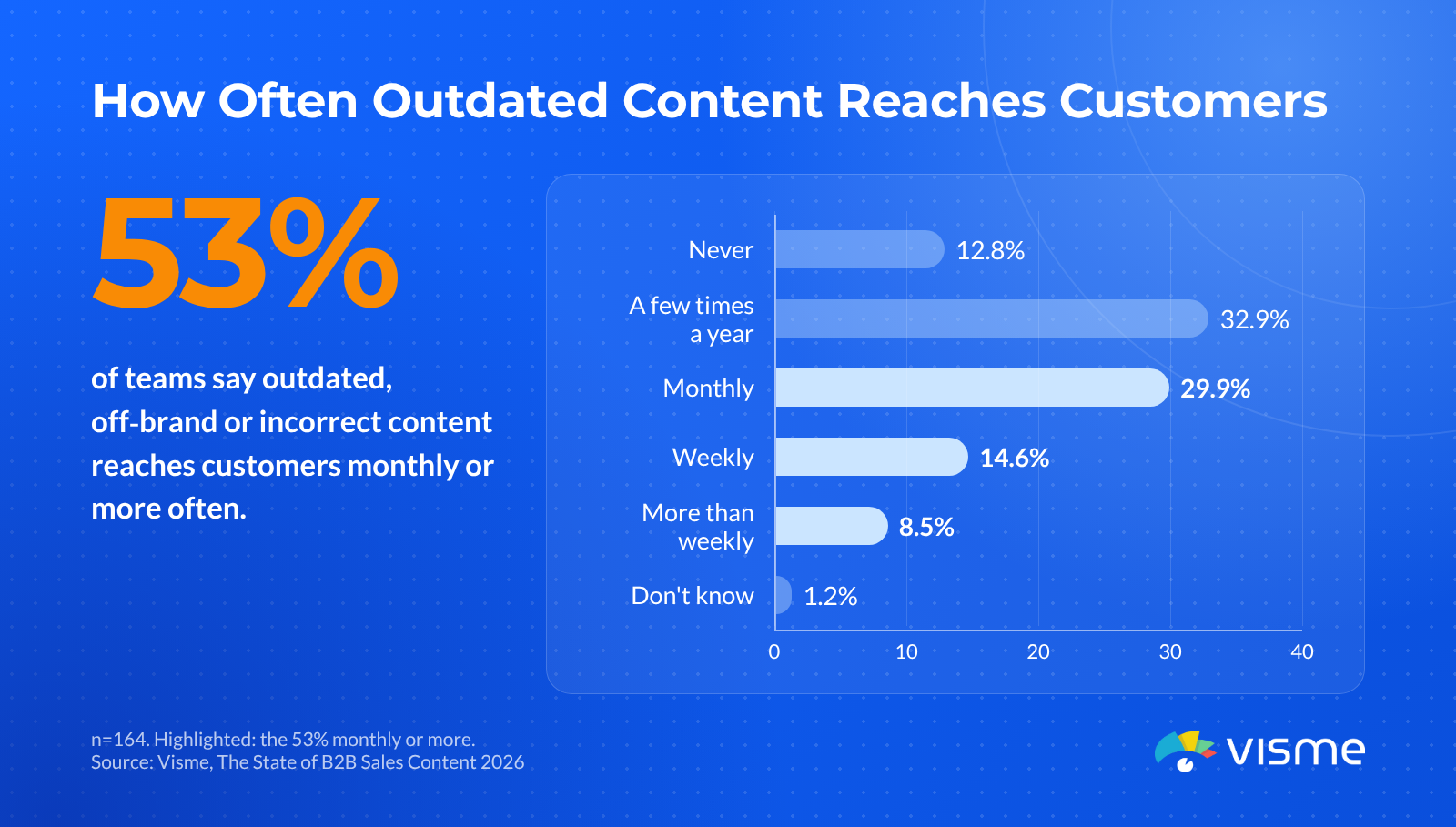
Outdated sales content reaches customers every month at most companies. 53% of teams say outdated, off-brand or incorrect content reaches customers monthly or more. 14.6% say it happens weekly, and 8.5% say more than weekly.
Those numbers should be unacceptable.
But when reps don’t have the guardrails to help keep decks in approved formats, it’s easy to understand why this keeps happening.
One C-level respondent in the survey said, "Despite using multiple tools, we have no single source of truth for approved, updated content." You can be sure that they’re not the only ones in that predicament.
Unfortunately, the damage created by an outdated sales deck goes past the first sales call or email. Because like Nate Nasralla, co-founder of Fluint says, “Internal meetings (not sales meetings) are where deals are won and lost.”
After the initial contact with your champion, they take the deck into their own budget meeting. If they're presenting the wrong information, nobody on your side will ever know until it’s too late.
Most teams send decks as attachments or files they can’t track. And not everyone is good at making sure they save the latest version of their presentation to the global folder where everyone can access and see them.
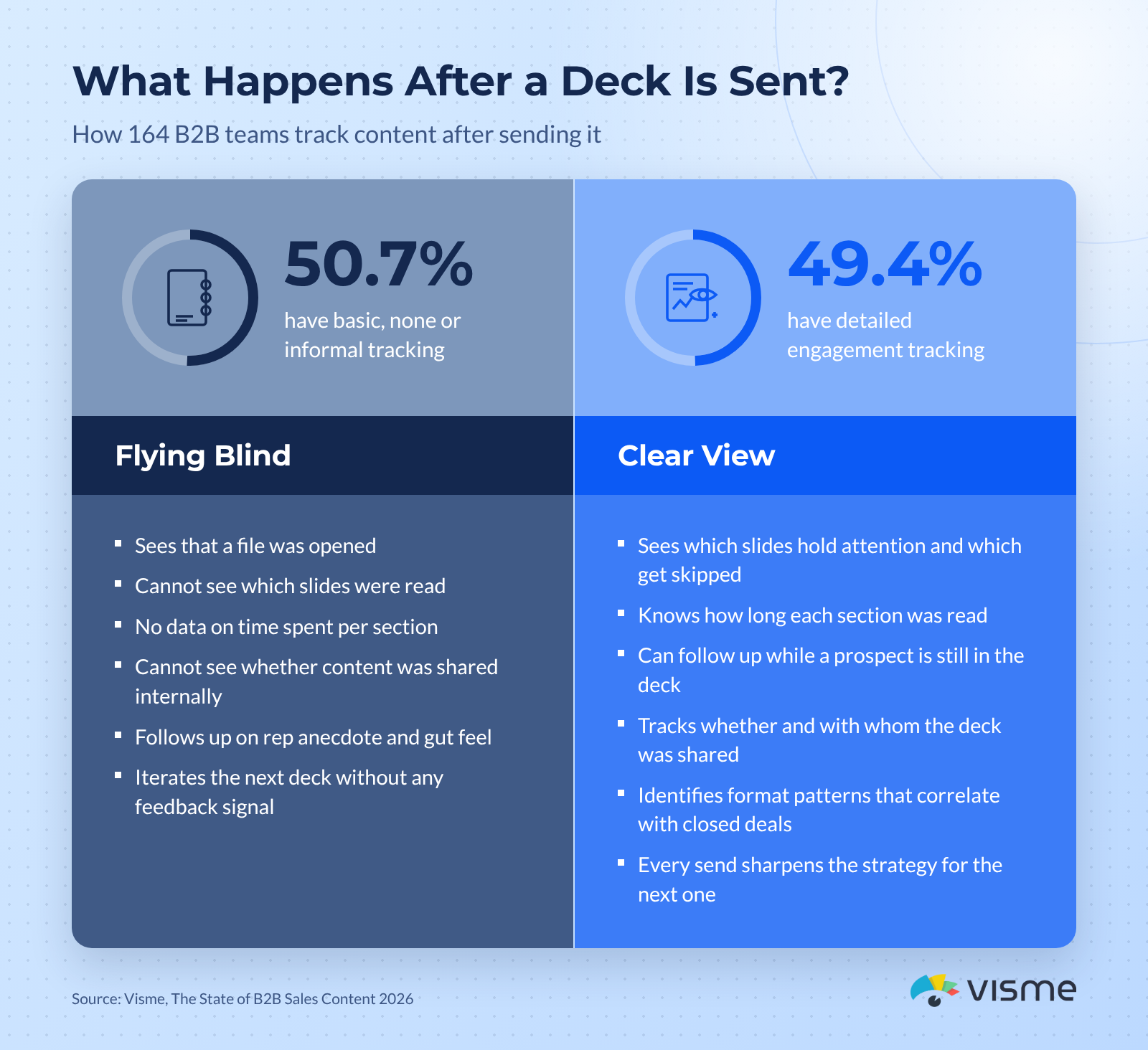
So, once the deck leaves the rep’s outbox, there’s no data. They might know a file was opened, but not which slides the buyer read, how long they stayed or whether the deck reached the people who sign off on new deals.
Our research found that 50.7% of teams have none, basic or informal tracking once content is sent. That means that for half the industry, not knowing what happens after send is the default.
In practice, it might look like this: A rep sends the deck at the start of the week and then follows up with a “just checking in” email a few days later. The buyer may have read the pricing slide three times. Or they may never have opened the file. The rep has no way to tell.
That blind spot spreads to the rest of the team. Managers coach on gut feel, pipeline reviews run on rep updates and the next deck gets built without any feedback from the last one.
 Source: Visme, State of B2B Sales Content 2026
When you protect the facts and track what happens after the send, review cycles speed up my minimizing handoffs. Most importantly, the deck’s approved vital elements stay intact even with some tailoring.
The first step is to save your logo, colors and fonts in the Brand Kit with the Brand Wizard. Then, build Brand Templates with pricing, product claims and brand elements locked, with set permissions that let reps tailor the rest. Over time, you have an approved slide library with decks that will go out perfect every time.
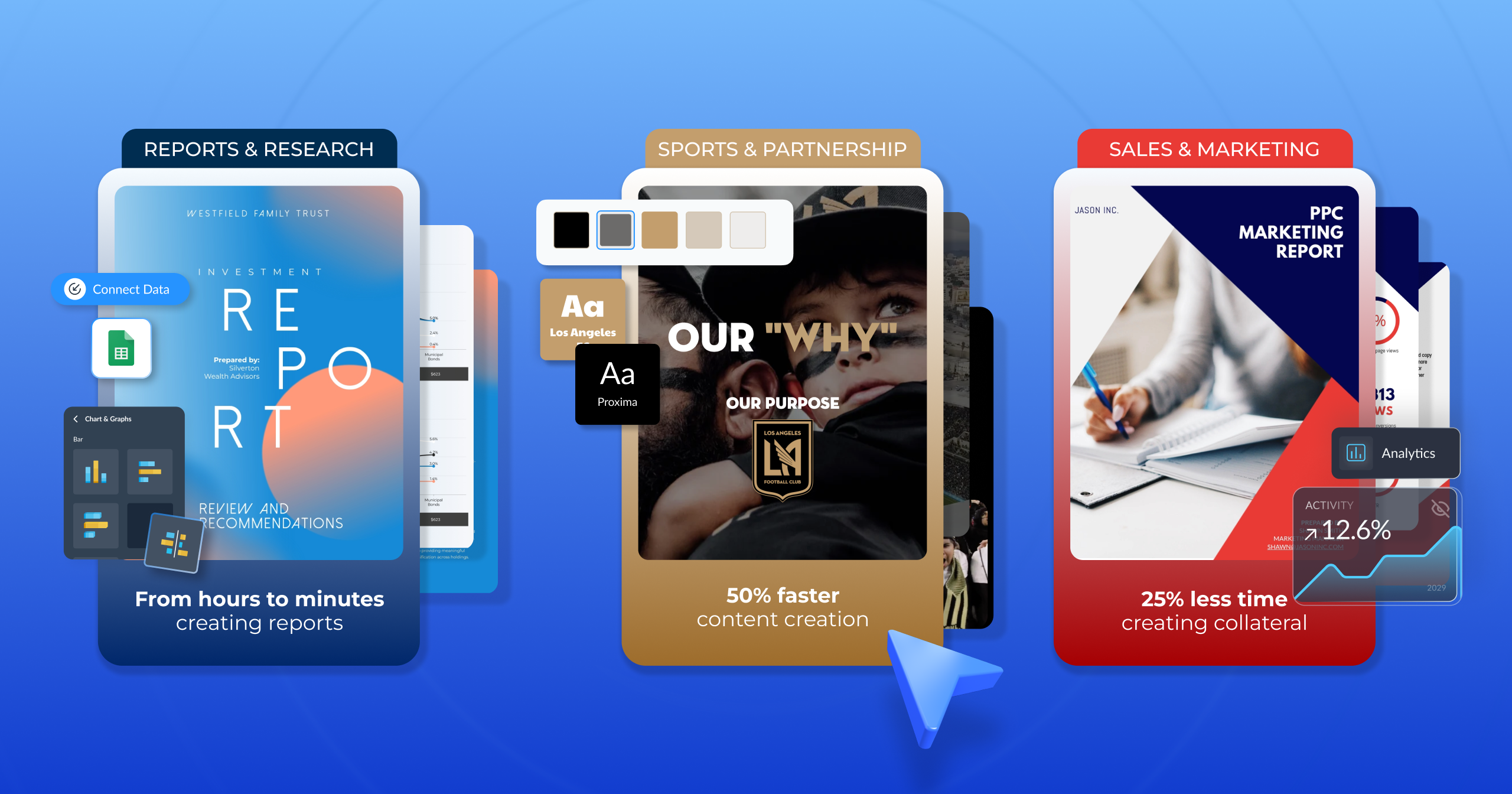
Using this exact system, LAFC’s partnership team cut deck reviews from three people to one. Reps duplicate an approved audience deck, personalize it with dynamic fields and get sign-off from the head of partnerships. Off-brand colors and fonts are blocked from the workspace, so reps only see the approved options. It works great. You can watch how they do it in the recording of our latest webinar.
The video below gives you a sneak peak inside their Visme environment.
Inside LAFC's Branded Sales Deck Template Library | Made with Visme
For decks that need formal sign-off, use Workflows to assign reviewers to each section and set due dates. You can also set up an approval flow that repeats every time for every deck, leaving nothing to chance.

Send the deck as a link, not an attachment, and check the analytics before you follow up. A tracked link shows views, time spent and how much of the deck the prospect viewed. An attachment shows you nothing.
I understand that some people want PDFs, and that's okay. They can download the PDF they need right from the shared deck link you send them. By creating an all-in-one package like that, you won’t have to worry about your emails with attachments getting blocked by IT firewalls / spam blockers.
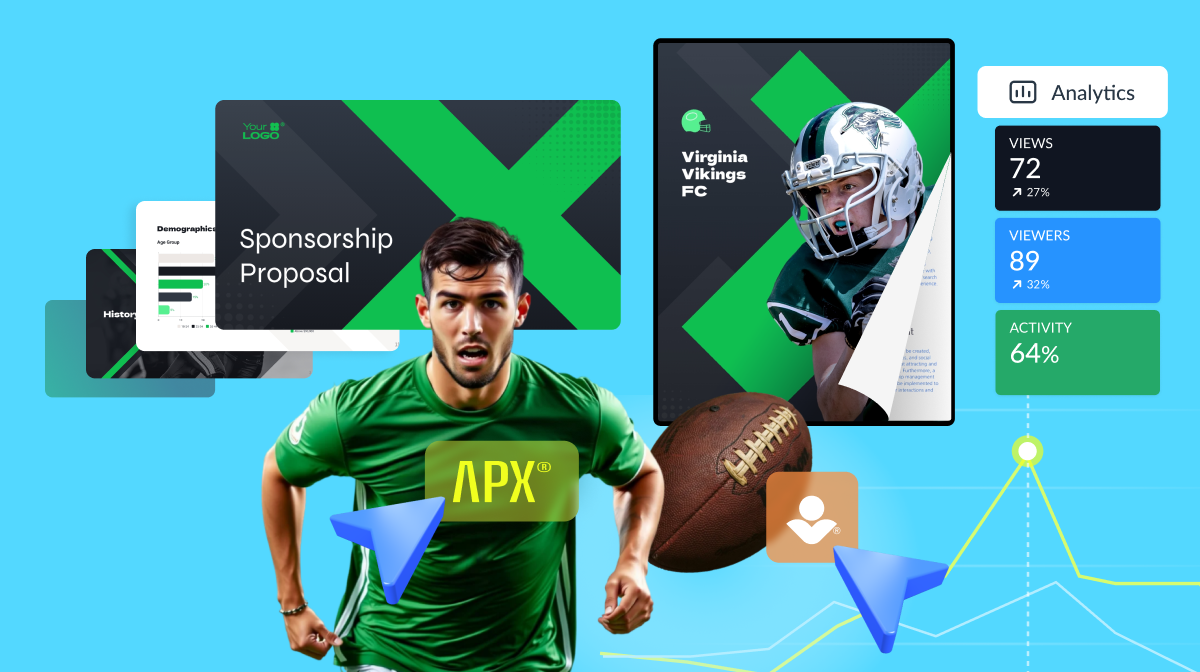
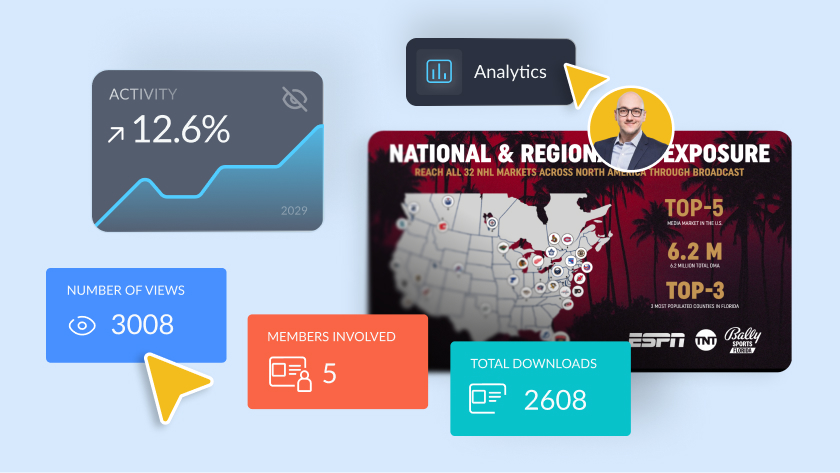
Another team that uses Visme, The Florida Panthers, tracks analytics on shared links to see which slides or sections a client values most, then shapes the next conversation around them.
You can do the same by following these steps:
If your team builds in PowerPoint and wants to track their performance, you can do that too. Import the PPTX into Visme and share it as a tracked link to add version control and engagement data. See our guide to presentation software for sales teams.
Sometimes, when you send a strong and personalized deck to a client that said no, it can reopen the door. The Florida Panthers partnership team saw it happen with a brand that initially wasn't interested in talking to them.
The team built a proposal and presentation in Visme around their best partnership stories. After presenting the deck, the prospect brand wanted to keep the conversation going, and the team closed the deal.
Bridget Sullivan, Director of Partnership Solutions at the Florida Panthers, said the quality of their proposals and presentations is "so much better than before." This is how she describes the team’s feelings about the work:
Director of Partnership Solutions, Florida Panthers
That’s not all though. The team also cut proposal and presentation time from more than a week to one or two days. Fifteen people across partnership sales, activation and solutions use Visme every day for sponsorship proposals, presentations and partner onboarding materials.
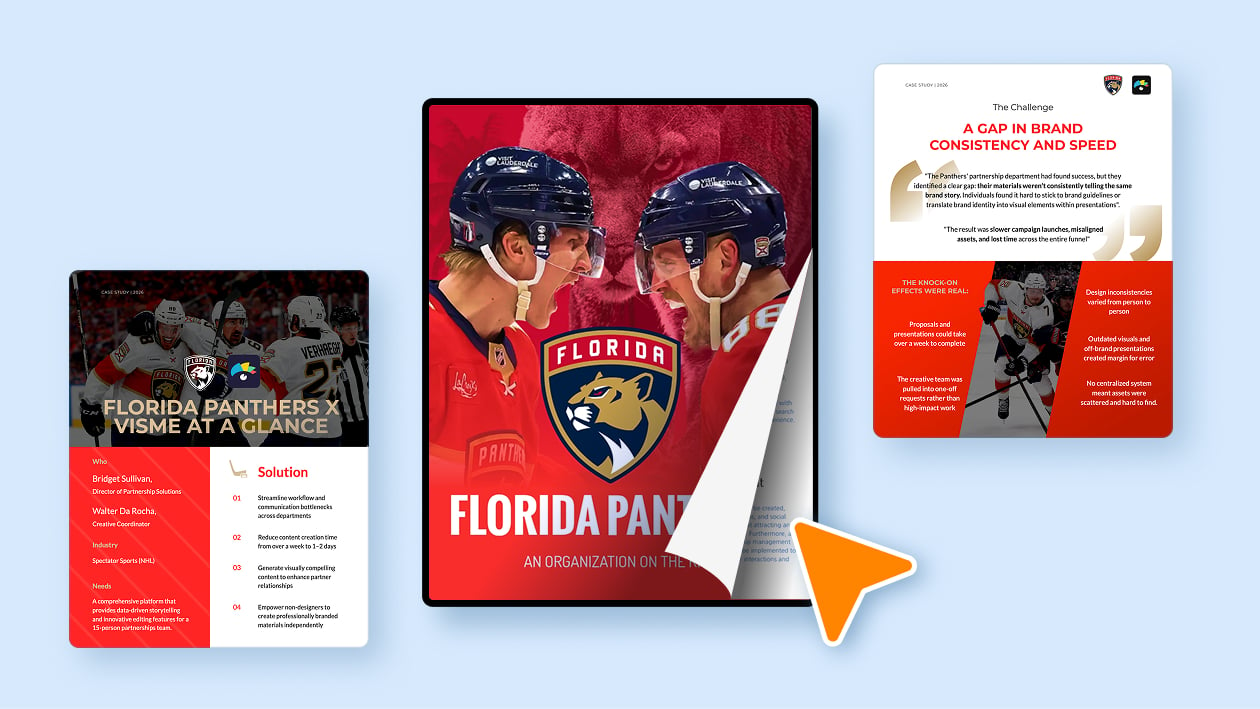
Get the Florida Panthers playbook to see the full workflow.
We’re building Playbooks by Visme for teams that send the same approved deck to client after client. Join the waitlist to get early access and a personalized demo.
Approval is where a deck's life in the field starts. But you need to plan for what reps and buyers do with it next. Protect the facts, give reps room to tailor and use sales deck tracking on every deck you send.
That's what sales content governance means to me: a few clear rules, one place for the current version and visibility after send. Our sales enablement best practices cover the rest of the process if you want to learn more.
Get in touch with me if you want to talk about how to do all this for your team.
Design visual brand experiences for your business whether you are a seasoned designer or a total novice.
Try Visme for free