

A Quick Guide on Sponsorship Marketing: Best Framework, Examples & Tools

Marketing in healthcare isn't like marketing anywhere else.
You can't just launch a clever ad campaign and expect conversions to roll in. You’re dealing with HIPAA regulations, trying to earn the trust of patients making major life decisions, and working with buying cycles that can stretch for months or even years.
As a marketer, you’re already familiar with the basics: SEO, content marketing, email campaigns and paid ads. But those tactics work differently in healthcare.
What works for a SaaS company or an e-commerce site needs a complete overhaul when yo u’re promoting a hospital system, medical device or telehealth service.
This guide will show you exactly how to adapt your marketing playbook for healthcare. We'll cover the strategies that actually move the needle, the channels that deliver ROI, and the compliance considerations you can't afford to ignore. We’ve also sprinkled real-life examples to inspire you.
But before you dive in, marketing expert Ivan Escott explains how to build a healthcare marketing strategy that actually works in this video.
Disclaimer: Visme is not a HIPAA-compliant platform and should not be used to store, process, or transmit protected health information (PHI). Users are responsible for ensuring their use of Visme complies with applicable data privacy and security regulations.
Before we get into specific strategies, let's talk about why healthcare marketing requires its own approach.
When someone is choosing a healthcare provider or medical solution, they're not just making a purchase decision. They're putting their health, and sometimes their life, in your hands.
According to a 2024 Edelman Trust Barometer study, only 62% of patients say they trust healthcare providers, down from 73% in 2020. That means your brand strategy and every piece of content, ad or email needs to help build and maintain that trust.
Healthcare marketers operate in a highly regulated environment.
You have to keep track of HIPAA, Stark Law, FDA advertising rules, and a maze of other compliance requirements that affect every piece of content you create. The penalties for violations are severe and can cost up to $50,000 each, with maximum annual penalties reaching $1.5 million.
This totally changes your strategy and how you use marketing channels. For example, unlike other marketers, you can't just plug in Facebook Pixel or Google Analytics the way other marketers do. You need to have security measures like encryption protocols, two-factor authentication and Business Associate Agreements with anyone who handles patient data.
And it's not just about tech. You can’t promise treatment results, and you can't just use patient photos or stories without jumping through a lot of hoops and getting signed permissions.
A patient researching knee replacement surgery might spend 3-6 months gathering information before scheduling a consultation.
They're reading articles, watching videos, comparing surgeons, talking to friends who've had the procedure, and mentally preparing for a major life event. A hospital system evaluating a new EHR platform could have a 12-18 month sales cycle with multiple stakeholders, budget approvals and extensive vendor comparisons.
This extended timeline means your marketing needs to nurture prospects over time rather than push for immediate conversions. It also means you need content and sustained presence across every stage of the journey and decision-making process.
Early-stage educational content that builds trust and positions you as an expert. Mid-stage content that addresses specific concerns and differentiates your approach. Late-stage content that makes scheduling easy and reduces barriers to taking action.
Unlike B2C marketing where you're typically speaking to a few decision-makers, healthcare marketing often involves patients, family members, physicians, administrators, insurance companies and more.
You're not always marketing directly to the person receiving care. Each stakeholder has different concerns and information needs, and you need to address them all. You may be trying to reach caregivers researching options for aging parents, spouses looking for cardiac specialists for their partners, or referring providers who need to trust your expertise before sending their patients to you.
Insurance networks can influence where and how care happens, adding another layer of decision-makers to your marketing strategy.
As Julie Wolk, Brand & Marketing Consultant, explains in this video:
“Healthcare is unique in that it's B2B and B2C—or what we call B2P (business-to-patient). You need to be able to flex to so many different types of audiences, but you also have to have the skill of being able to distill complex topics to a level that doesn't dumb it down, still gives the information, but then again makes it provocative, entertaining, informative, or inspiring.”
That balance is difficult. You’re simplifying complex medical topics without oversimplifying them. And you’re speaking to multiple stakeholders at once, often within the same campaign.
People aren't casually browsing for healthcare the way they might shop for shoes. They're often scared, confused or in pain. A parent frantically searching for "child won't stop coughing at night" at 2 AM isn't in the same headspace as someone buying a new laptop.
Someone researching cancer treatment options is facing one of the most terrifying moments of their life.
Your communication plan needs to acknowledge these emotions without exploiting them. Provide clear, helpful information that reduces anxiety rather than increasing it. Use compassionate language that shows you understand what they’re going through.
Avoid fear-based marketing tactics that prey on people's vulnerabilities. The goal is to be a trusted guide during a difficult time, not a salesperson pushing a transaction.
Healthcare marketing involves different tactics, each with specific use cases and tools.
Here's a breakdown of the main types you should know:
| Marketing Type | What It Is | When to Use It | Best Tools |
|---|---|---|---|
| Content Marketing | Educational articles, videos, guides, and resources that address patient questions and concerns. | Building authority, improving SEO, nurturing long buying cycles and establishing thought leadership. | HubSpot, WordPress, Visme, Wistia |
| Search Engine Optimization (SEO) | Optimizing website structure and content to rank for healthcare-related searches. | Capturing high-intent traffic, building organic visibility and reducing patient acquisition costs. | Semrush, Ahrefs, Google Search Console, Clearscope |
| Pay-Per-Click (PPC) Advertising | Paid search and display ads targeting specific healthcare keywords and audiences. | Driving immediate traffic, promoting new services, and targeting competitive markets. | Google Ads, Microsoft Advertising, Optmyzr |
| Email Marketing | Targeted campaigns for patient education, appointment reminders, and nurture sequences. | Patient retention, post-care follow-up, and lead nurturing. | Mailchimp, Constant Contact, Salesforce Marketing Cloud |
| Social Media Marketing | Engaging patients and communities on platforms like Facebook, Instagram, LinkedIn, and TikTok. | Building community, recruiting healthcare professionals and managing reputation. | Hootsuite, Sprout Social, Buffer |
| Video Marketing | Educational videos, patient testimonials, physician introductions, and procedure explanations. | Explaining complex procedures, building trust and improving engagement rates. | Vimeo (with BAA), Wistia, YouTube, Visme |
| Referral Marketing | Programs encouraging existing patients or physicians to refer others. | Growing patient base through trusted recommendations. | ReferralMD, PatientPop, Salesforce Health Cloud |
| Event Marketing | Health fairs, seminars, webinars, and community outreach events. | Local engagement, education and relationship building. | Eventbrite, Zoom (with BAA), ON24 |
| Account-Based Marketing (ABM) | Highly targeted campaigns aimed at specific hospital systems or enterprise healthcare buyers. | B2B healthcare sales, high-value accounts, complex enterprise deals. | Terminus, 6sense, Demandbase, LinkedIn Sales Navigator |
Now let's get into the strategies that deliver real ROI in healthcare marketing.
These are proven tactics that healthcare organizations use to drive growth. I’ve also shared healthcare marketing examples to inspire you.
Artificial intelligence is transforming healthcare marketing, and if you're not using it yet, you're already behind.
About 91% of patients prefer healthcare providers who offer tailored, personalized care over generic care.
AI allows you to create these personalized experiences for thousands of patients simultaneously. Something that would be impossible with manual segmentation alone.
And you can actually deliver these experiences to customers across three key phases of their journey: discovery, conversion and loyalty.
We're seeing early adopters use generative AI to break down the walls between brands and consumers, creating personalized experiences on a larger scale.
For example, Intermountain Healthcare implemented an AI chatbot to help patients navigate their symptom checker tool.
The chatbot asks clarifying questions, provides educational resources, and routes patients to appropriate care, whether that's self-care, a virtual visit, or an ER visit.
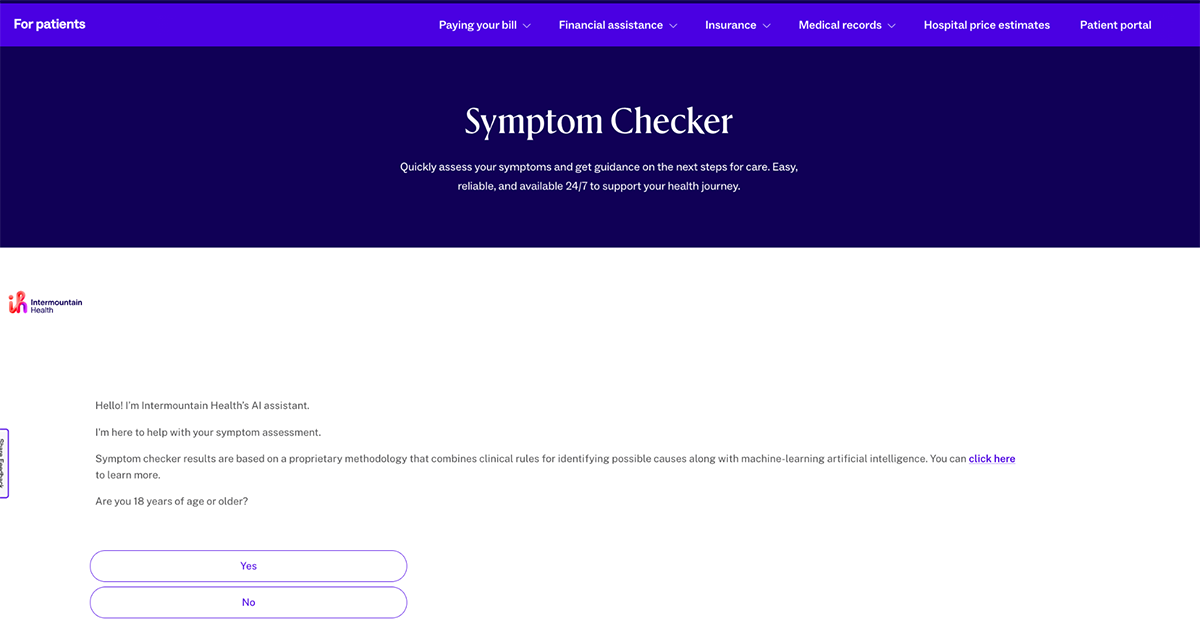
That's AI working in the discovery phase. At the conversion stage, AI can analyze a patient's browsing behavior and serve up exactly what they need to take action.
If someone has read three articles about surgery and downloaded a treatment guide, AI can trigger personalized CTAs that direct them to surgeons in their area with available appointments. It can also customize the scheduling page based on their insurance information and preferred location.
For loyalty, AI helps you stay relevant long after the first appointment. It can identify patients who haven't scheduled their annual check-up and send personalized reminders based on their health history. It can recommend relevant health content based on their previous engagement.
If you're looking to implement this healthcare marketing strategy, start with a HIPAA-compliant AI platform such as IBM Watson Health or the Google Cloud Healthcare API.
Use it to segment your audience based on browsing behavior, demographics, and health interests; not protected health information. Then create content pathways that serve relevant resources based on these segments.
Patients are searching for specific answers to specific questions, and Google rewards content that provides genuine expertise and helpful information.
Google's E-E-A-T guidelines (Experience, Expertise, Authoritativeness, Trustworthiness) are especially important in healthcare, which Google classifies as "Your Money or Your Life" (YMYL) content.
Publishing expert-driven content, written or reviewed by qualified healthcare professionals, can dramatically improve your search rankings and build patient trust.
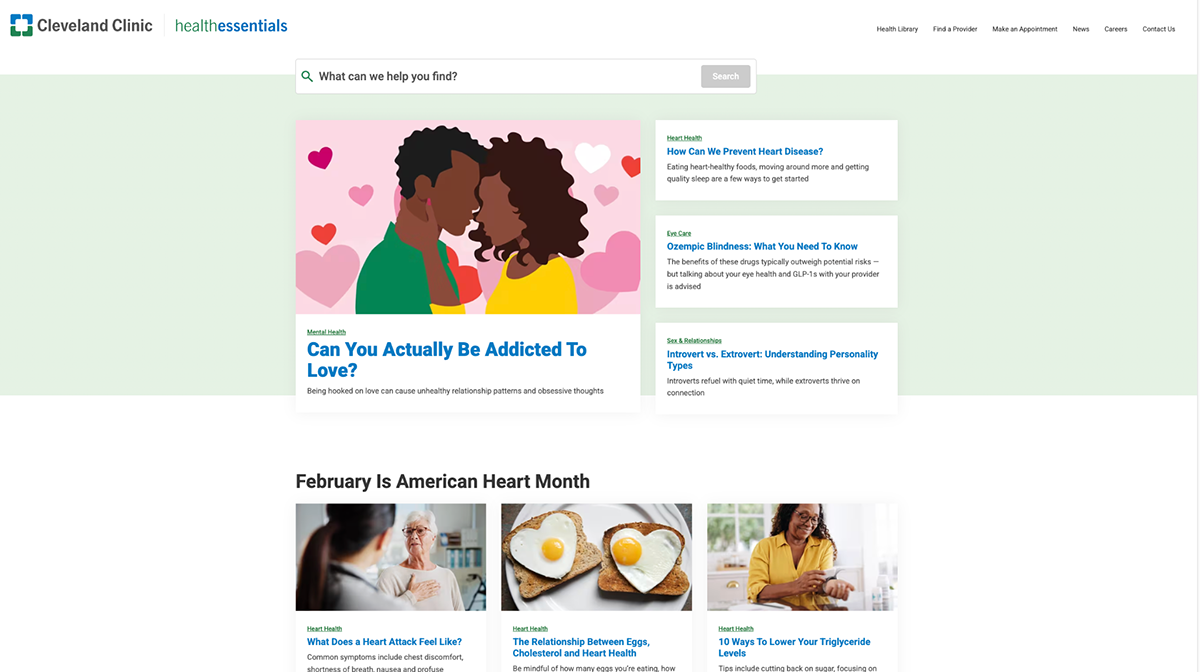
Cleveland Clinic has built their entire content strategy around this. Their Health Essentials blog features articles by their medical staff that address the questions patients actually ask across categories like mental, oral and heart health, sex and relationships, eye care, nutrition, wellness, orthopedics and more.
Each article specifies the physician or specialist who contributed to it. This boosts credibility while addressing real health issues. This content strategy helps them attract millions of visitors who are actively researching health topics.
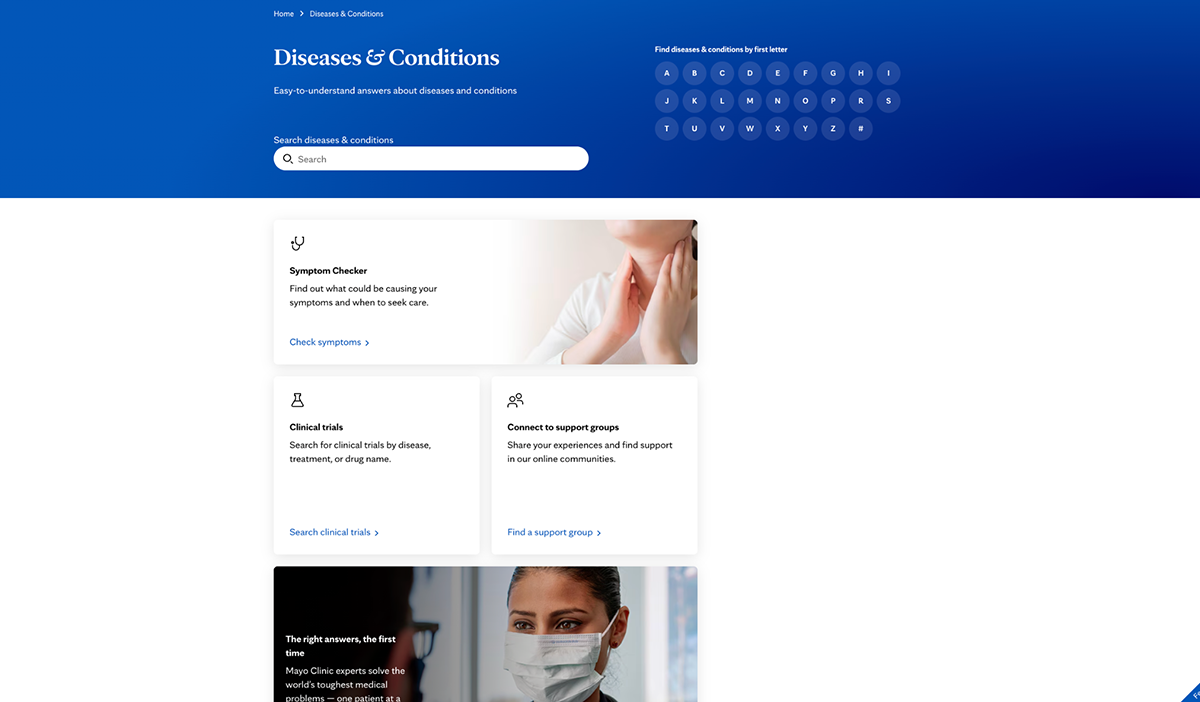
Then there's Mayo Clinic, which has basically built an entire content empire. They've published hundreds of expert-reviewed articles that rank for thousands of healthcare keywords, driving over 40 million monthly visitors to their website. This massive organic traffic then converts into appointment requests for their system.
Start by identifying the questions your patients are actually asking. Use tools like AnswerThePublic and Google's "People Also Ask" feature. But don't stop there; review your patient intake forms, listen to call center recordings, and talk to your front desk staff. The questions patients ask when they're nervous and confused are goldmines for your content marketing strategy.
Then create comprehensive guides that answer these questions, written or reviewed by qualified clinicians. Include credentials, citations, and clear next steps for patients who need care.
Video is one of the most effective marketing strategies out there. Up to 82% of marketers say video marketing has given them a good ROI.
In healthcare, video supports patient education, humanizes your brand, increases engagement, and drives click-through rates. Plus, you can make it accessible to a larger audience using captions, transcripts and audio descriptions.
Dr. Sandra Lee's YouTube channel (aka Dr. Pimple Popper) is a perfect example of how to leverage video content to build a personal brand and educate viewers.
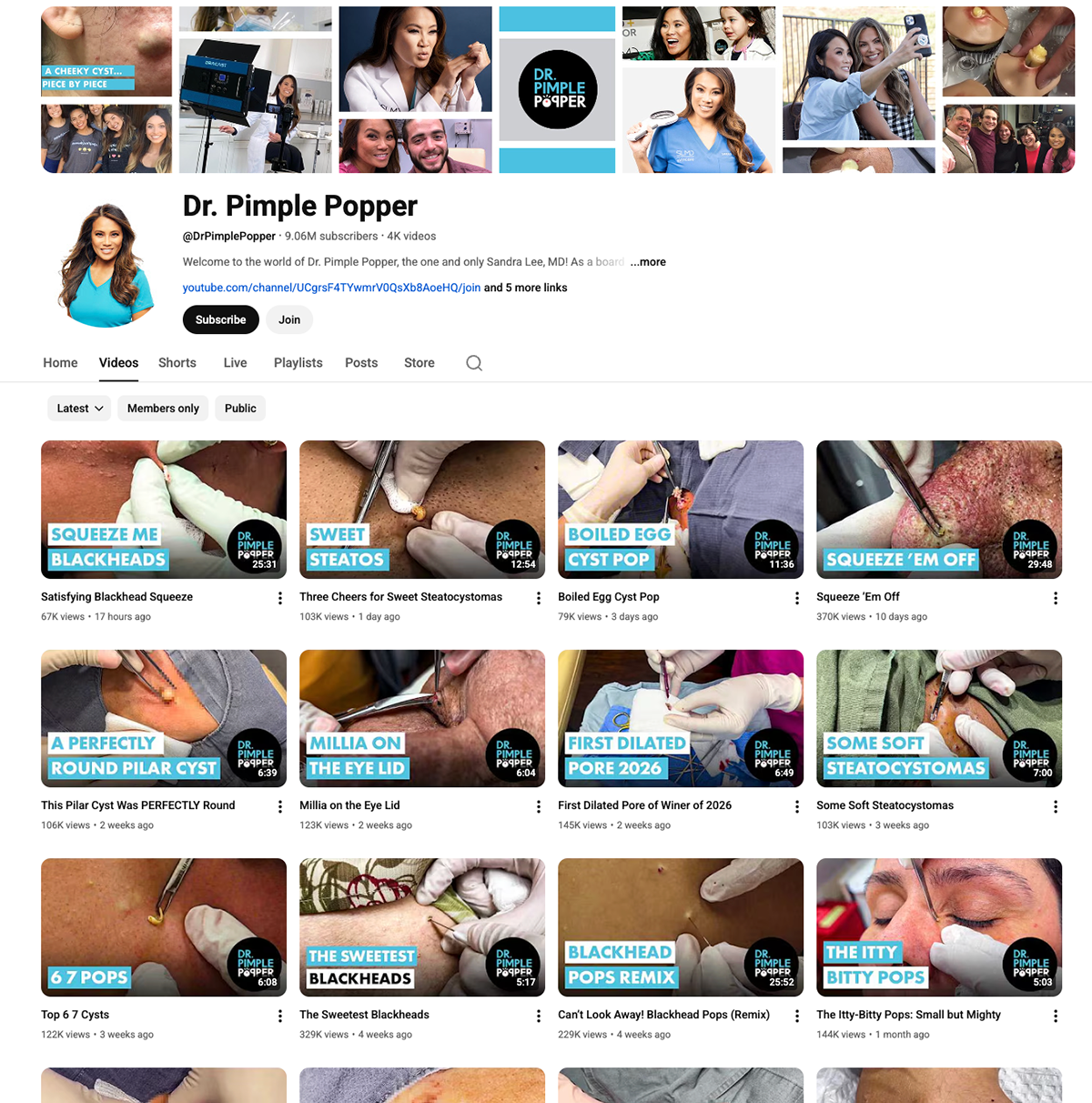
Her mix of educational and entertaining content attracts millions of views while normalizing dermatological procedures. She's built 9.06 million subscribers.
This video alone has 3.8 million views
Indiana University Health took a different approach with their "Meet Your Doctor" series. These 2-3 minute videos feature physicians introducing themselves, explaining their approach to care, and sharing what patients can expect. They've built a subscriber base of 24.1K focused on connecting patients with their providers before their first appointment.
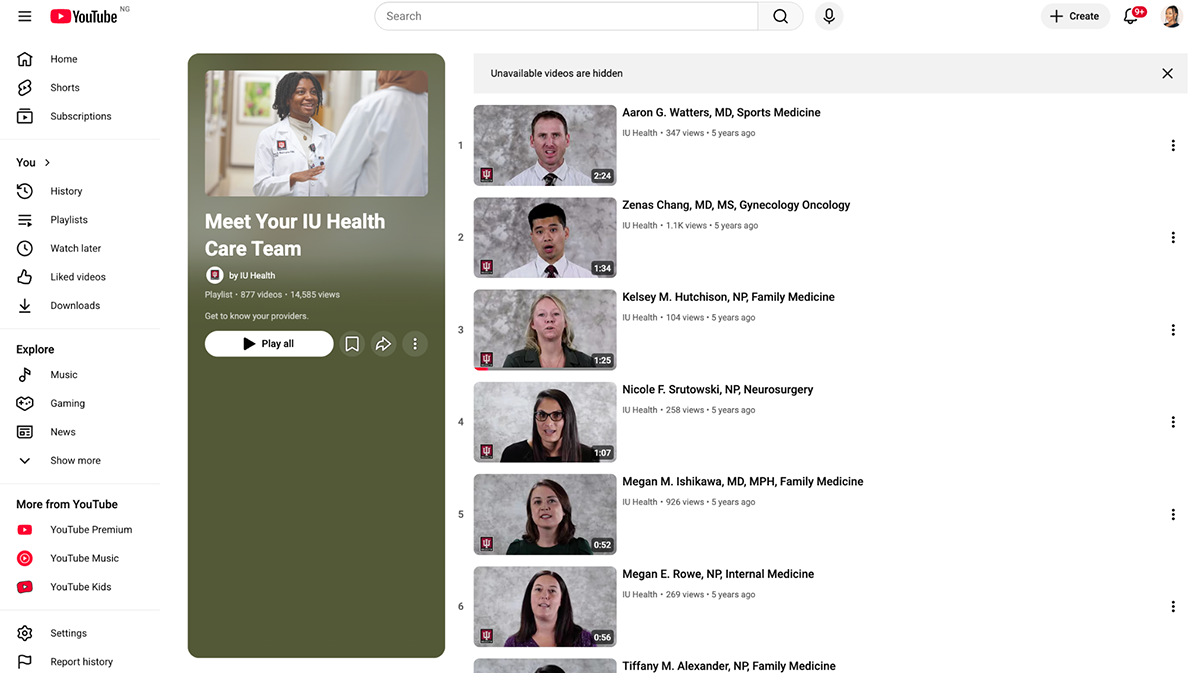
Here’s one example of such videos:
Children's hospitals have found particular success with "what to expect" videos. Children's Hospital of Philadelphia produces videos of common procedures, showing families exactly what to expect when their child comes in for surgery or treatment.
But provider introductions and procedure walkthroughs are just the beginning. Here are other video types that work incredibly well in healthcare marketing:
You don't need a Hollywood production budget to make this work. Record short introduction videos with your physicians, procedure explanations using Visme’s presentation recording tool. Or create animated explainer videos using our rich library of templates and design assets like 3D characters, scenes, effects, icons, and illustrations. Post these videos on YouTube, embed them on your website, and share them in email campaigns.
Most healthcare searches are local, and most patients start on Google.
Dominating local search results can be one of your highest-ROI strategies, especially if you're competing against large health systems in your market.
Here’s what the stats say about patients’ online behavior. According to Google, 77% of patients use search engines before booking an appointment. Plus, 72% of healthcare searches result in the user visiting a provider within 5 miles.
If you're not showing up in local search results, you're invisible to most potential patients in your community.
Conducting effective keyword research is essential for connecting with local search intent.
Use tools like Google Keyword Planner to identify local search phrases like "family doctor in [City]" or "urgent care near me." Then integrate these keywords naturally into your website content, service pages and blog posts to improve your relevance for local searches.
OrthoCarolina shows how powerful this can be for multi-location practices. With over 30 locations across North and South Carolina, they created neighborhood-specific content addressing local search queries like "orthopedic surgeon near me" and "sports medicine in Charlotte."
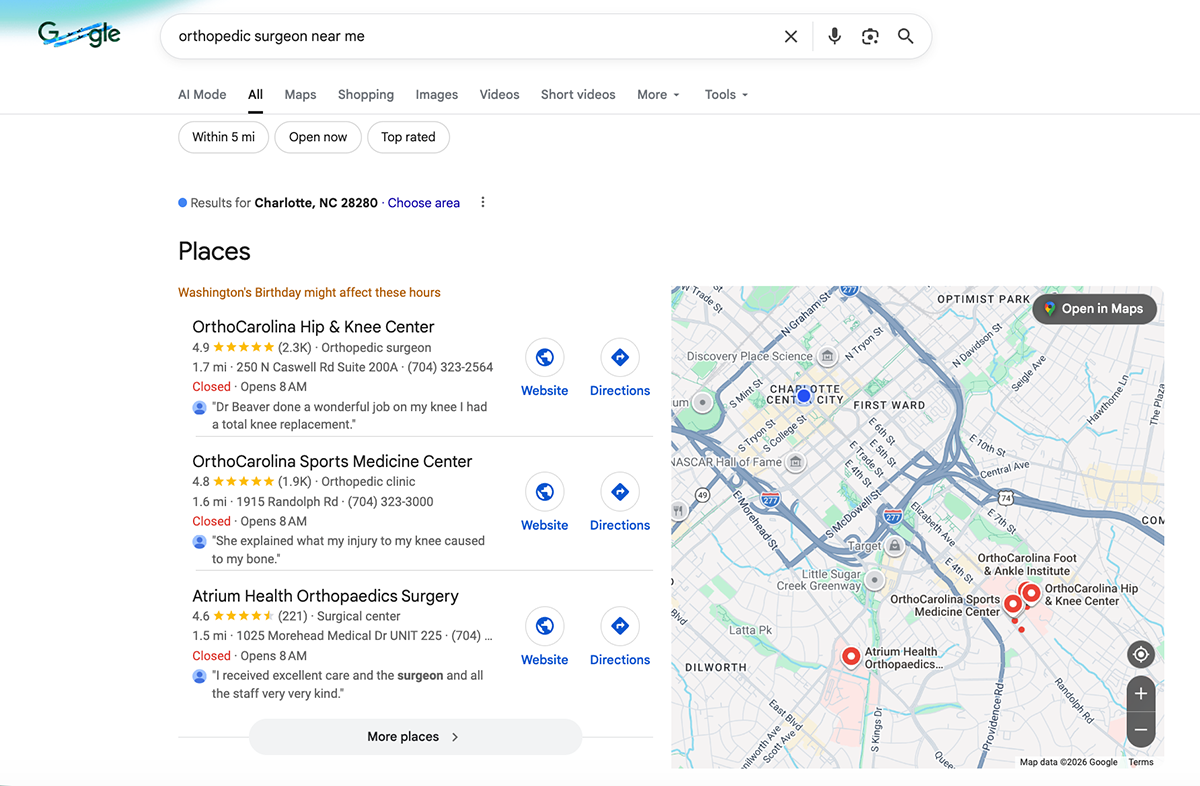
They also claimed and optimized every single physician's Google Business Profile. This strategy helped them capture a significant portion of the organic search traffic for orthopedic-related queries in their markets.
Here’s what Ivan Escott, Marketing expert and video producer, recommends
“As you optimize for SEO, remember that patients are constantly searching for providers online. Publish relevant, keyword-rich content, keep your website fast and mobile-friendly and optimize your Google Business Profile. Make sure your listings are complete with photos and up-to-date information. Encourage satisfied patients to leave reviews, as fresh, positive signals improve your visibility.”
Healthcare buying cycles are long, and patients need different information at different stages. Someone researching a healthcare condition today probably won't book an appointment for months.
Mapping the patient journey and creating automated email sequences for each stage can dramatically improve conversion rates while providing genuine value to patients who are researching their options.
The performance of automated email in healthcare is actually better than in most industries.
According to Mailerlite, automated email campaigns in health and fitness have an average open rate of 47.81% and click-to-open rate of 4.45%: both higher than the average across all industries.
Patients are actively seeking information and genuinely appreciate helpful, educational content delivered at the right time.
Start by mapping out your patient journey for each major service line. What questions do people have when they first learn about a condition? What concerns come up when they're comparing providers? What do they need to know before they're ready to schedule? Once you understand these stages: awareness, consideration, decision, and post-care, create email sequences that actually address what patients are going through.
Use a HIPAA-compliant email platform with a signed Business Associate Agreement, then set up behavioral triggers. For instance, when someone downloads a guide, visits specific pages, or schedules an appointment, that could automatically put them in the right sequence.
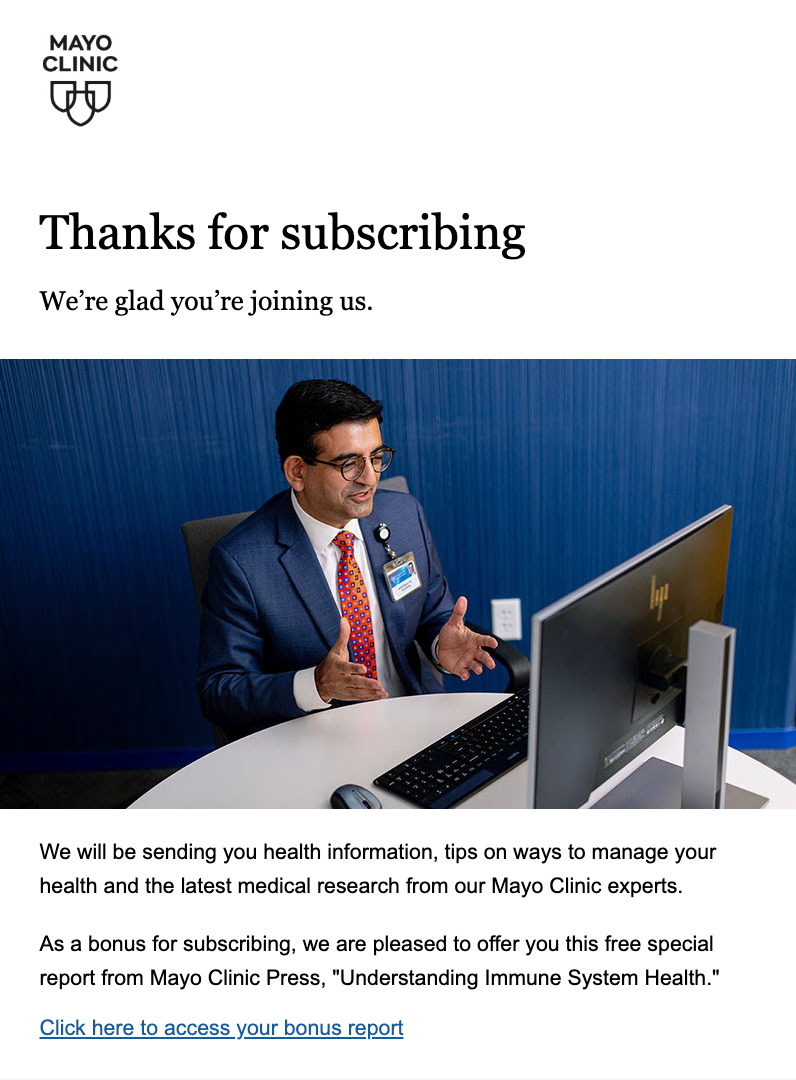
Educational Nurture Sequences: Establish your practice as a trusted health authority by sending regular, informative content that educates patients about relevant health topics. These emails help patients make better health decisions while keeping your practice top-of-mind between visits.
These sequences get triggered when someone downloads a specific resource or shows interest in a particular service. Each email builds on the previous one, gradually moving them from "just researching" to "ready to talk to someone."
Appointment Reminders and Follow-Ups Reduce no-shows with automated appointment reminders sent at strategic intervals (one week before, one day before, the morning of). After the appointment, send follow-up emails with care instructions, relevant resources, and next steps. This improves patient outcomes and keeps your organization top of mind.
Preventive Care Reminders: Automate reminders for annual check-ups, mammograms, colonoscopies, and other preventive screenings based on patient age and health history. These emails help patients stay on top of their health while driving recurring appointments for your practice.
Condition-Specific Education Series: For patients with chronic conditions like diabetes, heart disease, or asthma, create an ongoing educational series that provides management tips, lifestyle advice, and updates on new treatments. This positions you as a partner in their long-term health journey, not just a transactional service provider.
Service Promotion Campaigns: When launching new services or promoting seasonal offerings such as flu shots or sports physicals, targeted email campaigns to relevant patient segments can drive awareness and appointments. Keep these promotional, but still valuable, by including educational content alongside the offer.
Patient Reactivation Campaigns: Identify patients who haven't visited in 12-18 months and send re-engagement campaigns to them. Remind them you're here when they need care, share what's new at your practice, and make it easy to schedule. These campaigns can recover patients who simply forgot about you or assumed you wouldn't remember them.
For many healthcare organizations, physician referrals remain the most valuable source of new patients. In fact, Ruler Analytics reports that referrals have the highest conversion rate of 7.2%.
A strong referral network can be your most reliable channel for patient acquisition. It even has a lower cost per acquisition than paid advertising.
But building and maintaining these relationships takes more than just being a good clinician. You need an actual strategy.
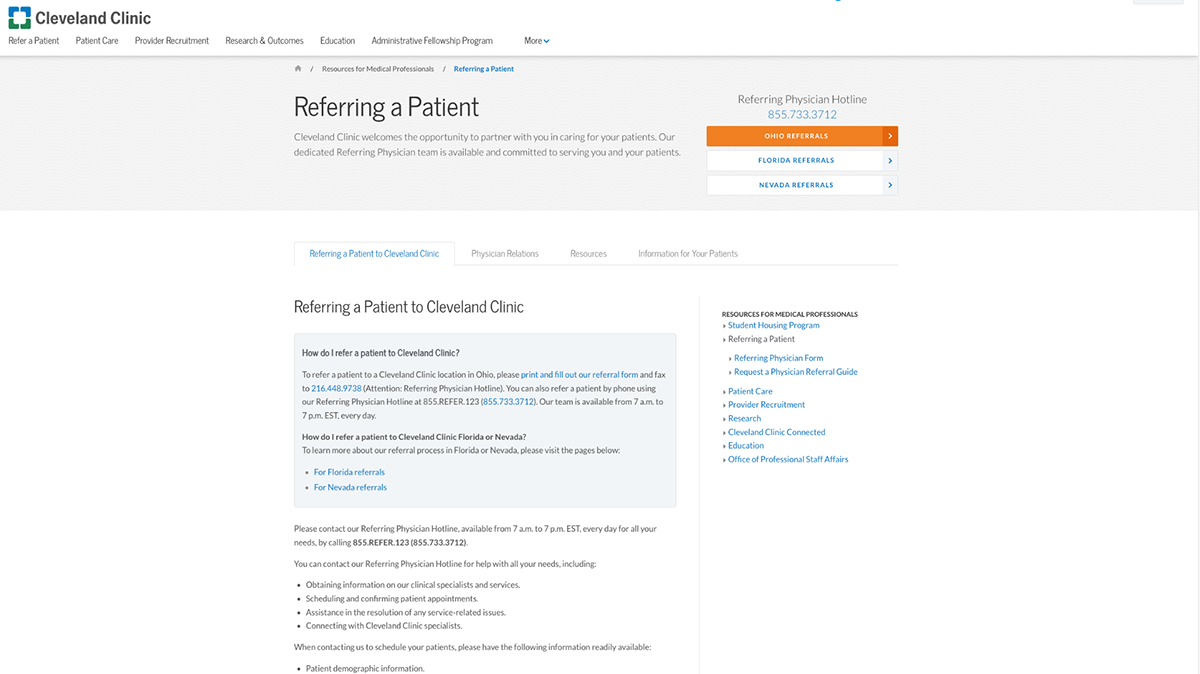
Cleveland Clinic shows what this looks like when done right. They've built a global reputation largely through their structured, relationship-driven referral model.
Instead of relying on casual networking or occasional lunch meetings, they created a dedicated physician referral program with:
Referring physicians can easily connect with specialists, submit cases digitally, and receive updates quickly. The whole system is built around making referrals as frictionless as possible.
So what does strategic physician referral marketing actually look like?
Now that you know which healthcare marketing techniques drive results, the next question is: what channels work best for healthcare marketing?
Let’s break down where you should focus your efforts.
Google processes more than 1 billion health-related searches every day, which works out to roughly 70,000 searches per minute. That is where most patients begin. They search symptoms, compare treatments and look up providers long before they book an appointment.
But search is no longer limited to Google and Bing. Patients are now asking health questions inside tools like ChatGPT and Perplexity. These platforms pull from authoritative web content and summarize it into direct answers, often citing the original sources. That means your content is not just competing for rankings. It is competing to be referenced by LLMs like ChatGPT, Perplexity, Gemini, Claude and so on.
Every expert article you publish should be optimized for both traditional search engines and AI-driven discovery. Clear headings, structured formatting, question-based subtopics and well-organized information help search engines understand your content. They also make it easier for large language models to extract and reference your material.
For high-value services such as elective procedures or specialty care, combine organic SEO with paid search. Organic builds long-term authority and trust. Paid search captures high-intent traffic when competition is strong.
When designing your content marketing strategy for healthcare, compliance should always be part of the conversation.
Although GA4 has IP anonymization enabled by default, Google Analytics is not HIPAA-compliant, and Google does not offer a Business Associate Agreement. Google explicitly states that HIPAA-regulated entities must not use Google Analytics in any way that exposes Protected Health Information.
This means:
If tracking could expose PHI, you need a healthcare-specific analytics solution that signs a BAA.
Your website is your central conversion hub. Every channel (search, social, email) should drive traffic here. It’s where patients explore your services, read educational content, download resources and book appointments.
Small improvements can boost traffic, dwell time and increase conversions. I’ve seen specialty clinics increase conversions simply by cleaning up their service pages, adding short educational videos and optimizing their forms.
You don’t even need to hire experts to pull that off. With Visme’s form builder, you can create personalized and animated forms proven to drive 2X more conversions. You can either design your registration or lead form from scratch or browse our library of templates for:
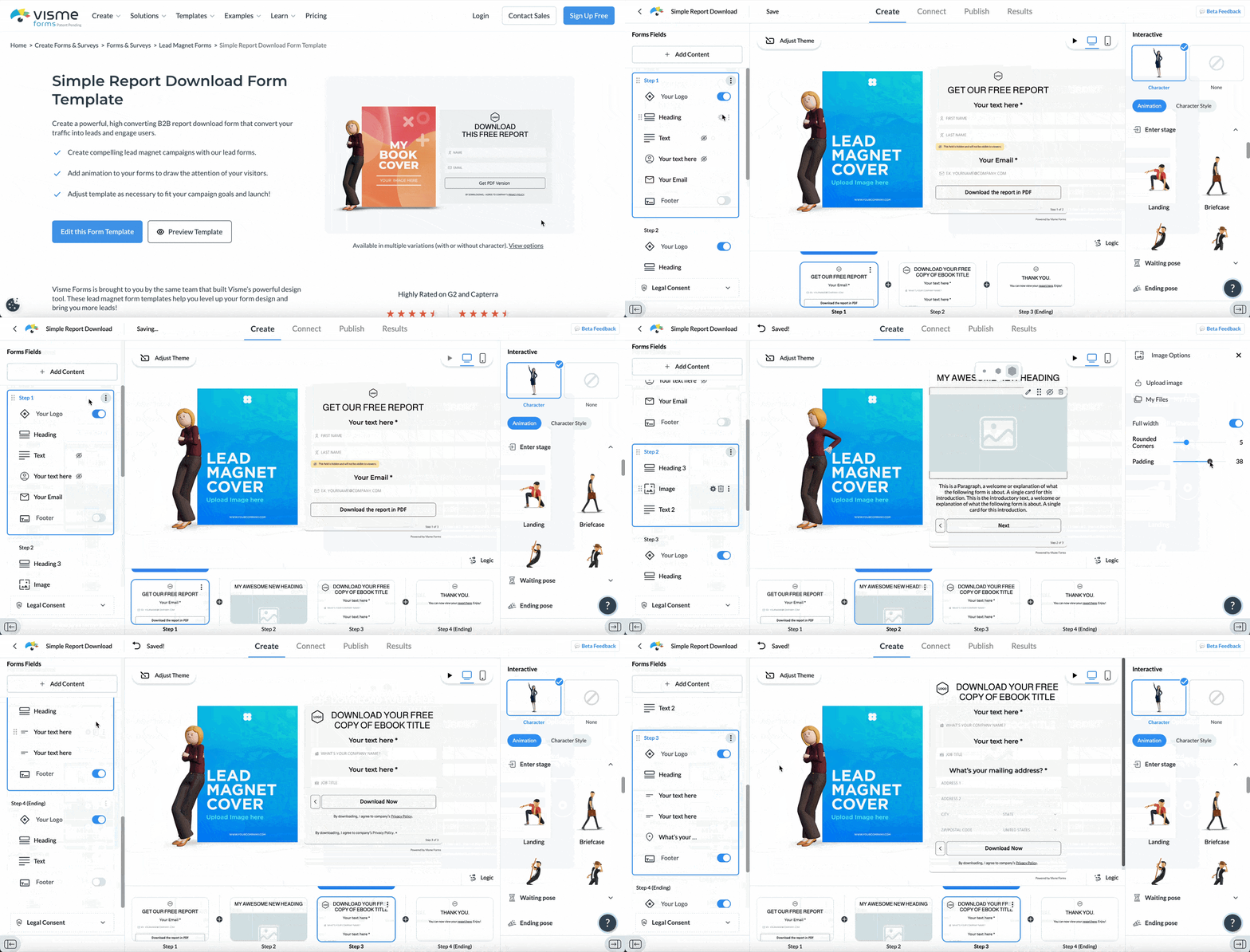
Customize your form fields to suit your needs: collect email addresses, names, phone numbers, or other information, add conditional logic, and customize the styles as needed. Pair them with downloadable resources and publish with a link, or QR code, or embed them on your website using auto-generated HTML.
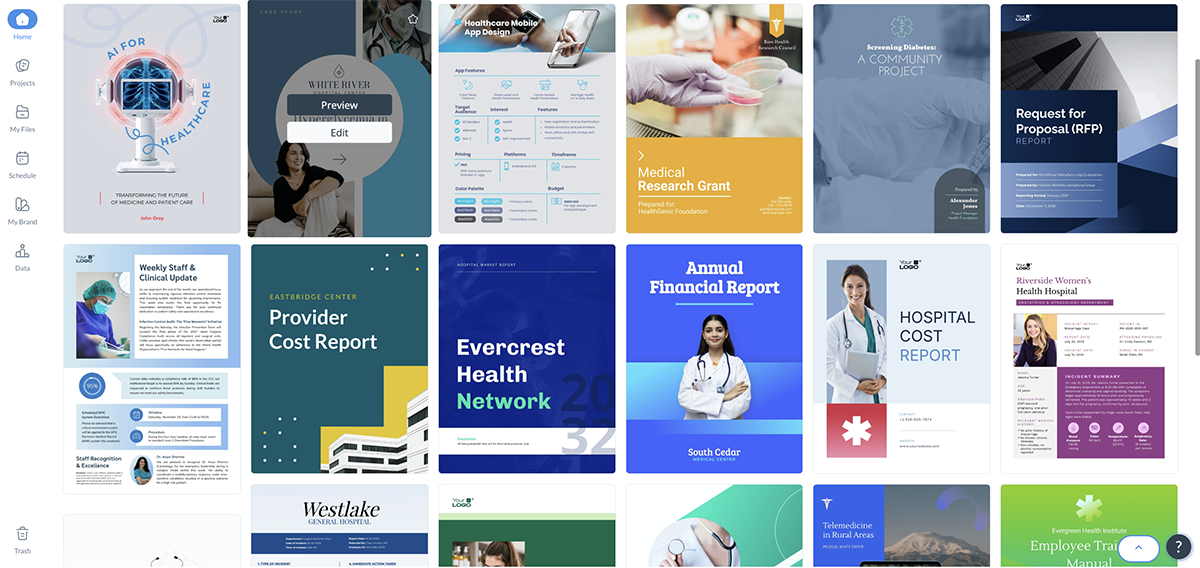
Beyond forms, Visme gives you the tools to create the actual assets that drive traffic. You’ll find templates for infographics, ebooks, case studies, web graphics, short videos, flyers, white papers, SBAR and other healthcare communication.
Add icons, stock photos and other visual elements to simplify complex healthcare information, and keep everything consistent with your brand using the Brand Wizard.
And if you’re racing against the clock or need a hand with design, Visme has an entire hub of AI tools, including an AI design generator, AI edit tools, an AI text generator, an AI image generator, AI text-to-speech generator.
Once the design is ready, download it in PDF, Image and PPTX formats. Or export or publish the final piece as HTML and place it directly on your landing page.
Once you share the content, our analytics tool lets you track who's actually opening it and how long they're engaging with it.
Of course, none of this matters if compliance is overlooked.
Make sure you implement proper consent management for cookies and tracking. Ensure that all forms that collect patient information use SSL encryption. If you're using chatbots or AI tools, verify they're HIPAA-compliant and have signed BAAs.
Healthcare email marketing is one of the few channels that help keep patients engaged and coming back without dealing with tricky algorithms.
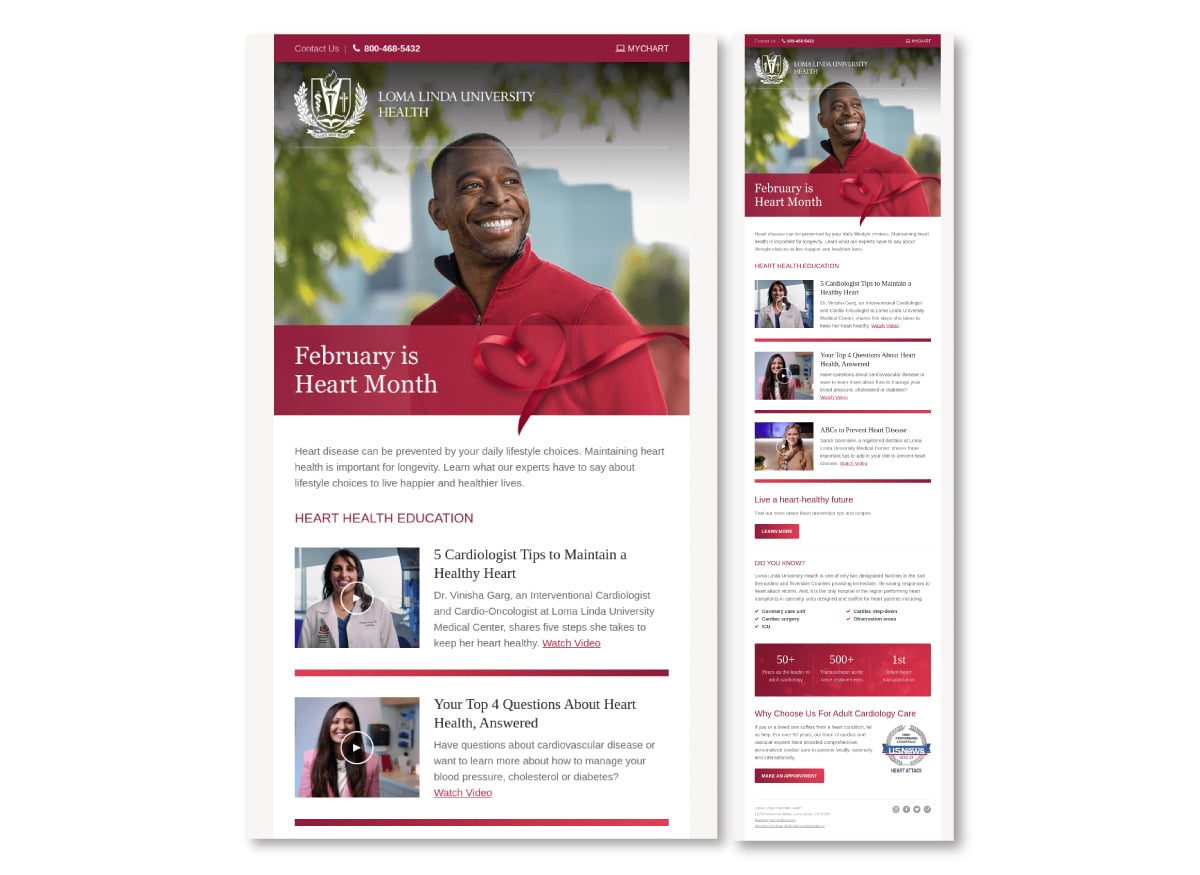
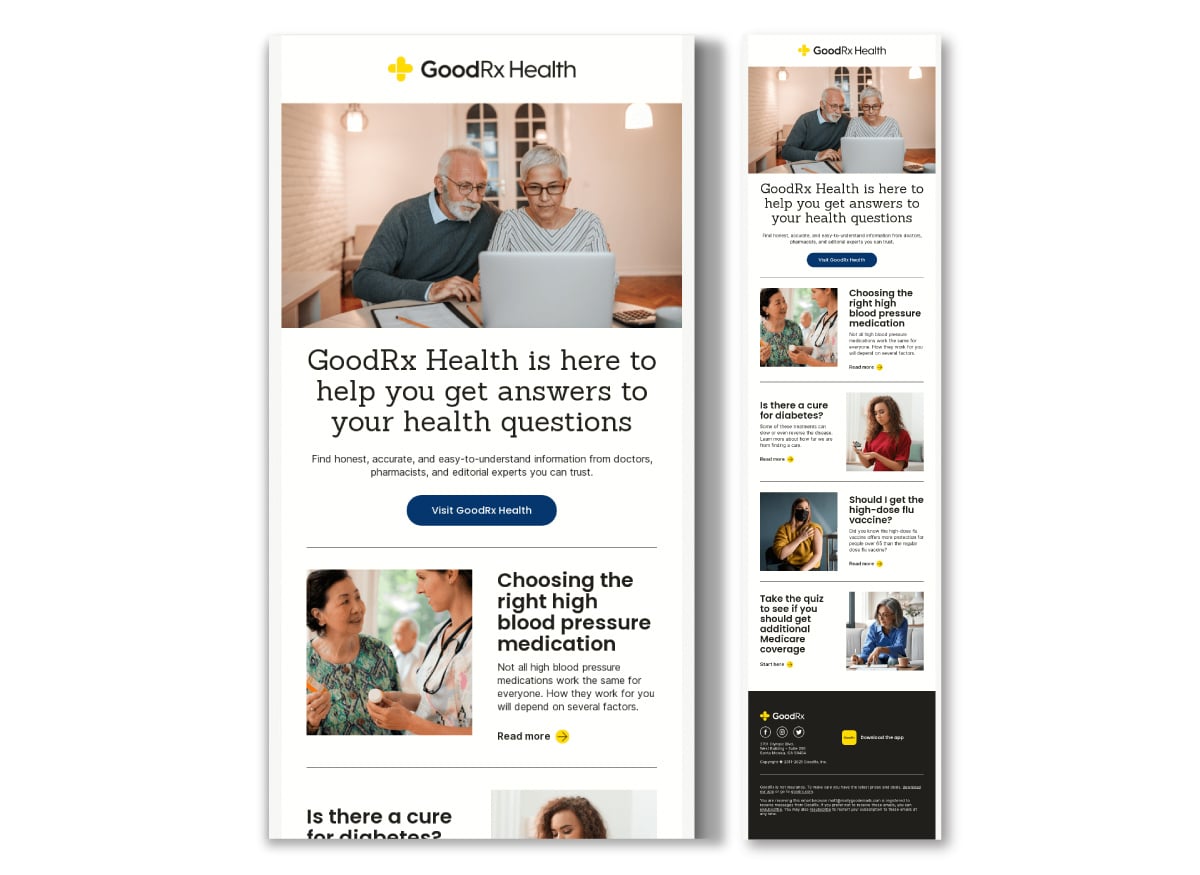
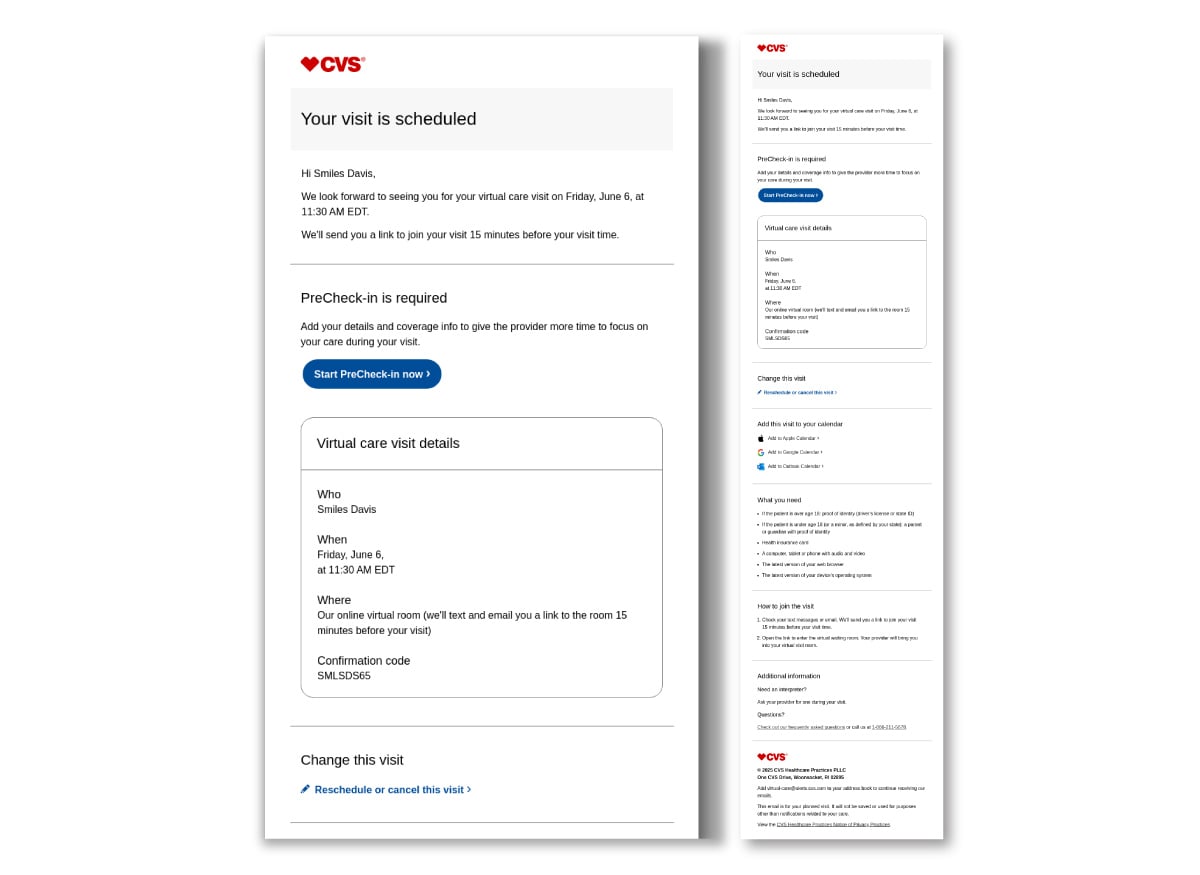
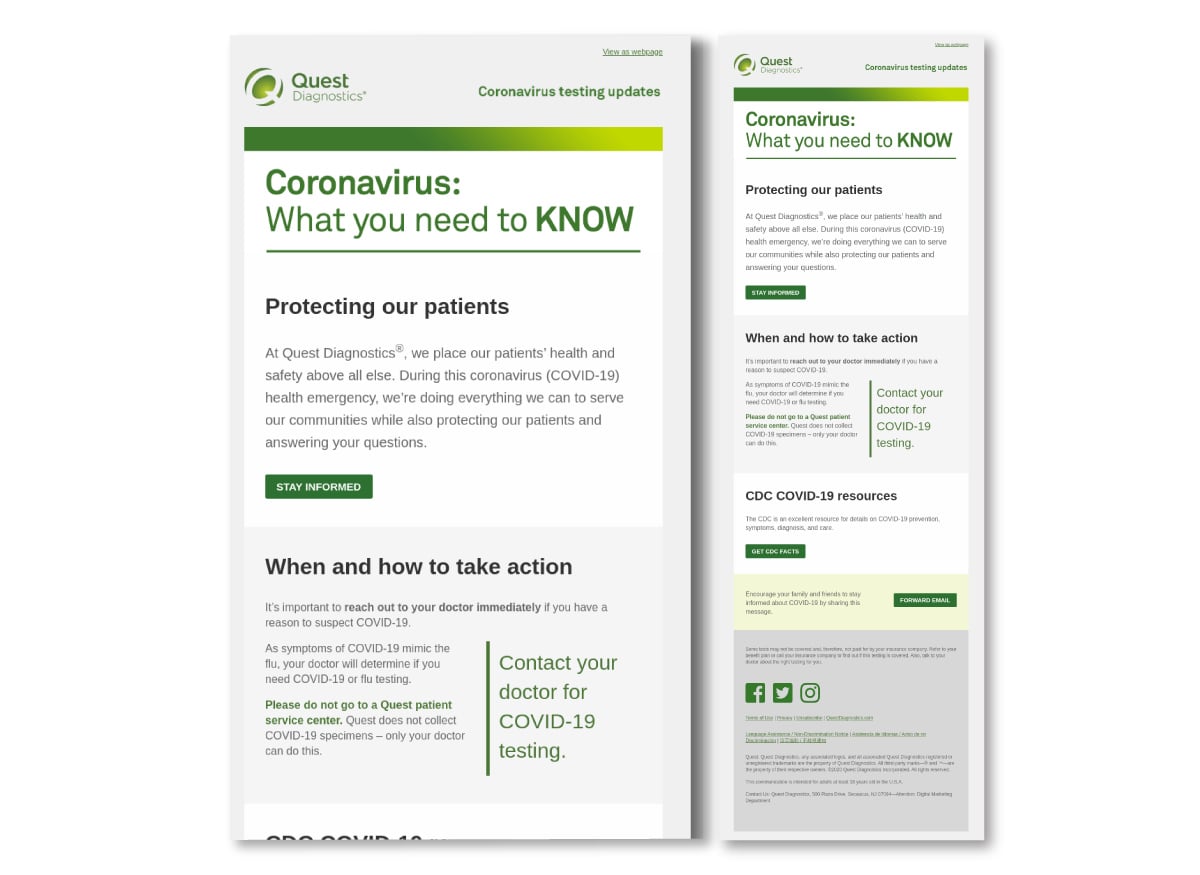
You can use email campaigns to educate patients who may take their time making decisions, send appointment reminders, gather feedback after visits or share health updates based on patients' interests.
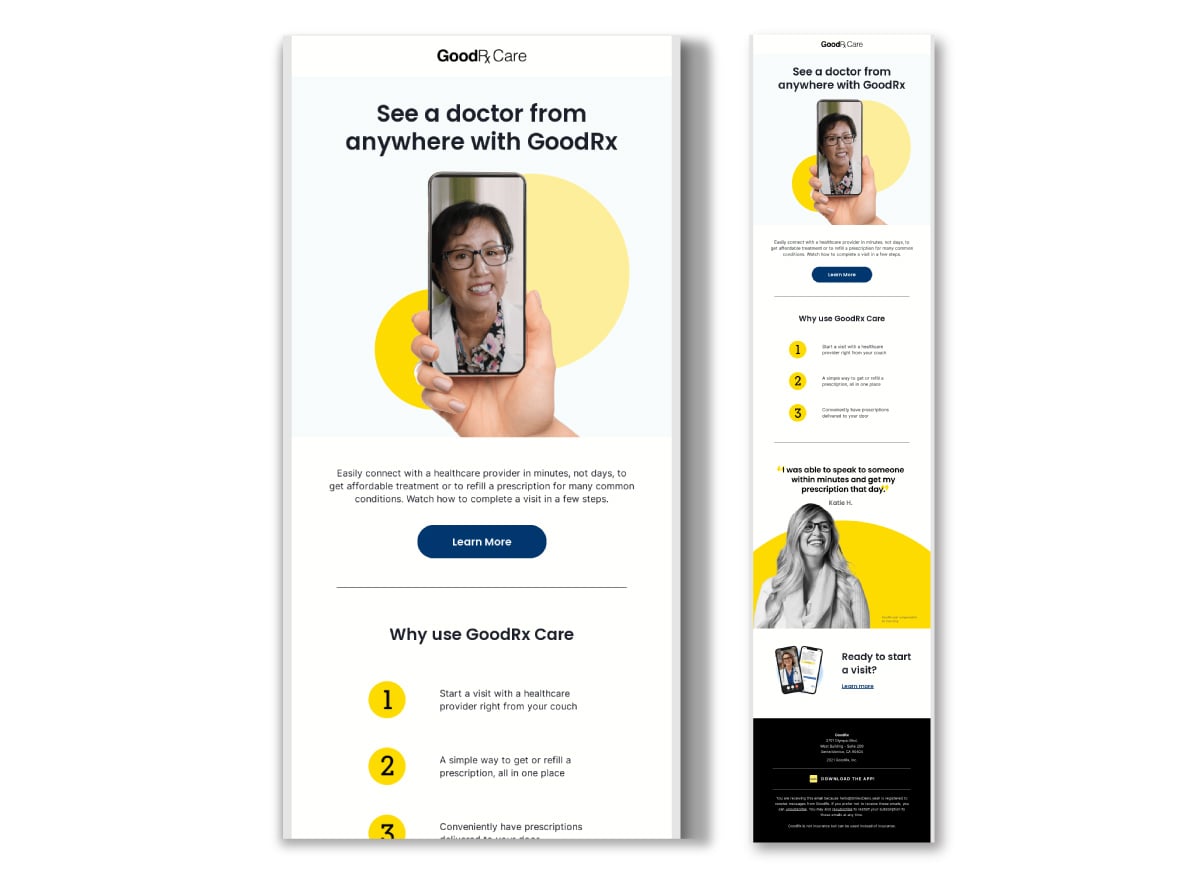
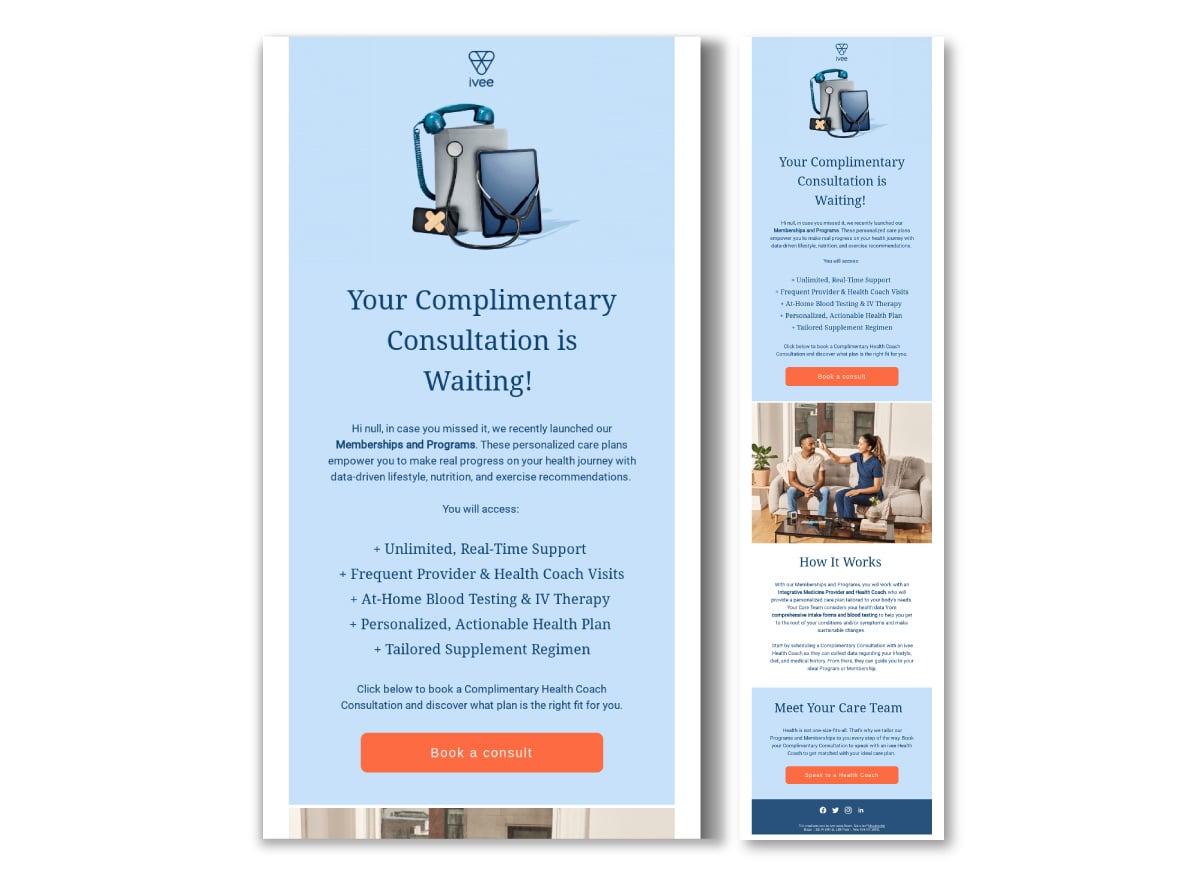
That said, building newsletters from scratch every month isn’t realistic for most teams. Visme offers a wide library of newsletter templates that you can customize to match your brand voice and visual style.

Collaboration is also a breeze. Multiple team members can review and edit the newsletter in real time. Or use the workflow tool to assign sections of the document to different teams and track their progress.
This is super handy when marketing, compliance, and medical staff all need to weigh in before anything gets sent out. To make your emails stand out, consider adding animations and interactive elements such as videos, clickable buttons, animated charts or hover effects.
Compliance, however, is non-negotiable. You need to work with a HIPAA-compliant email service provider that has a signed Business Associate Agreement. Platforms like Constant Contact and Salesforce Marketing Cloud offer HIPAA-ready options, but you’ll need to formally request and sign the BAA.
And remember, don't include any protected health information in your marketing emails without getting written consent first. Always provide an easy way to unsubscribe and to keep track of consent preferences.
Social platforms are ideal for sharing your video content, engaging with your community, and humanizing your brand.
LinkedIn works well for B2B healthcare marketing and physician recruitment.
Facebook and Instagram are strong for patient-facing content and community building.
TikTok is emerging as a powerful platform for health education, particularly for younger audiences who are comfortable getting medical information from short-form videos.
Cleveland Clinic's social media strategy focuses on educational content that positions its specialists as trusted experts. They share quick health tips, myth-busting videos, and behind-the-scenes content that humanizes their brand.
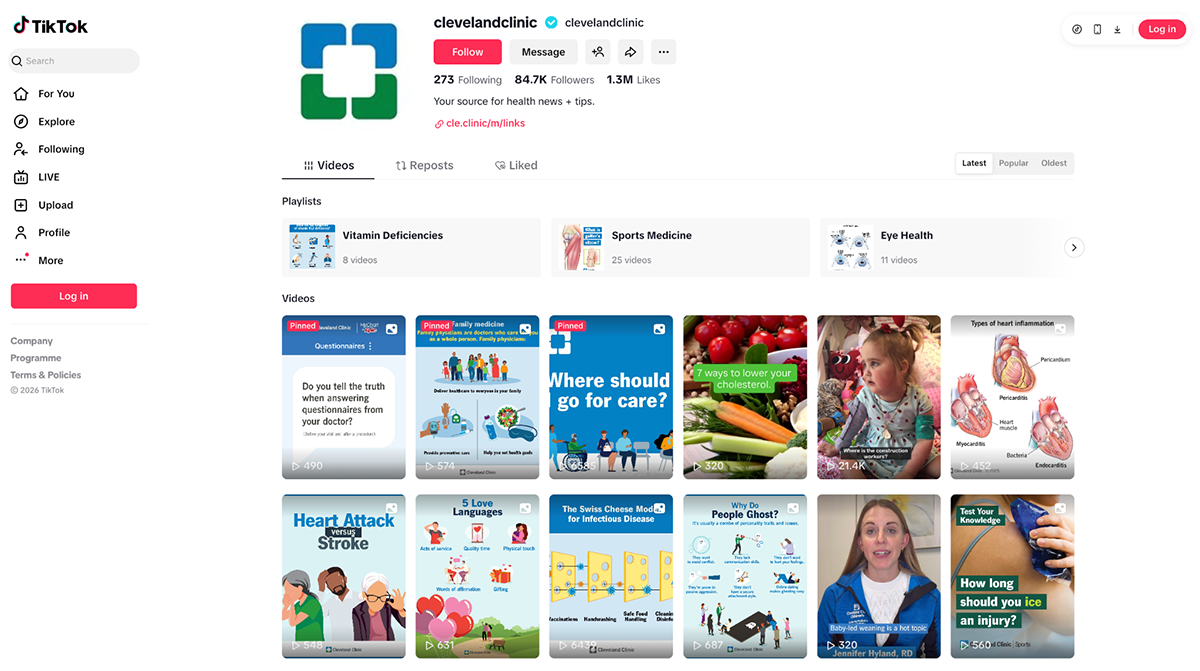
Their TikTok account has gained significant traction with younger audiences by making health education entertaining and accessible.
@clevelandclinic Did Mona Lisa have high cholesterol? See the signs in her famous portrait. #LoveYourHeart ♬ Things From The Past - Evgeny Grinko
In Visme, you can design short educational graphics, animated explainer slides or branded quote visuals using built-in icons, stock photos, video, charts, graphs and other visual assets. Then use our Social Media Scheduler to plan and schedule posts to Instagram, Facebook, LinkedIn, Slack and more.
Here's where you need to be extra careful with healthcare social media marketing.
Never respond to specific patient questions with medical advice on social media. This can create a patient-provider relationship with significant liability implications.
Don't use social media pixels (Facebook Pixel, LinkedIn Insight Tag) on pages with PHI or patient portal login pages without consulting your compliance team. Be extremely careful with patient testimonials and photos; always get explicit written consent and a signed HIPAA authorization form before featuring patients in social content.
YouTube is the second-largest search engine, with approximately 122 million daily active users. For healthcare organizations, it’s a serious discovery channel, search engine and education hub.
Patients use YouTube to understand procedures, compare treatments and hear directly from specialists before making decisions.
A good example is Infertility TV. The channel focuses entirely on fertility and IVF education, with many videos surpassing 100,000 views.
Topics are clearly organized around treatment types and patient questions, which helps the videos rank not only within YouTube but also in Google search results for IVF-related queries.
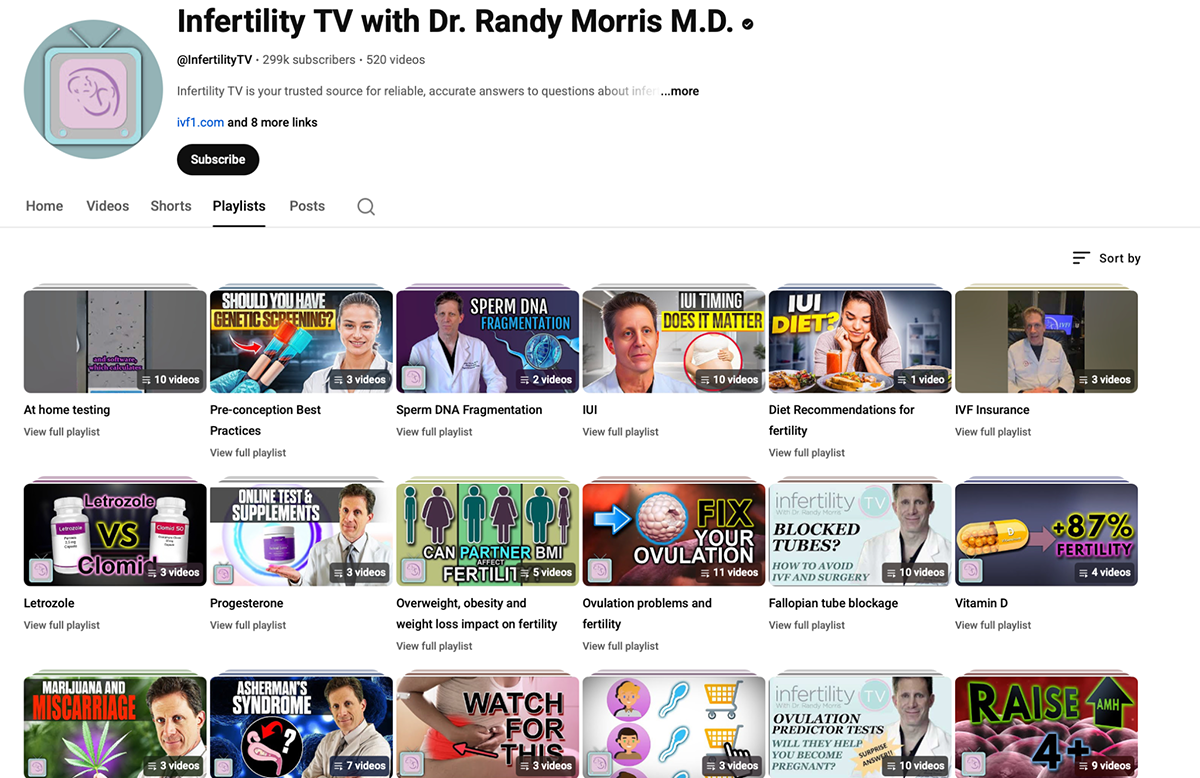
That dual visibility means patients can discover the content whether they search on Google or directly on YouTube.
If you’re building a healthcare YouTube strategy, structure your channel by specialty or service line. Optimize each video with detailed descriptions, timestamps and keyword-rich titles that reflect how patients actually search.
Educational videos frequently appear in Google’s video carousel, giving you two opportunities to capture attention on a single query.
Compliance, however, must be handled carefully. YouTube is owned by Google but you must sign a Business Associate Agreement if you expect the platform to be used in a way that could implicate protected health information.
Avoid including PHI in video titles, descriptions or tags. If featuring patients, obtain signed releases and HIPAA authorization forms. You should also consider moderating or disabling comments, since patient disclosures in comment sections can create unintended compliance risks.
Many patients search for providers directly on healthcare platforms like Zocdoc, Healthgrades, and Vitals before they ever visit your website. These sites allow patients to compare providers, read reviews and in many cases, book appointments.
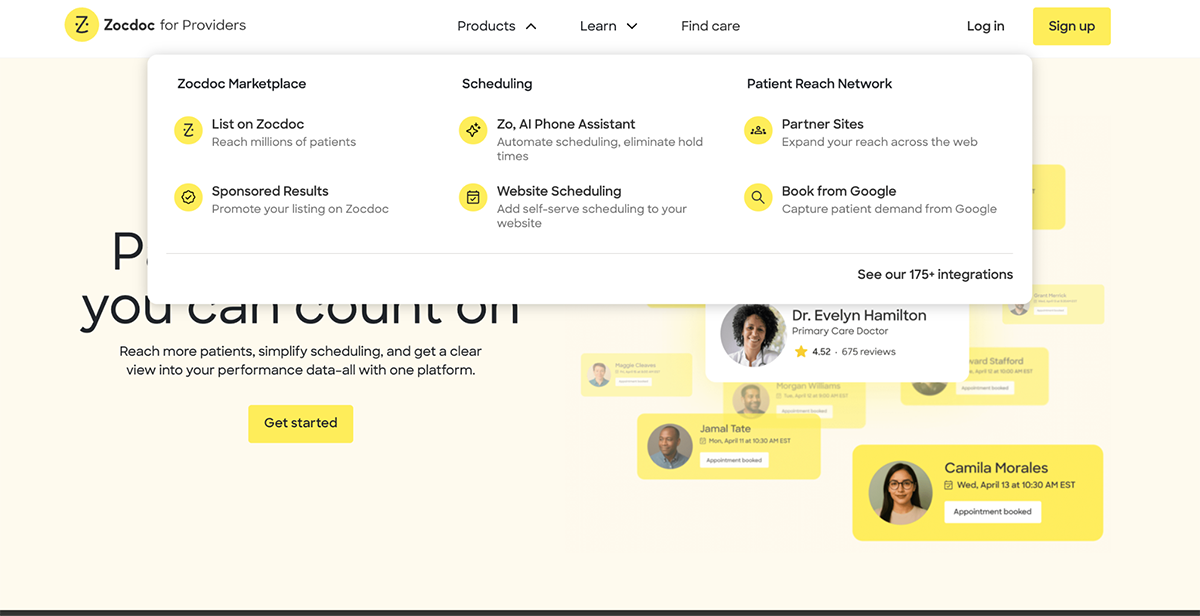
Claiming and optimizing your profiles can drive meaningful patient volume, particularly in competitive specialties. Complete provider bios, accurate service descriptions and professional images all influence whether a patient clicks or moves on.
That said, review each platform carefully. Understand how data is handled, how integrations with your scheduling system or EHR work and what security measures are in place. If appointments are passed directly into your systems, ensure those connections are properly secured and documented.
Some platforms charge per booked appointment. Run the numbers. Compare acquisition costs across channels and determine whether the patient lifetime value justifies the spend.
As a marketing expert and video producer, Ivan Escott puts it,
“After implementing your strategy, measure your marketing efforts. If you can’t measure it, you can’t improve it. Tracking performance helps you understand what’s working and where you’re wasting budget.”
Healthcare marketing continues to grow rapidly.
Here are three significant trends you should prepare for now to stay ahead of the curve.
The emergence of generative AI in search is changing how people find health information. Tools like ChatGPT, Perplexity, Gemini, and Copilot offer immediate answers, which reduces clicks to websites.
Google responded by introducing AI Overviews. Featured answers, AI summaries, and knowledge panels are now satisfying user intent directly on the results page.
The impact of zero-click searches is already being felt. Chartbeat data shows organic search traffic down 33% from November 2024 to November 2025. News publishers expect traffic to drop by 43% by 2029.
Healthcare content marketing isn’t immune to this shift.
Patients are already using AI tools to ask about their symptoms, treatment options, and provider recommendations, rather than clicking through to healthcare websites.
So what do you do about it? You need to expand beyond SEO (Search Engine Optimization) to include AEO (Answer Engine Optimization) and GEO (Generative Engine Optimization). This means structuring your content so AI tools can easily extract and cite your information.
The broader digital health market is expanding at a pace that's hard to ignore.
Forecasts suggest the market could approach $885 billion between 2025 and 2029, growing at more than 25% annually. This includes telemedicine, mobile health apps, remote monitoring and virtual care.
As patients increasingly interact with digital tools, healthcare marketing needs to lean into personalization, mobile experiences and tailored educational content to stay relevant.
Think about it: patients are already using apps to manage their medications, wearables to track their vitals, and telehealth platforms to see their doctors. Your marketing needs to meet them in these digital spaces with content that actually helps them. This means creating content flows and custom email series to send them the best resources for their health interests.
Patients no longer travel down a predictable marketing funnel. They move between channels in ways that would make your head spin. Someone might see your Instagram post, Google your practice, watch a YouTube video about the procedure, visit your website, leave, come back three weeks later from an email link, and then finally call to schedule.
Modern healthcare buyers expect consistent experiences across all those touchpoints.
Your social media messaging should align with what's on your website, which should match what's in your emails.
Marketing strategies must coordinate across platforms rather than operating in isolated silos.
This requires tools and systems that track patient journeys across channels. You need to know how someone found you, what content they engaged with, and what finally convinced them to take action. Without this visibility, you're operating in the dark.
Privacy concerns are reshaping how healthcare marketers collect and use data.
As rules are getting stricter globally (like HIPAA in the US, PHIPA in Canada, and GDPR in Europe), being open and ethical about how you collect data is now a selling point, not just something you have to do to follow the law.
At the same time, patients are more aware of their data rights and more selective about who they trust. They generally tilt towards providers that are transparent about what data is collected, why it’s needed, and how it will be used
So you have to get explicit consent before tracking their behavior, give patients control over their data, and make it easy for them to opt out. Healthcare brands that treat privacy as a core part of the patient experience will build stronger, longer-term trust.
Healthcare marketing is the process of using strategic communication and marketing tactics to attract patients, build relationships with referring providers, and promote healthcare services, products, or organizations. It includes digital marketing, content creation, advertising, public relations, and community outreach; all while adhering to HIPAA regulations and healthcare-specific compliance requirements.
Healthcare marketing comes with these perks
Healthcare marketers measure success using a wide range of metrics including
The specific metrics depend on campaign goals and organizational priorities.
The 5 P’s of healthcare marketing are
The 5 key marketing strategies for healthcare are
Each strategy should be adapted for healthcare’s unique compliance and trust requirements.
The 7 P’s of marketing in healthcare are:
These expanded Ps recognize that healthcare is a service industry where patient experience and trust are critical.
Agencies integrate CRM with healthcare marketing by implementing HIPAA-compliant CRM systems like Salesforce Health Cloud or Microsoft Dynamics 365.
They track patient interactions across touchpoints to create unified profiles, segment audiences for targeted campaigns, automate email nurture sequences based on patient journey stage, and measure campaign ROI by connecting marketing activities to appointments and revenue.
Product strategy in healthcare marketing involves identifying which services to promote based on market demand, competitive positioning, and organizational capabilities. It includes developing new service lines that meet patient needs, positioning existing services to differentiate from competitors, and creating service packages that appeal to specific patient segments.
Marketing communicates the value proposition of these healthcare products through content, advertising, and patient education that highlights outcomes, expertiseand patient experience.
HIPAA-compliant healthcare marketing tools are available from vendors that will sign Business Associate Agreements (BAAs).
Key categories include email marketing platforms like Mailchimp, Constant Contact, and Salesforce Marketing Cloud; analytics tools like Freshpaint and Able; CRM systems like Salesforce Health Cloud and HubSpot (with BAA); video platforms like Vimeo and Wistia; and content creation tools like Visme.
Before you start, always check that a vendor will sign a BAA and keep proof of all your agreements. Consult your legal and IT security teams before selecting any marketing technology.
That’s a wrap! We’ve covered the strategies that really make a difference in healthcare marketing to the best channels to invest in and the trends you should get ready for.
Now it’s time to execute. And that starts with equipping your team with the right tools to create content that attracts clients, builds trust and scales business growth.
Visme has everything you need to create professional marketing materials, training content, presentations, social media graphics, lead magnets, hospital communication materials and more.
You’ll get access to millions of design assets, an extensive library of healthcare templates, AI tools, brand management, workflow and team collaboration features that keep everyone aligned.
Ready to revamp your healthcare marketing content? Connect with sales to discover how Visme can help you create engaging, compliant marketing content.

Design visual brand experiences for your business whether you are a seasoned designer or a total novice.
Try Visme for free