





Visme Forms Walkthrough: Build a Form That Routes, Syncs and Converts

![Due Diligence Reports: A Complete Guide [+ Templates]](https://visme.co/blog/wp-content/uploads/2023/10/Due-Diligence-Reports-A-Comprehensive-Guide-with-Actionable-Templates-Header.jpg)
A due diligence report provides a structured summary that assesses business viability, uncovers liabilities and confirms asset value that investors and decision-makers use to mitigate risk and validate transactions.
But what exactly goes into a due diligence report and how can you create your own?
In this practical guide, we cover everything you need to know about creating due diligence reports. We provide you with customizable due diligence templates, AI feature suggestions and tools that will save you time.
Before you jump in, check out this video where we share the five-step framework for creating a due diligence report.
A due diligence report is a comprehensive business document that summarizes the findings of a thorough investigation. These investigations could be about an individual, a business, an organization or an investment opportunity.
In the report, the analyst highlights what actions were taken, the information uncovered and recommendations for how to proceed.
Due diligence is often carried out before events like investments, partnerships, mergers and acquisitions, business exit and other transactions.
The goal is to assess the overall health of the potential investment or acquisition target.
With this insight, investors can make informed decisions about whether to proceed with a transaction, negotiate terms, adjust the deal structure or walk away.
The need for thorough due diligence is well supported by the data. A rigorous analysis of 40,000 acquisitions over 40 years by NYU professors Baruch Lev and Feng Gu found that 70–75% of acquisitions fail to achieve their objectives due to several factors, including poor due diligence processes.
Plus, according to Bain's 2020 Global Corporate M&A Report, nearly 60% of executives attribute deal failure directly to poor due diligence that failed to identify critical issues before signing.
That’s why due diligence reports help investors and businesses to:
Here's an example of a due diligence report:
There are three primary categories of due diligence: legal, financial and commercial.
Although each focuses on different areas, they shouldn’t be conducted in isolation.
That’s because the due diligence conducted in one area can shed light on—or even enhance—the audit in other areas. Adopting a holistic approach to due diligence results in more thorough and accurate assessments.
Here's how the three types break down at a glance.
| Type | What It Covers | Primary Goal | Common Users |
|---|---|---|---|
| Legal Due Diligence | Contracts, litigation history, intellectual property, compliance, data privacy and corporate structure | Identify legal risks and liabilities that could affect the deal | Lawyers, legal advisors and M&A teams |
| Financial Due Diligence | Financial statements, tax records, revenue breakdown, audit reports and capital expenditures | Validate financial health and confirm the accuracy of reported figures | Financial analysts, investors and private equity firms |
| Commercial Due Diligence | Market size, customer data, competitive landscape, sales strategy and growth opportunities | Evaluate market viability and commercial potential | Investors, private equity firms and strategy consultants |
Legal due diligence examines the legal affairs and obligations of a transaction. Conducting due diligence in law helps you identify potential legal issues that could impact the transaction, the target company, or the acquirer.
A legal due diligence report typically includes the following information:
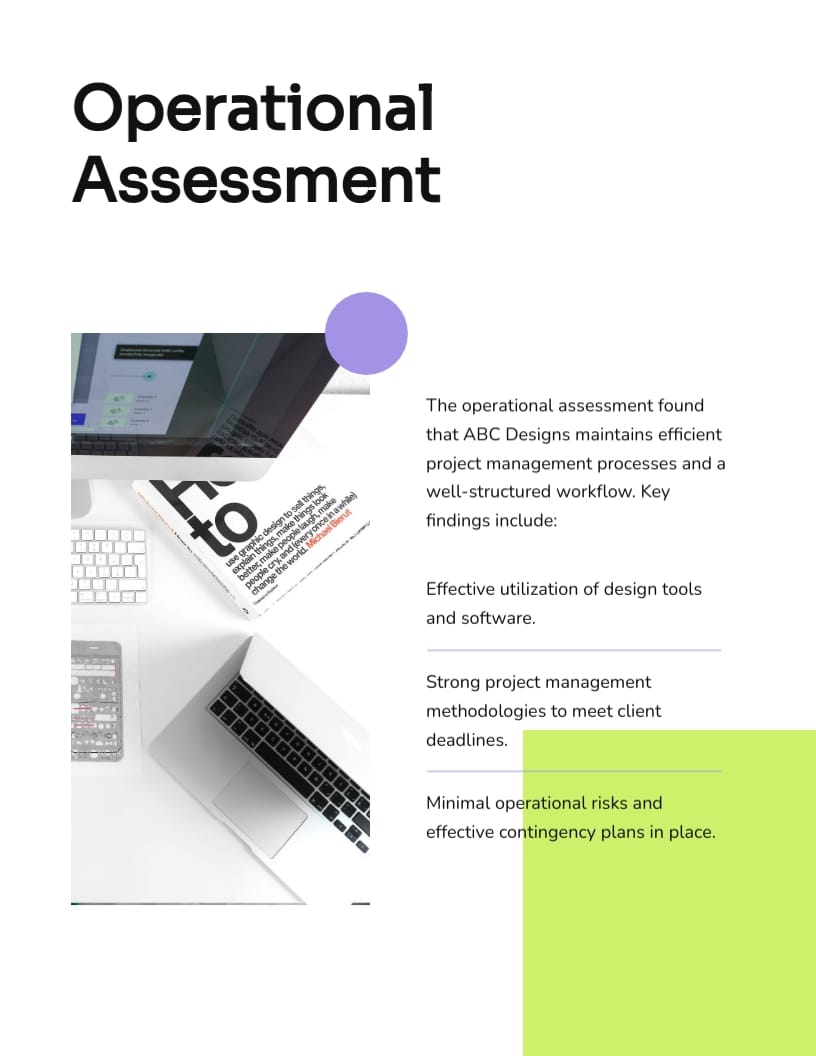
Here’s an example of a due diligence report you can customize
Financial due diligence examines the financial health and viability of the business.
The main focus is on verifying the financial information provided and evaluating the business's performance.
Here are the key components typically involved in financial due diligence:
Here's another example of a financial due diligence report you can use.
Commercial due diligence primarily evaluates the market and commercial aspects of the business or investment opportunity. It helps investors, private equity firms and companies assess the commercial and market viability of the target company.
Below are the key components of the commercial due diligence report.
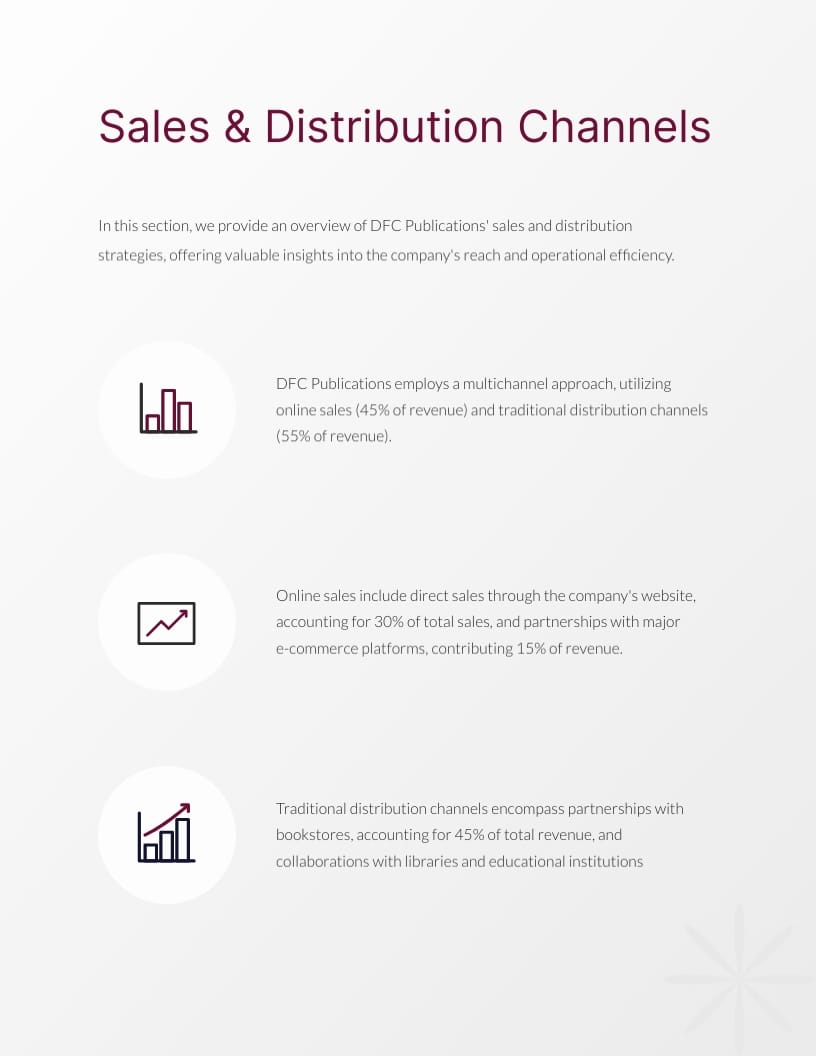
Here's a commercial due diligence report example to help you create your own.
As we’ve mentioned, there are different types of due diligence reports. Therefore, the details in your report will vary depending on the type of due diligence and purpose.
But to give you an idea of what to include, here is a breakdown of a general due diligence report format.
Made with Visme Infographic Maker
A due diligence report starts with an executive summary.
If you're looking for how to make a due diligence report, begin with an executive summary.
This section provides a high-level overview of the main findings, including any major red flags or areas of concern.
Remember to keep your due diligence executive summary concise and easy to understand for readers who may not have the time or expertise to delve into the full report.
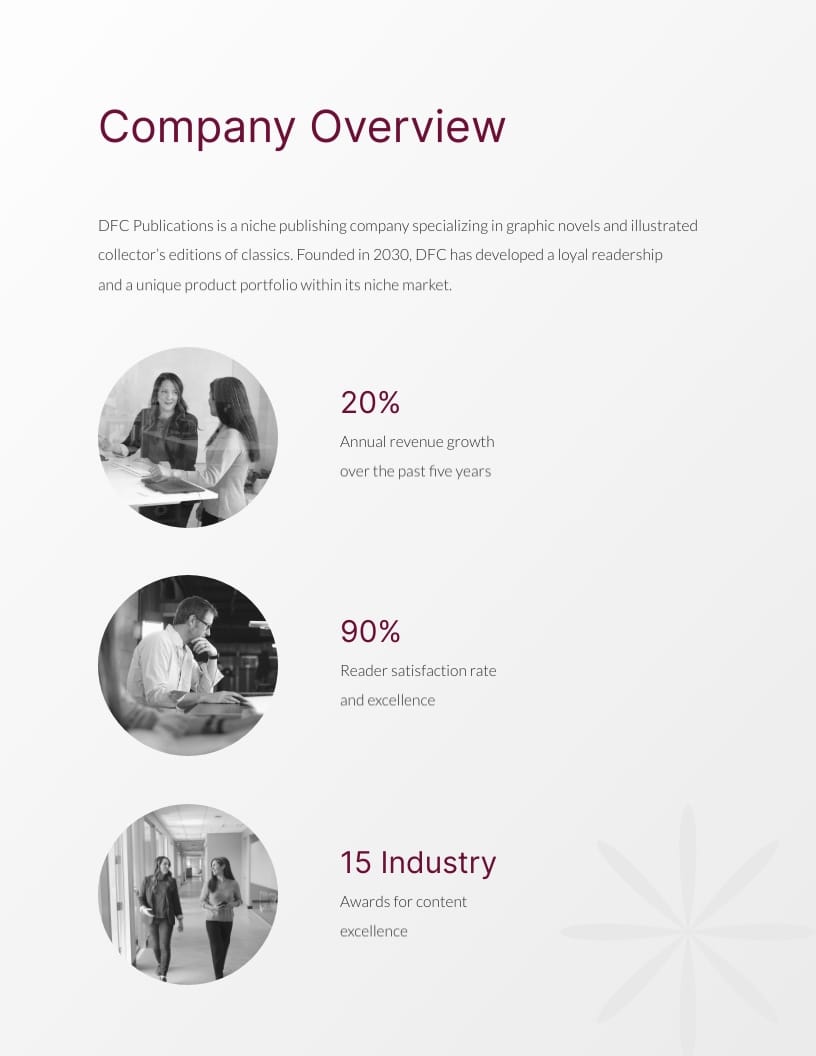
The overview is a brief description of the company, including its history, mission statement, products or services offered, target markets and any notable achievements or milestones.
The report must also clearly state why the company's due diligence is being conducted and what its objectives are. For instance, is it for a merger and acquisition deal, partnership, investment opportunity, etc.?
The financial due diligence section is a detailed analysis of the company's financial performance, including income statements, balance sheets, cash flow statements and other relevant financial metrics.
Discuss any trends, patterns, or anomalies observed in the financial data and provide insights into the company's financial health and stability. Provide information on tax returns, compliance status and outstanding tax liabilities.
Share a breakdown of revenue sources and major cost components, including past and planned capital expenditures. If applicable, include reports from external auditors.
When editing the template, incorporate data visualizations to organize and visualize figures. Visme has 50+ customizable charts, graphs, maps and widgets to help you present complex data in a simple format.
And if you have data from external sources, import data from Google Sheets, MS Excel, Google Analytics, and SurveyMonkey into your chart.
Watch this video to see how it works.
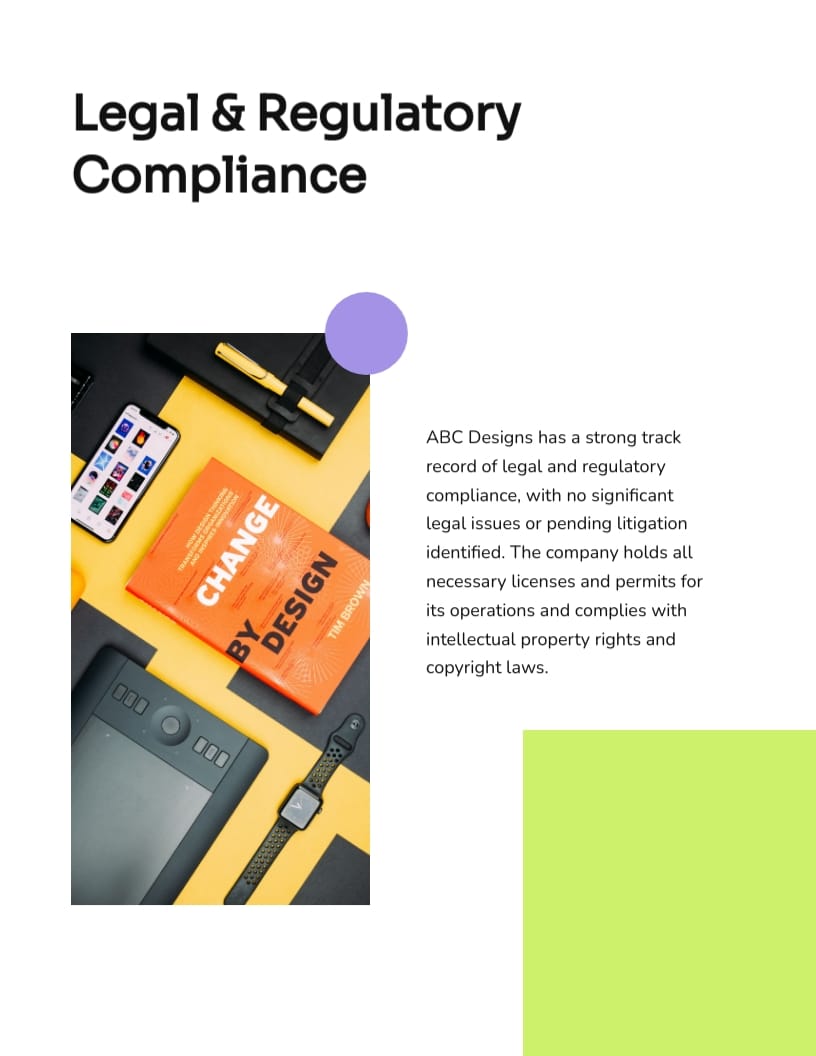
For the legal section, investigate the company's compliance with relevant laws and regulations, including environmental, labor and tax laws. Identify potential legal risks or liabilities and discuss measures the company can take to mitigate them.
A due diligence report also assesses the efficiency and effectiveness of the company's operations, including its production processes, supply chain management, logistics and distribution networks.
Share information about the company’s organizational structure, key management personnel and employee demographics. Evaluate the company's management practices, such as employee training programs, performance monitoring and succession planning.
Provide an overview of the company’s IT infrastructure, including technology systems, software applications and cybersecurity measures. Share insights into key customer relationships, supplier agreements and customer concentration analysis.
Regarding their market position, evaluate the company's marketing and sales strategies, including product positioning, pricing, advertising and customer acquisition tactics. Discuss the competitive landscape, market trends and potential growth opportunities.
Also, dig deep into customer segmentation, customer satisfaction data and customer retention rates. This will help you identify opportunities for growth and expansion.
The report should also evaluate the company's commitment to environmental sustainability and social responsibility. Examine its policies and practices regarding energy consumption, waste management, diversity, equity and inclusion.
Another highly important section is risk analysis. Identify the company's potential operational, financial, reputational and strategic risks. Describe the risk management policies and procedures. Then, provide insurance coverage details, including property, liability and key person insurance.
Does the company have a positive outlook for the future? Assess the company's prospects for future growth and expansion. Identify opportunities for organic growth, partnerships, collaborations, or acquisitions and offer recommendations for maximizing growth potential.
Finally, the report closes with a summary of the key findings and recommendations from the due diligence process.
Discuss the identified risks and their potential impact on the investment or acquisition. Outline actionable steps the company can take to address identified issues, capitalize on opportunities and achieve long-term success.
To complete the report, include relevant documents that support the report's findings. These may include contracts, legal filings, financial models, market research reports, and other relevant data.
If you need help creating your next due diligence report, use the AI document generator to quickly produce it, complete with content and branding. You can customize the report using our intuitive editor.
The best way to understand what good due diligence looks like, and what happens when it breaks down, is to see it in action.
The following three examples come from some of the most closely documented deals in recent corporate history. Two (Microsoft/LinkedIn and Salesforce/Slack) demonstrate that a thorough investigation lays the groundwork for successful outcomes. And one (HP/Autonomy) shines a light on what happens when the warnings are there but nobody acts on them.
When Microsoft acquired LinkedIn for $26.2 billion in 2016, the process started months before the deal was announced. LinkedIn's board assembled a Transactions Committee, engaged financial and legal advisors, and ran a competitive process that included parallel discussions with Salesforce and Google. Microsoft gained access to an electronic data room and completed formal due diligence before the board voted unanimously to approve.
According to LinkedIn's definitive proxy statement filed with the SEC, the deal closed at $196 per share, a 49.5% premium over LinkedIn's closing price the day before the announcement. Microsoft expected the acquisition to become accretive to non-GAAP earnings per share within two years of closing.
Here’s a visual timeline of the process and how it happened:
Made with Visme Infographic Maker
Not every due diligence process is about uncovering problems. A lot of the time, it’s more about proving that what is assumed is actually true. For example, when Salesforce acquired Slack for $27.7 billion in 2021, the two companies already had an established commercial relationship.
In this case, due diligence served a different purpose: confirming that Salesforce's view of Slack was actually true. Essentially, Slack already had: a loyal user base, a scalable product and a clear fit with Salesforce's existing CRM ecosystem.
According to Slack's proxy statement filed with the SEC, Slack's board formed an independent strategic transaction committee and engaged Qatalyst Partners as financial advisor before entering formal negotiations.
The official deal announcement from Salesforce confirmed the acquisition closed on July 21, 2021, with Slack continuing to operate as the foundation of Salesforce's digital workplace strategy.
In 2011, HP (Hewlett-Packard) paid $11.1 billion to acquire Autonomy, a UK-based enterprise software company. It was a high-profile deal that unraveled fast. Less than a year after the close, HP announced it was writing off $8.8 billion in Autonomy's value, meaning the business was worth a fraction of what HP had paid for it.
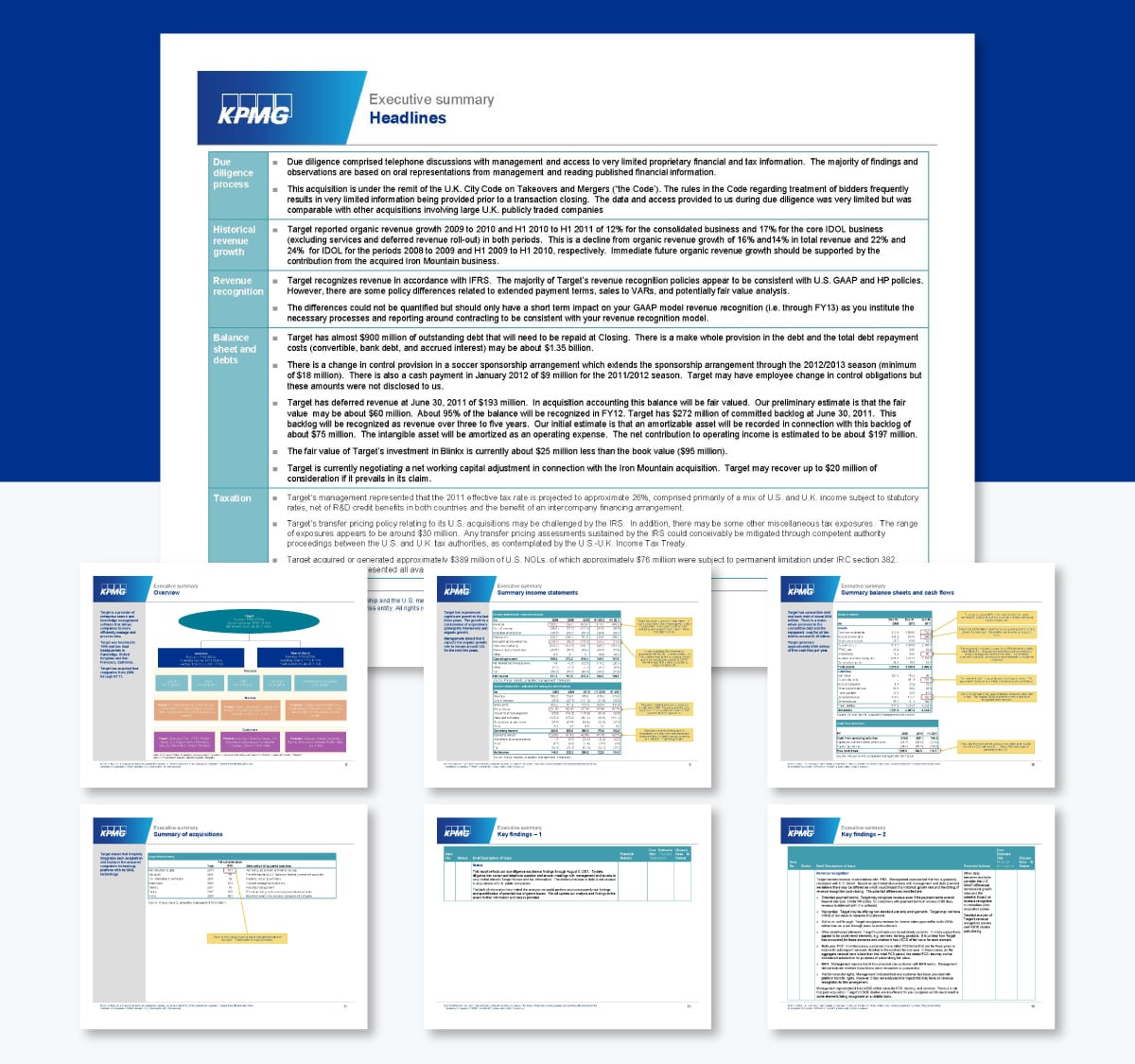
Was the due diligence conducted? Yes! KPMG produced a 44-page draft report dated August 9, 2011, just nine days before the deal was announced. But if you look closely, the warnings are visible throughout it.
KPMG stated directly that the work was based on "oral representations from management and reading published financial information" rather than independent verification. The tax due diligence section noted the scope was "severely limited by the inadequate access to information and personnel," and that all requests to speak with Autonomy's external tax advisors were denied.
On revenue recognition, KPMG flagged multiple potential issues that "could not be quantified." Regarding organic growth, it raised concerns that Autonomy's figures relied heavily on acquisitions and that management refused to provide customer data to back up their claims.
Several sections closed with a variation of the same line: that findings would be updated once further data was provided. That update never came because the deal closed before a final report was ever delivered.
After the debacle, a fraud trial followed. HP's former CFO, Cathie Lesjak, admitted under oath that she had received KPMG's preliminary findings and never read them. As The Register reported directly from the High Court proceedings, her barrister asked: "I think you didn't, yourself, read a due diligence report prepared by KPMG, is that right?" Her reply: "I did not."
CEO Leo Apotheker also testified that he hadn't read the due diligence reports, saying it wasn't his job to do so.
The KPMG report is now publicly available because HP was forced to release it during the trial. You can read it and see the red flags yourself. The lesson here isn't that HP skipped due diligence. It's that the work was done, the warnings were there, but nobody in a position to act on them ever read the document.
It's a pattern Professor Baruch Lev, co-author of The M&A Failure Trap and one of the most cited researchers in corporate finance, has seen repeatedly. "Many companies don't pay much attention to due diligence," he shared in the Business Talk podcast. "A good due diligence would have identified it. Pay the right resources for people to investigate the target company very carefully."
Here is the full PDF draft of KPMG's due diligence report.
Let’s take a look at how to write a due diligence report that ticks all the right boxes. We will cover:
This first step marks the beginning of your investigation.
What are the questions you need answers to? What are the areas and aspects you want to examine? Financial records, legal documents, operational processes, and potential risks? How will you gather the information you need in the next step?
Answering these questions helps you define a scope that keeps you and your team focused on the most important aspects of the exercise. It also reduces the likelihood that important tasks and actions will slip through the cracks.
Collect all relevant information and documentation related to the business or investment opportunity.
Why is this important? It gives you in-depth insights into the entity or company you’re investigating.
Depending on the type of due diligence report, you can collect data from financial statements, contracts, customer/supplier lists, organizational charts, regulatory compliance records and more.
You’ll find this information in public records, regulatory filings, industry reports and other relevant sources. You may also need to interview the management, employees, suppliers, customers or other stakeholders.
The next step is to review the information you’ve gathered. Then perform a thorough analysis to identify patterns and insights that can guide your due diligence.
Analyze the company's financial performance, annual operating reports, market position, competitive landscape, legal and regulatory compliance, operational efficiency, and any potential liabilities or risks.
Avoid examining the data from a narrow perspective. Instead, consider multiple viewpoints or angles, identify trends and outliers and consider any potential limitations or biases.
Doing an in-depth analysis will help you:
Your report must clearly present the findings, analysis, and recommendations in a structured format. Include an executive summary, detailed sections for each aspect of the due diligence and a conclusion with recommendations.
Refer to the section above to see what your report should include.
If you need help creating a report in a fraction of the time, Visme’s AI report writer can help you get started fast. All you need is the right prompt, one that describes what you want to create, plus an upload of your written content.
The AI will ask you to choose a design style, and after a couple of minutes, it will generate a beautiful report draft. You can further customize the report design with Visme’s intuitive drag-and-drop editor and endless design features.
Based on the analysis, provide recommendations for the stakeholders making the decision. This could include any areas of concern, potential opportunities for improvement or risks that need to be addressed.
The due diligence process can be broken down into eight distinct steps.
Although the importance of each stage may vary depending on the type of due diligence, these are the key steps that are generally involved. Use this process as a starting point and adjust as needed.
If you're unsure about how to write a due diligence report, use this process as a starting point.
We also share practical due diligence tools and templates to support you through the process.
Made with Visme Infographic Maker
Before launching a full-scale due diligence, the investor or buyer defines the objectives. They also outline which aspects of the target company must be investigated. This step is also called initial due diligence.
The investor conducts an initial review of the company's publicly available information from sources like:
This preliminary audit helps buyers assess the company's overall attractiveness and identify potential red flags.
Xapian, an AI due diligence tool, can accelerate this stage by automatically aggregating and analyzing public data on the target company. This frees the due diligence team to focus on deeper investigation by saving time on manual research.
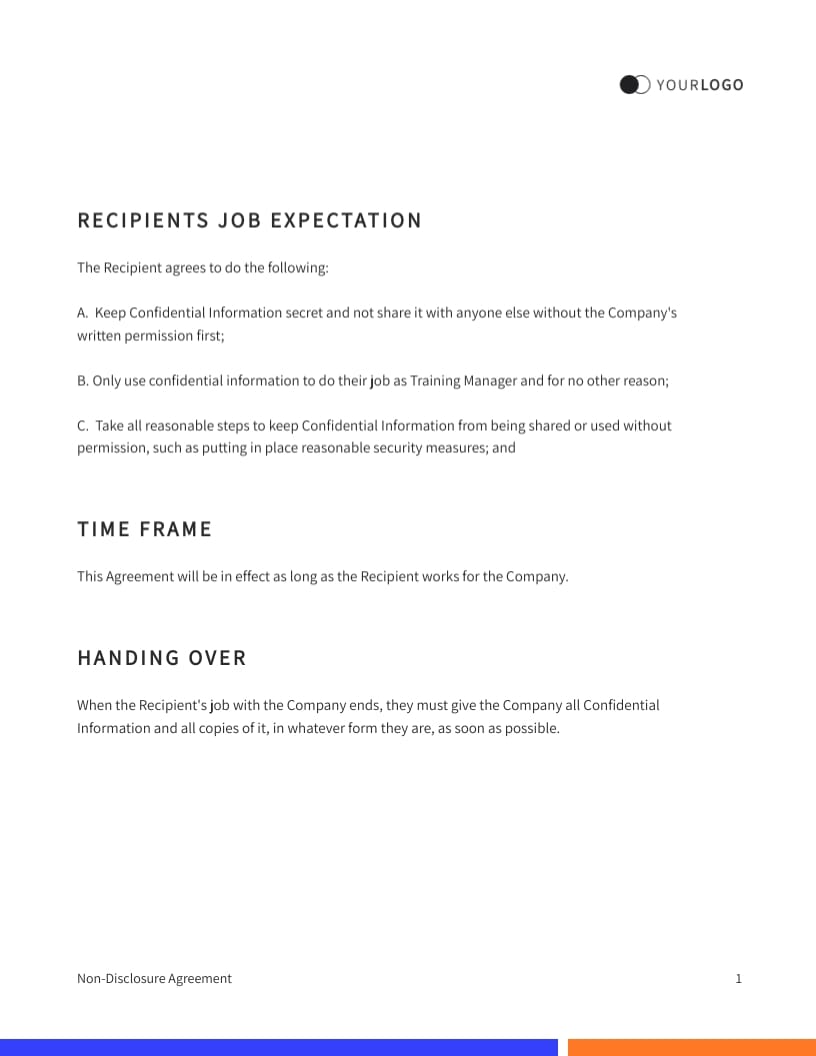
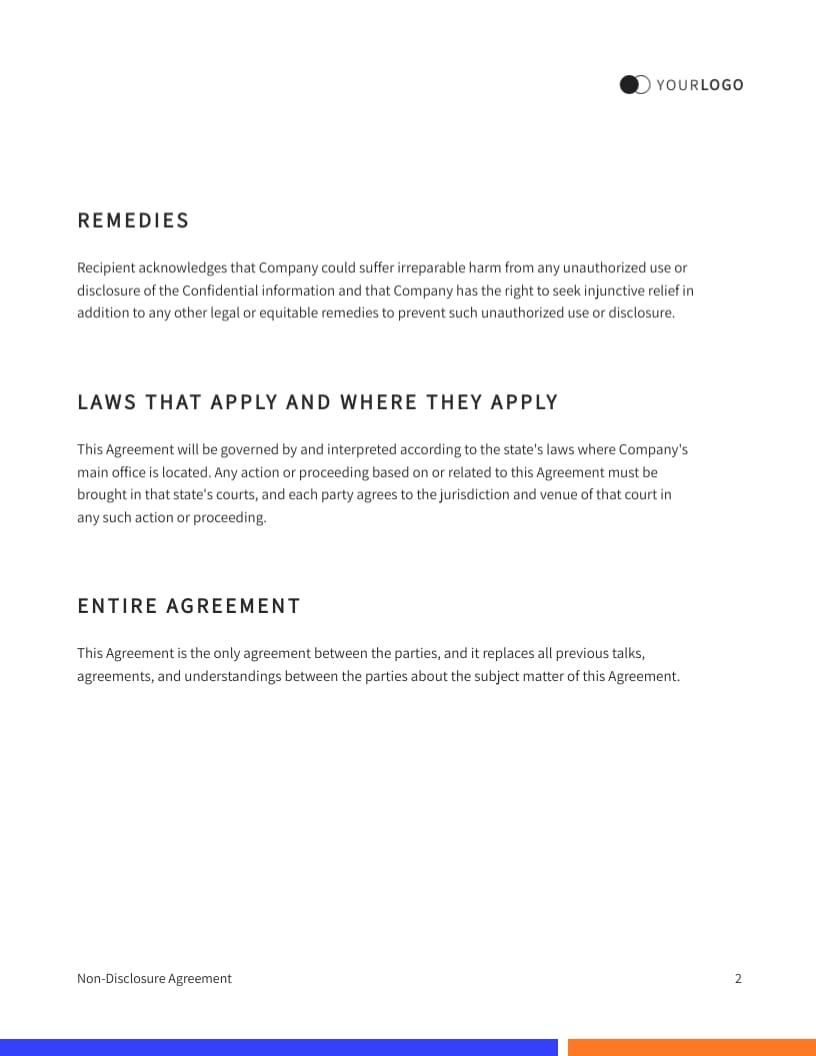
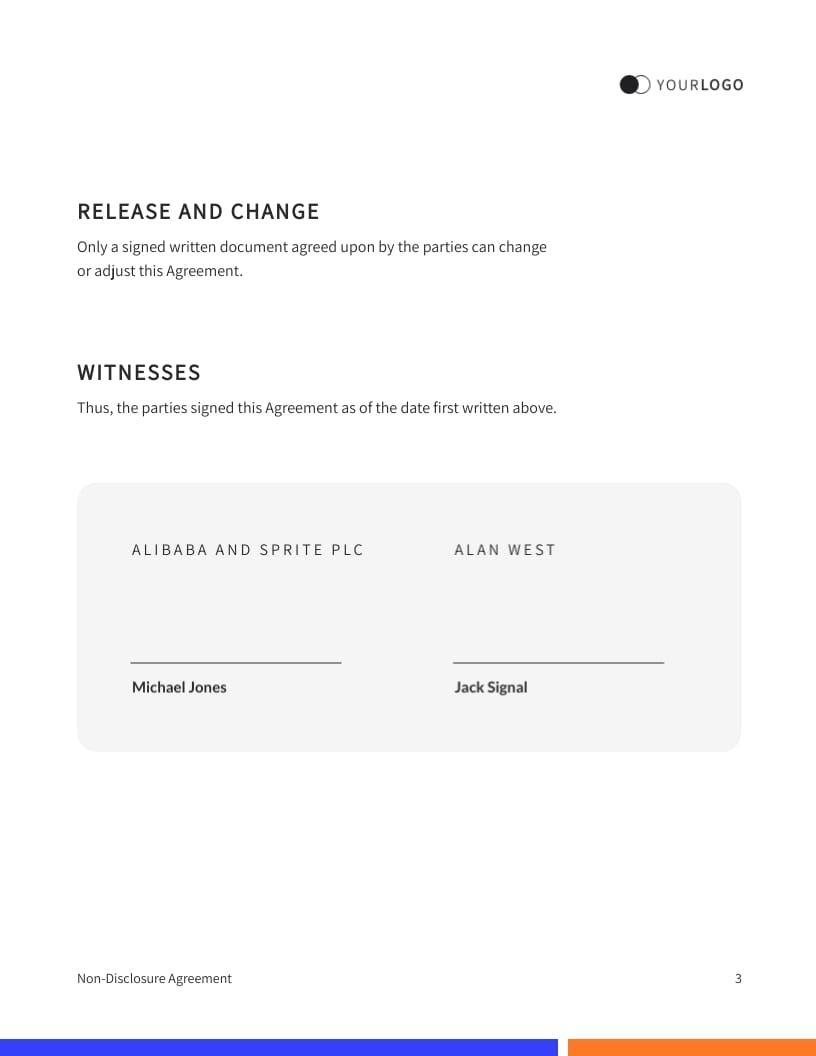
Before gaining access to sensitive information, the parties involved typically sign a non-disclosure agreement (NDA) to protect the confidentiality of the target company's data. The NDA also covers any other sensitive information shared during the process.
Here’s a customizable template you can use to draft your non-disclosure agreement.

At this stage, the investor assembles the due diligence team. This team of experts may include financial analysts, legal advisors, operational specialists and industry experts who can help evaluate the company's operations, financials and legal status.
The team will then create a due diligence request list (DDRL) outlining the documents and information they need to review.
The checklist may include financial statements, contracts, employee records and intellectual property documents.
DealRoom AI can automate much of this setup by generating deal playbooks and request lists based on deal type and industry. This can help ensure fewer coverage gaps before the review begins.
Once the target company provides the requested documents, the buyer's due diligence team will carefully review them.
Depending on the nature of the business, the buyer may also conduct site visits to inspect the target company's facilities, manufacturing processes and other operations. This allows the buyer to assess the company's physical assets, inventory and operations firsthand.
The buyer's due diligence team may also hold discussions with management, key employees, customers, suppliers and other stakeholders. This helps buyers gain insights into the company's culture, strategies, relationships, reputation and challenges.
Use tools like Kira, which are trained specifically on M&A contracts and can review large volumes of documents far faster than a human team. It’s primed to pinpoint over 1,400 clause types and anomalies, as well as inconsistencies or missing provisions that might otherwise go unnoticed under time pressure
The analysis involves evaluating various aspects of the target company. Validation, on the other hand, ensures the accuracy and reliability of the information obtained.
The team checks the target company's data by comparing it with data from other sources. Any discrepancies or anomalies are thoroughly investigated.
After reviewing all the necessary documents and conducting site visits and interviews, the buyer's due diligence team will analyze the company's valuation.
They will consider projected earnings, growth potential, market share and competition to determine whether the asking price is reasonable.
The due diligence process also includes a risk assessment, where the buyer identifies potential risks associated with the acquisition. These risks may include regulatory hurdles, legal disputes, environmental issues, and other factors that affect the company's profitability or reputation.
These processes are iterative and involve cross-referencing data from different sources to paint a complete and accurate picture of the target company.
Using AI for these processes can save your team significant time and effort. McKinsey's research on using gen AI for outside-in diligence shows how deal teams are applying AI to run scenario models, benchmark financials against industry comparables and identify patterns across large datasets.
After analysis, validation and risk assessment, the due diligence team compiles the report. The report summarizes findings, highlighting key risks, opportunities and recommendations.
The report also includes relevant documents, contracts, financial statements and other evidence that support the findings.
At the point when you’re doing last touches, use Visme’s AI Writer to finesse any text that reads too long or to check your grammar and spelling. You can also use it to reword bits of text that sound overly complex or too generalized.
Remember to keep your report aligned with your company's brand identity. With Visme's brand wizard, you can ensure your due diligence report has a cohesive look and feel. Just input your URL, follow the steps to build your Brand Kit and apply the assets via the editor.

The investor or buyer evaluates the due diligence report to make an informed decision about the investment, acquisition or partnership.
Based on the findings, the buyer may choose to negotiate the purchase price or terms of the sale. If the due diligence process reveals significant issues, the buyer may decide to walk away.
Once the parties have agreed on the terms, legal agreements are finalized and the transaction is closed.
One of the best ways to gauge progress throughout the due diligence process is for all parties to communicate and collaborate effectively.
Visme has a wide range of tools that streamline collaboration and communication for teams of all sizes. Colleagues can tag each other, leave comments and reply to comments on your due diligence report.
The workflow feature lets you assign sections of the due diligence report to team members and even add due dates.
For example, you can assign the legal due diligence section to the legal experts to work on. You can also require specific users in your workspace to get approval before publishing, sharing or downloading the report.
Visme allows you to download and share your report in multiple formats. Plus, you can share your report via an online link or generate an embed code.
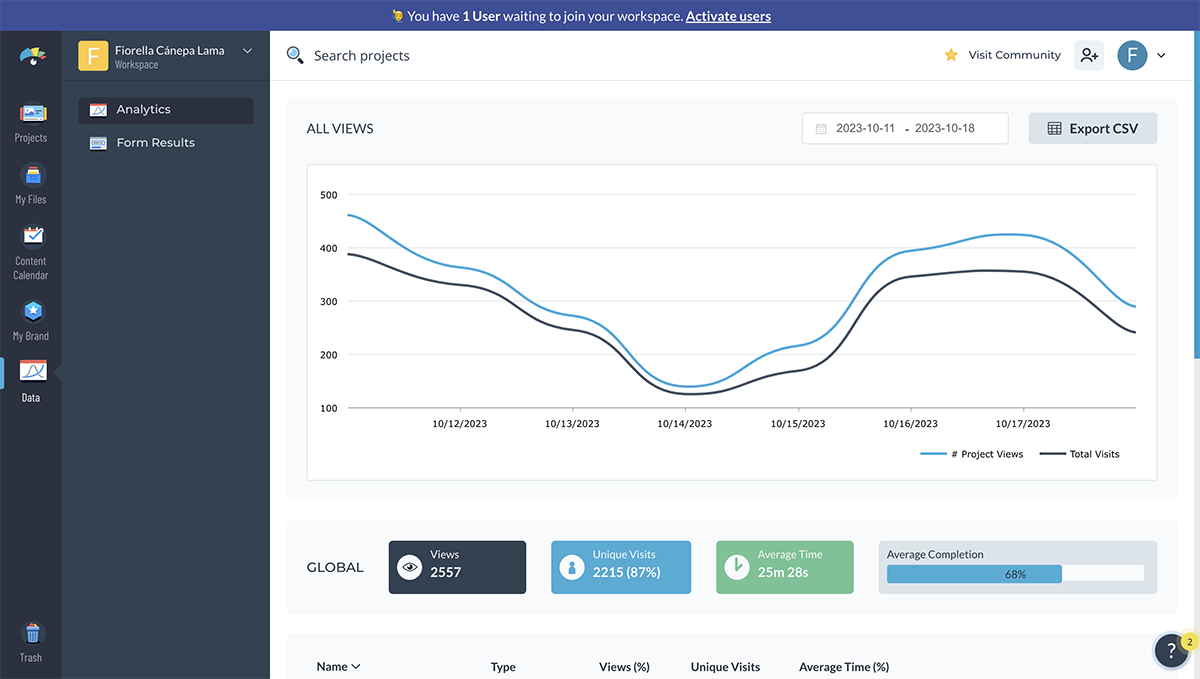
Furthermore, download your due diligence reports in PDF, PPTX, PNG, JPG and more. Once you’ve shared your report, you can monitor how readers engage with it using Visme analytics.
A due diligence checklist is list of items that must be reviewed and verified during the due diligence process.
This checklist acts as a roadmap, ensuring nothing falls through the cracks during evaluation. As with all other details we share, remember that the checklist's content may vary depending on the nature of the transaction and the industry involved.
Here’s a checklist template to streamline your due diligence flow. Feel free to include additional items as needed.
Your checklist doesn’t have to be drab to do its job. Elevate the design with Visme’s icons, stock photos and videos. If you work with multiple teams or clients, you can customize your checklist for different types of due diligence using dynamic fields.
As you work through your due diligence process, you might be asking yourself, "What are the red flags in due diligence that I should be aware of?"
Let’s answer that.
Red flags in due diligence are warning signs that suggest a deal carries more risk than it appears to. Some are obvious right off the bat, while others only become visible if you know what to look for. Worst-case scenario, no one realizes until the deal is closed, and it’s too late.
Here are the most common red flags and mistakes in due diligence processes. Interestingly enough, several were present during the HP/Autonomy acquisition that went south.
A 2024 study by Bayes Business School found that the average pre-announcement due diligence period grew from 124 days in 2014 to 203 days over the following decade.
Deals completed too quickly (under 45 days) had lower completion rates and worse shareholder returns than those given adequate time. When a seller or deal timeline is pushing you to move faster than the process allows, that pressure itself is a warning sign.
Revenue that doesn't reconcile across periods, unusual spikes before the sale or accounting policies that differ significantly from industry norms all warrant deeper investigation. As the KPMG report on Autonomy noted, revenue recognition differences "could not be quantified." That phrase should have stopped the deal in its tracks.
When a target company limits which documents it shares, denies access to key personnel, or refuses to let advisors speak with external tax or legal advisors, it's a clear signal that things aren’t what they seem. In the HP/Autonomy deal we mentioned earlier, every request to speak with Autonomy's tax advisors was denied. KPMG even flagged it in their report draft.
This is one of the most overlooked red flags in legal due diligence.
Andrey P, Legal Counsel at Visme, sees it all the time:
"The red flag I see most often is a broken documentation trail: gaps in IP ownership, unsigned or undated contracts, missing regulatory approvals. Deal teams tend to brush past these as 'administrative issues,' but they're not. Incomplete records directly affect valuation, trigger reps-and-warranties exposure and can kill closing certainty altogether. A clean paper trail is the foundation on which the entire deal price is built."
Pending litigation, unresolved regulatory issues, off-balance-sheet obligations and change-of-control clauses in supplier or customer contracts can all materially affect deal value. If these aren't surfaced during due diligence, they become the buyer's problem after closing.
Targets that present aggressive growth forecasts with limited historical support, or that can't provide customer-level data to validate their numbers, are worth careful scrutiny. Lev and Gu note in The M&A Failure Trap that management information provided at announcement is "highly optimistic" in the vast majority of deals, but that isn’t always the truth.
This red flag is harder to quantify, but that doesn’t mean it's not important. According to a 2023 McKinsey Global Survey on M&A capabilities, the lack of cultural fit and friction between the acquirer and the target are the most common reasons integrations fail to deliver expected value.
For example, high employee turnover at the target, a leadership team that's planning to exit or operating processes that are fundamentally incompatible with the acquirer's are all issues worth evaluating early on.
The team of professionals and experts involved in the process is responsible for writing a due diligence report. These professionals include financial analysts, lawyers, industry specialists, market analysts, project managers, consultants and due diligence firms.
Generally, professionals in finance, accounting, law, operations, IT and market analysis can conduct due diligence investigations.
The responsibility for performing due diligence falls on the party or parties involved in a business transaction, such as investors, acquirers, lenders, business partners, business brokers, legal and financial advisors, consultants, due diligence firms and internal audit teams.
There are three primary levels of due diligence.
Enhanced Due Diligence. This level of due diligence offers greater scrutiny of potential business transactions or partnerships. It is primarily deployed in high-risk transactions, such as dealing with politically exposed persons or high-value investments in emerging markets.
The specific requirements of a due diligence report can vary based on the nature of the transaction and the parties involved. However, a standard due diligence report should include the following components:
Compliance focuses on meeting legal and regulatory requirements. Due diligence involves thoroughly investigating various aspects of a business transaction to make informed decisions.
Due diligence often includes assessing compliance as one of its components. However, it goes beyond compliance by evaluating the overall health and potential of the target company.
Here are several key components typically included in a financial due diligence report to provide a comprehensive analysis of the financial aspects of a business or investment opportunity.
A due diligence report can be issued by a range of professionals, depending on the deal’s complexity:
In smaller deals, the buyer or investor may prepare it with support from their legal and financial team.
Start by defining the scope, then gather and analyze relevant documents. A typical report follows these steps:
The 4 P’s framework helps evaluate a business from four angles:
Here’s what to prepare for:
And remember, having your documents organized and accessible from the start will make the process significantly smoother.
It typically runs between 30 and 90 days, depending on the size and complexity of the deal. Larger transactions involving multiple business units, international operations or significant legal complexity can extend well beyond 90 days.
A private equity firm acquiring a SaaS company is a great example. Before closing, the firm would investigate the business from multiple angles:
If anything looks off, the firm can renegotiate the price, request fixes or walk away entirely.
A due diligence report is a prerequisite for finalizing a legal agreement, whether it's a business transaction, investment, merger or acquisition.
In this guide, we explained how to prepare a due diligence report that helps you make insightful and winning decisions.
You can identify risks that should be avoided or tackled early on and negotiate favorable terms.
However, you need the right due diligence tools not only to guide you through the process but also to organize your findings into a report.
Visme's report maker makes it easy to create a due diligence report and any other business or legal document—you don't need to be a professional designer.
Search the extensive template library for a due diligence report template. Or simply customize the ones we’ve shared in this article to meet your unique needs.
Feel free to swap the colors, text, icons and other visual elements to match your brand. Easily collaborate and communicate with the rest of your team on the report and access a vast range of download and sharing options.
Sign up for Visme to create stunning documents, reports and other visual content!

Design visual brand experiences for your business whether you are a seasoned designer or a total novice.
Try Visme for free