


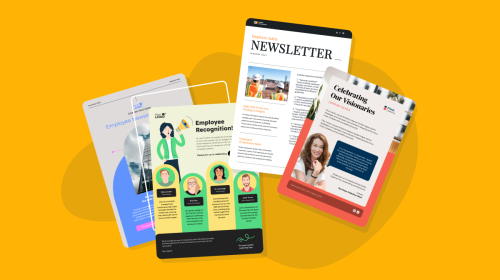
14+ Employee Newsletter Examples, Ideas & Templates


Running an employee performance strategy is like tuning a musical instrument. Both need a good dose of care and intentional maintenance to perform at their best.
Nowadays, employees and managers are dissatisfied with inefficient processes that neither inspire nor help them succeed. In a study by TruQu, 59% of workers said that traditional annual reviews have “no impact” on their performance.
The solution to this problem is strategic and continuous performance management.
Building a solid performance management stack incentivizes growth and development in your organization. It enables employees and managers to align with the company's big picture, improves employee productivity and makes internal communications between HR and employees seamless.
Ready to create a performance management system that drives positive change in your company? In this guide, we share nine best practices and four of the best performance management software to get you started.
At the end of this article, you’ll have the knowledge and tools to start a performance management overhaul for your organization. Plus, you’ll discover how Visme can improve your performance management system with branded templates and dedicated workspaces.
Let’s get to it.
*Disclaimer: The comparisons and competitor ratings presented in this article are based on features available as of Feb 15, 2023. We conduct thorough research and draw on both first-hand experience and reputable sources to provide reliable insights. However, as tools and technologies evolve, we recommend readers verify details and consider additional research to ensure the information meets their specific needs.
Performance management is an ongoing, cyclical process that helps improve employee performance and satisfaction through goal setting, planning, monitoring, reviewing and rewarding.
Performance management is a critical sector of HR activities. Over the years, it has evolved from annual performance appraisals to a more efficient performance management cycle. The work disruptions of 2020 also forced changes in performance management, increasing the need for improvement towards collaboration, open communication and regular feedback.
In an ongoing cycle, employees perform better, feel comfortable communicating with managers and peers and improve their careers.
Performance management is measured using OKRs (Objectives and Key Results). Managers and employees set goals and objectives in regular check-ins that monitor progress and push it forward. Any setbacks and blockers are confronted quickly, making finding fast solutions as a team easier.
Full-time employees spend half of their waking day working. Naturally, people want to feel comfortable and safe at their place of work; they might even want to enjoy themselves.
When employees feel unseen, unheard and poorly managed, their performance suffers. They don’t feel inspired or empowered to do any better.
When managers and employees have regular interactions about their work, employees feel like they’re working with a team that cares. Cyclic performance management systems with regular feedback meetings are key drivers of employee satisfaction. A study by Adobe found that 80% of employees would rather have immediate feedback than an annual performance review.
Performance management in a continuous capacity is one of the most effective systems for improving employee performance and satisfaction, consequently improving company culture across the organization.
Effective performance management is important for businesses. It helps companies align their systems, resources and personnel with their strategic goals.
Performance appraisals are periodical activities for reviewing employees’ performance at the end of a specified period, generally yearly. The difference between performance appraisals and performance management is that appraisals are repetitive, periodic actions, while performance management is a cycle.
If your company or organization is still doing appraisals once a year and there is no ongoing performance management cycle, it’s time to change. It’s not just for a change into cyclical management but a shift towards accepting constant change and adaptation in HR.
This infographic clearly explains the difference between performance management and performance appraisals.
Made with Visme Infographic Maker
Performance management is a continuous cycle; it doesn’t stop or happen only once or twice a year. It’s an ongoing activity with many interconnected parts. Each step of the cycle involves action from the HR team. With many employees doing the cycle simultaneously but starting at different times, all actions occur continuously.
Something is always going on with the performance management cycle. That’s why there needs to be a strategy in place as a foundation. Otherwise, the whole thing can get out of control if you don’t have systems in place.
The four main parts of the continuous performance management cycle are:
Inside each section are more detailed levels of activity that need software implementation and documentation. Generally, a strategic performance management cycle generally needs a combination of tools to perform different actions simultaneously.

Performance management is slightly different inside each organization. Your HR team needs to customize the cycle to align with the organization’s missions, values and goals.
Here are nine best practices to streamline your company's performance management system overhaul.
Performance management is evolving into a living cycle that needs nurture to back it up and keep it running smoothly. That's why you need to be strategic about it.
A strategic performance management system involves setting goals and getting buy-ins from the HR team. The strategy is complete with constant monitoring and reviewing between managers and employees.
Strategizing every step of the cycle gives you full control of iterations and changes for improvement. Customize the actions at each step to get the most out of your employees with regular feedback and training options.
Here’s what a performance management cycle looks like:
Made with Visme Infographic Maker
In a recent study by the HR Research Institute and BetterWorks, 89% of HR managers say that continuous performance management is more useful than traditional performance management.
Constant communication is achieved with timely check-ins and regular feedback through conversation. Make it easy for employees and managers to talk to each other using performance management software that integrates with the work operating system you’re already using.
Create interactive templates for documents that can help keep things moving along in the cycle. With a Visme enterprise plan, you can design all the performance appraisals and reviews you’ll need for content monitoring and feedback cycles.
Use Visme workspaces to have smaller HR teams working on specific assets like performance review checklists, appraisals and training manuals. Create icon collections according to brand guidelines and set the color theme using the Brand Kit.
Customize your performance management software and resources to fit your strategy, values and goals, not the other way around. Use the Plan, Monitor, Review and Reward cycle as a guide to strategize both the overall activities and the personal meetings with employees.
Be flexible and use data to adjust and iterate the cycle, so it flows and incentivizes employees.
Surveys help determine if employees and managers feel positive about the performance management cycle. Create a survey with Visme and include it in the monitoring stack.
You don’t only monitor the employee’s performance but also the performance of the cycle itself. It has to make it easier for employees to succeed. If the system is hindering them, it needs a change.
Performance feedback is essential for employee performance and self-esteem. However with non-continuous performance reviews, feedback spreads over time, losing impact and importance.
Such non-regular feedback makes employees feel disconnected from the organizational goals and mission.
Regular feedback has better results because they’re timely and helpful.
Feedback includes both positive and negative reviews. Train your managers to be empathetic and understanding when sharing negative feedback. Always offer solutions, help, support and change that will inspire employees to improve for their own benefit. Likewise, reward employees that go above and beyond for their team and the organization.
One of the most critical steps in the performance management cycle is goal setting. Managers should meet and set goals with every employee. Their performance goals must align with the team and organization as a whole.
Conduct team goal-setting activities as part of the cycle, collaborating on performance growth and building a better company culture.
Set objectives and key results (OKRs) that inspire employees. Aim not only at the team and organization-based objectives but inspire them to have personal goals.
Help them achieve those goals by setting objectives that have key results they can see. Here's a goal-setting worksheet to help you manage this process.
To review performance fairly with all employees, the HR team must work hand in hand with the diversity, equity and inclusion (DEI) team. Diversity, equity and inclusion are at the core of fair performance reviews. HR and DEI work together to create fair performance review templates by analyzing the wording of the content and any visuals that might not suit the organization’s message and values.
Managers and DEI professionals must work closely to conduct one-on-ones and check-ins without bias or pre-existing judgments. Use peer-to-peer reviews to get a broader idea of how team members are performing together and if issues need resolving in terms of communication.
Read this article to get more insight into what you should include in your next performance review, plus templates to get you started.
When you notice that an employee needs improvement in an area of their work, offer training and development resources. Feedback without a follow-up is an empty observation that won’t inspire the employee to improve. Use Visme to create training material in various styles, including digital documents, videos, infographics and flipbooks.
Try a buddy or mentor system. Pair up employees at the same level who can help each other by giving regular feedback on specific tasks. Ask employees with more time in the organization to mentor the newer employees, helping them integrate and feel welcome. Mentoring and buddy programs are essential during onboarding and beyond.
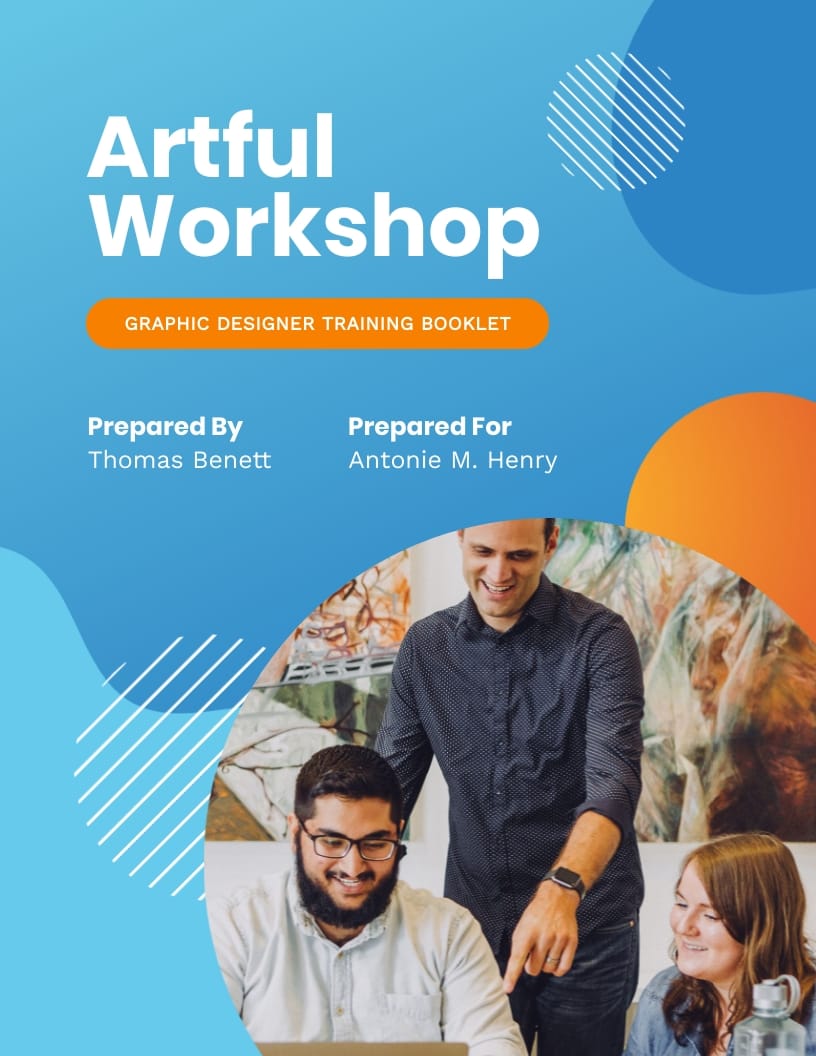
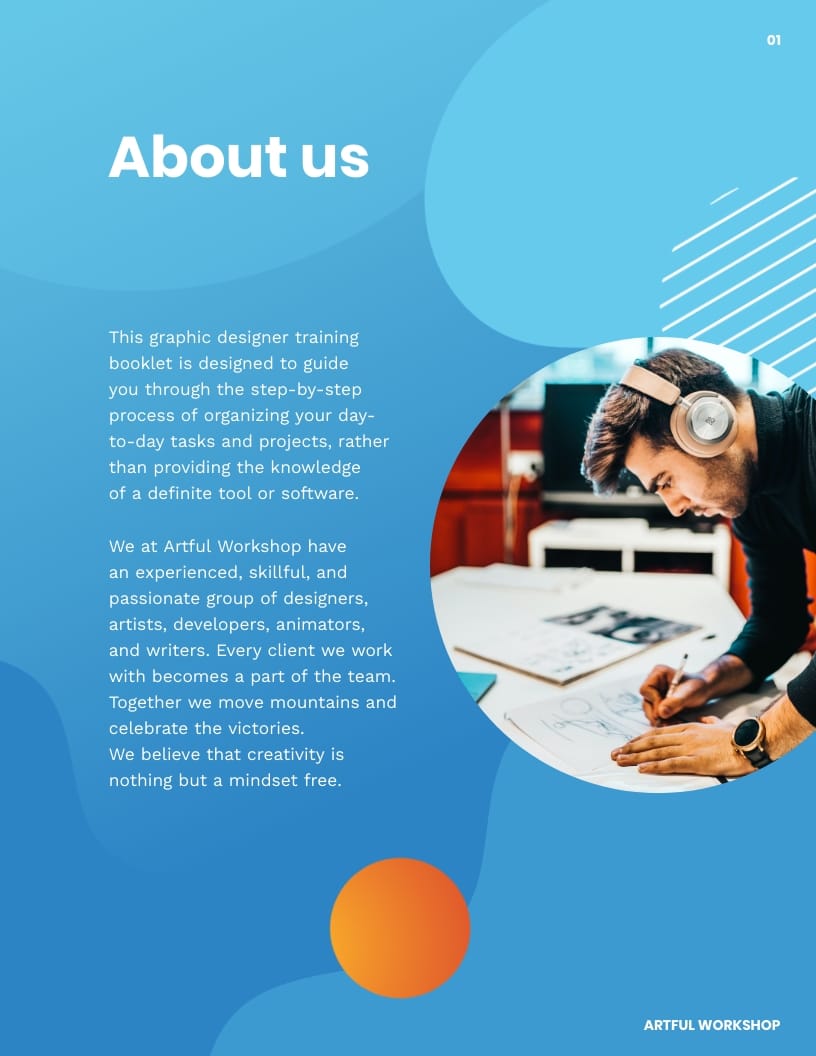
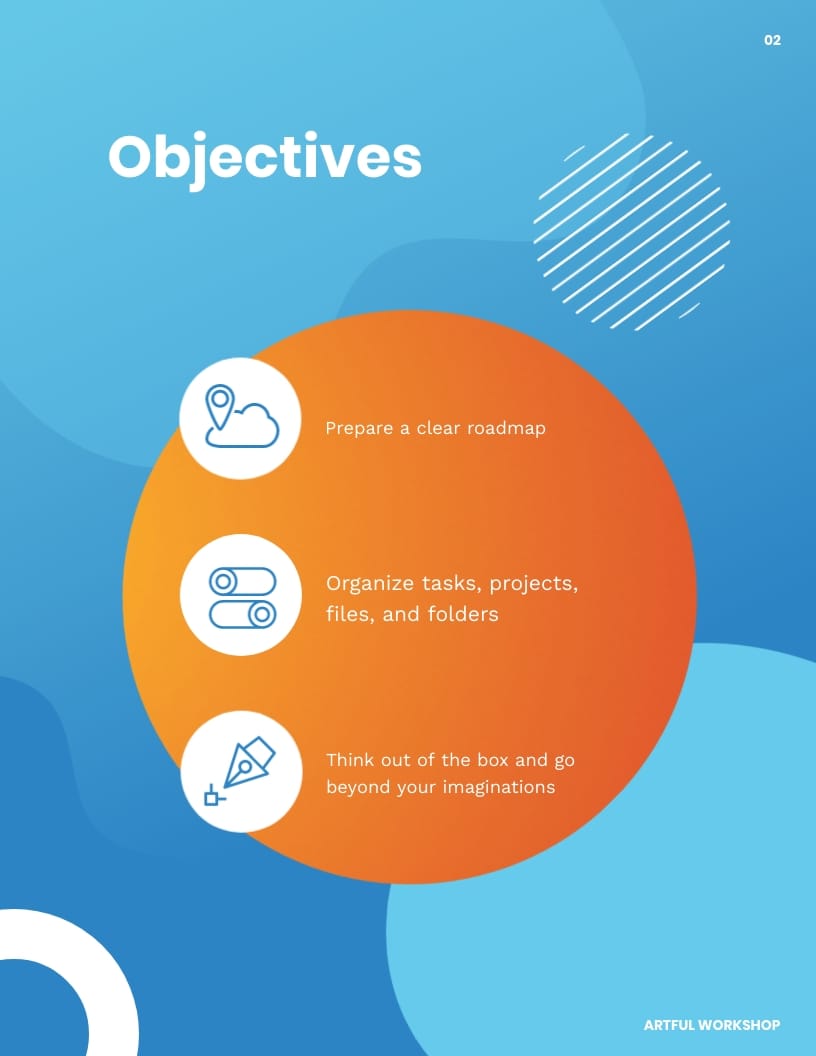
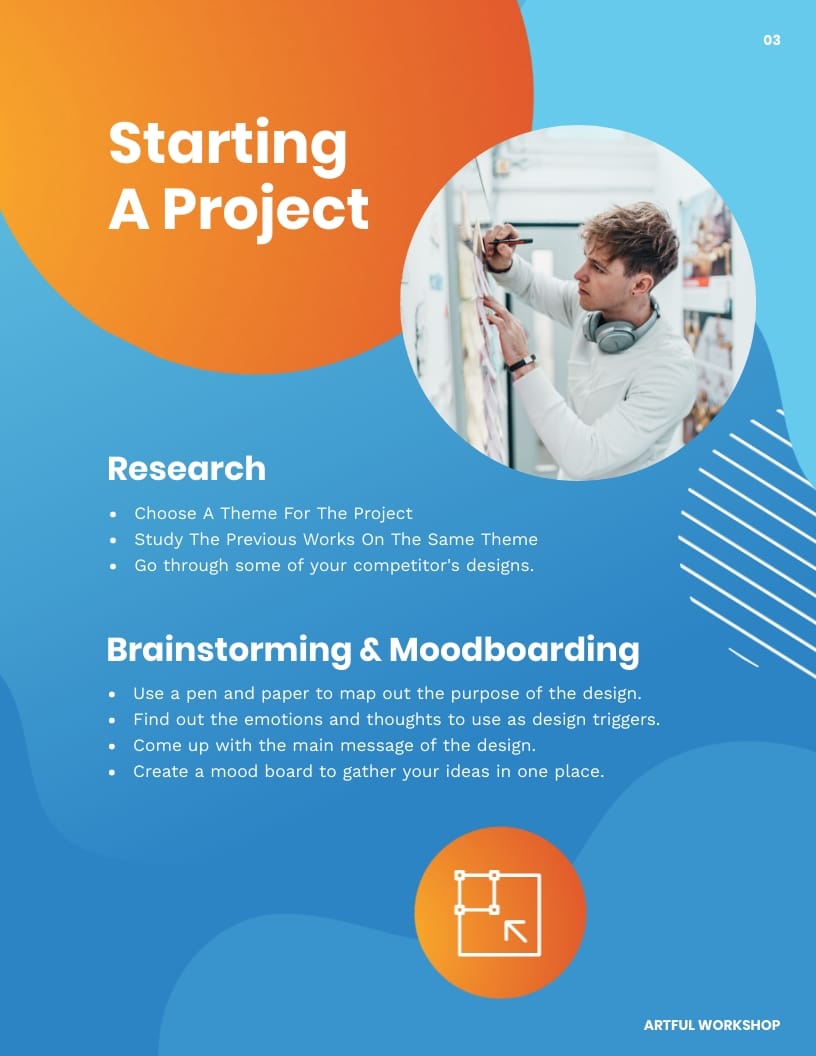
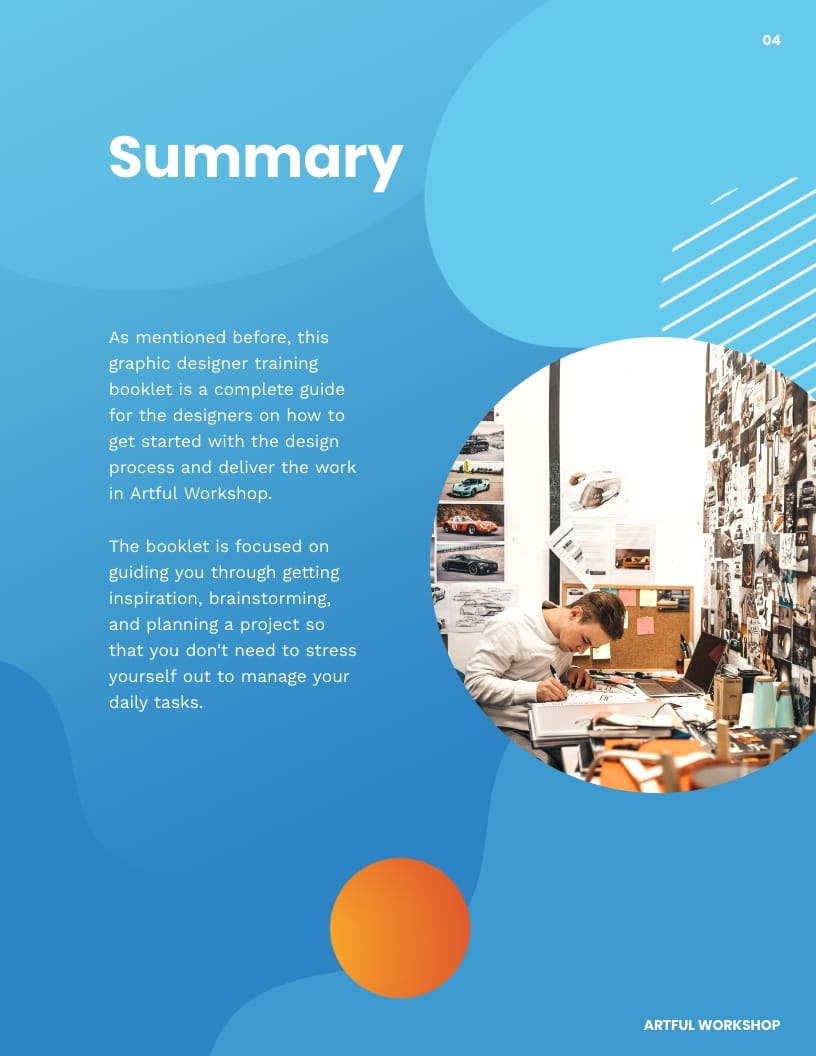
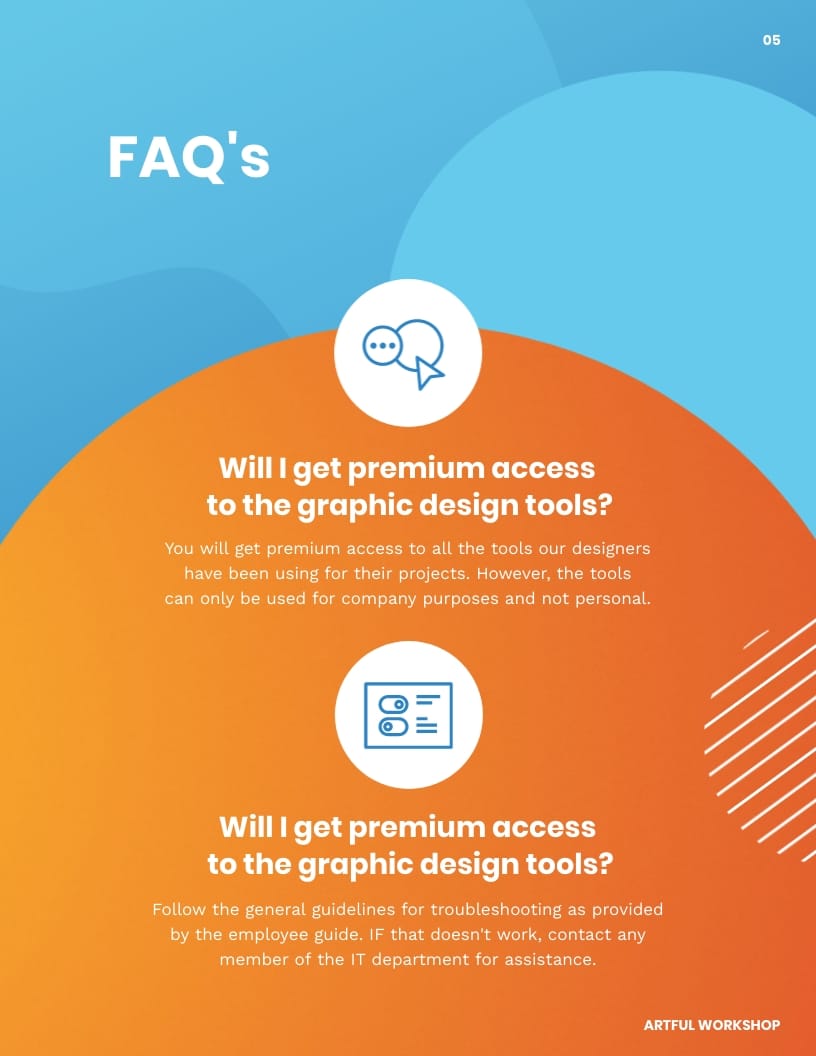
Frequent one-on-one meetings between manager and employee are critical for an efficient ongoing performance management cycle. These one-on-ones don’t need to be long; they’re check-ins regarding the employee's plan and goals. Setting weekly goals helps employees buy into the organization’s mission and overall goals. They'll be happier and driven to keep improving when they feel like their work is worth something.
Use the Visme infinite whiteboard as a visual tool to collaborate with employees during one-on-ones. Take notes and leave comments with feedback about their thoughts on how to reach their individual and team goals.
Foster a culture of open communication throughout the organization. Don’t use hierarchy as a crutch for company culture. Build community throughout the org chart by concentrating on the company's values and mission.
Inspire employees and managers to talk to each other when a problem or doubt arises. Create systems that help make communication easy and fluid. A positive company culture depends on performance management with open and honest communication.
Finding a performance management system that suits your organization will take research and dedication from the HR team. Don’t look for a tool and build your strategy around it; build the strategy first and then look for the tool or combination of tools to help you build the system and keep it running efficiently.
Here are some software recommendations.
Lattice is a people success platform built for mid-market to enterprise HR teams. All Lattice functions revolve around OKRs, objectives and key results. It brings performance management, employee engagement and career development into one connected platform, with AI-powered tools that help managers give better feedback and make more informed talent decisions.
The features that make Lattice stand out are:
The Lattice pricing structure starts with the main product, Performance Management + OKRs & Goals. You can add extra features in three unique packages.
Teamflect is a performance management and employee engagement platform built specifically for organizations running on Microsoft Teams and Outlook. HR teams and managers can run performance reviews, track goals and exchange feedback without ever leaving the tools their employees already use every day.
By embedding performance management directly into existing workflows, Teamflect removes the friction that typically slows down adoption and keeps feedback and goal tracking from becoming an afterthought.
BambooHR is a comprehensive HR platform built for small to mid-sized businesses. It centralizes the entire employee lifecycle in one place, from hiring and onboarding to performance management and offboarding, with an intuitive interface that keeps adoption high across teams.
Bamboo HR boasts many practical features for human resources management, including performance management. These are the best features for performance management at Bamboo HR:
Bamboo HR has two plans: Essential and Advantage
The add-ons are:
To get a quote, you must fill out a few forms and send an email. Organizations with more than 20 employees pay on a per-employee, per-month basis. With 20 employees or fewer, it’s a monthly flat rate. They automatically apply volume discounts as the employee count rises.
Leapsome is an AI-powered HR platform that connects performance management, employee engagement and learning in one place. It's built to help organizations align teams from the top down, with OKRs and goal-setting tools that tie individual performance to company-wide objectives.
As a software dedicated to performance management, the available features are detailed and go deep into employee engagement and personal development. Leapsome’s extensive features are grouped into five categories:
Keka is an all-in-one HR, Payroll, People Operations, and performance management software built for growing businesses. With Keka, people teams can go beyond annual reviews and take a continuous, data-driven approach to managing performance. It brings goal-setting, continuous feedback, OKRs, skill management, and performance analytics into one unified platform.
Keka is designed to help HR teams shift from reactive administration to proactive people strategy, making it a strong choice for mid-sized and enterprise companies looking to align individual performance with organizational growth
The features that make Keka stand out are:
Keka's entry-level Foundation plan starts at $9 per employee per month. Three plans are available:
factoHR is a mobile-first HR and payroll platform designed to manage the full employee lifecycle from hire to retirement. Trusted by over 3,500 companies and 2.6 million employees globally, it's built for organizations that need deep automation across payroll, attendance and performance management in one platform.
FactoHR's performance management feature also provides valuable insights through analytics and reporting, enabling data-driven decisions to enhance employee productivity and engagement.
There are four plans available:
PerformYard is a focused performance management platform built to replace spreadsheet-based review processes with a structured, flexible digital system. It's designed to support organizations across consulting, healthcare, financial services and nonprofits, with dedicated customer success support for every account.
PerformYard has a deep feature set to build your ideal performance management cycle. They’re grouped into:
Performance management is a system your organization uses to incentivize and uplift employees toward reaching goals aligned with org-wide mission and goals. Aligning employees with the big picture helps them positively integrate with the team and the organization, growing roots for a strong company culture.
With Visme, your team can create branded HR material to use with your performance management software. In the Visme template gallery for HR docs, you'll find performance review templates for various capacities: self-review, team, quarterly, yearly, etc. Create a comprehensive HR digital document stack with dedicated Visme workspaces, folders and branded templates.
Improve your performance management with Visme by taking advantage of all the tools available inside your dashboard. Give your HR team superpowers to create branded assets with impact. The future of work depends greatly on performance management and how your organization tackles it for the benefit of everyone.

Design visual brand experiences for your business whether you are a seasoned designer or a total novice.
Try Visme for free


![How to Create a Practical Crisis Management Plan [+ Templates]](https://visme.co/blog/wp-content/uploads/2025/07/How-to-Create-a-Practical-Crisis-Management-Plan-Thumbnail.png)