

How to Write a Procedure Content: Best Methods, Examples & Templates


Product specifications sit at the center of every successful product decision.
They keep everyone aligned on scope, priorities and timelines, and which technical trade-offs are worth making.
When specs aren’t clear, things usually feel fine at first. Then the cracks show up. Features need to be redone, requirements are unmet, budgets stretch, and the scope slowly creeps out of control.
And suddenly, teams are stuck in a string of “that’s not what we agreed on” conversations.
To put it in perspective, the Consortium for Information & Software Quality reports that inadequate requirements and specification errors cost the U.S. economy at least $2.41 trillion.
So how do you avoid these risks?
One approach I’ve found consistently effective is learning from successful examples. Reviewing well-prepared product specification sheets shows you the structure, level of detail and presentation that make a specification effective.
In this article, I’ve analyzed product specifications from various industries and selected five standout examples. For each, I explain why it works and highlight practical takeaways you can apply when creating your own.
I’ve also included expert insights and customizable product spec templates to help you get started quickly.
Let’s get to it!
A product specification is a document that defines what your product is, how it works and the requirements it meets. It helps in aligning teams throughout the development cycle of a product.
In addition, a great product spec sheet offers the following benefits:
Product specifications usually fall into one of three types, depending on what you need to communicate in your product development process and where the team is on the roadmap.
A technical spec sheet is best for explaining how the product will be built or implemented.
They guide engineers, developers or manufacturers by detailing the underlying structure. In software, this includes system architecture, APIs and security protocols. In hardware, it covers materials, electrical requirements and manufacturing tolerances.
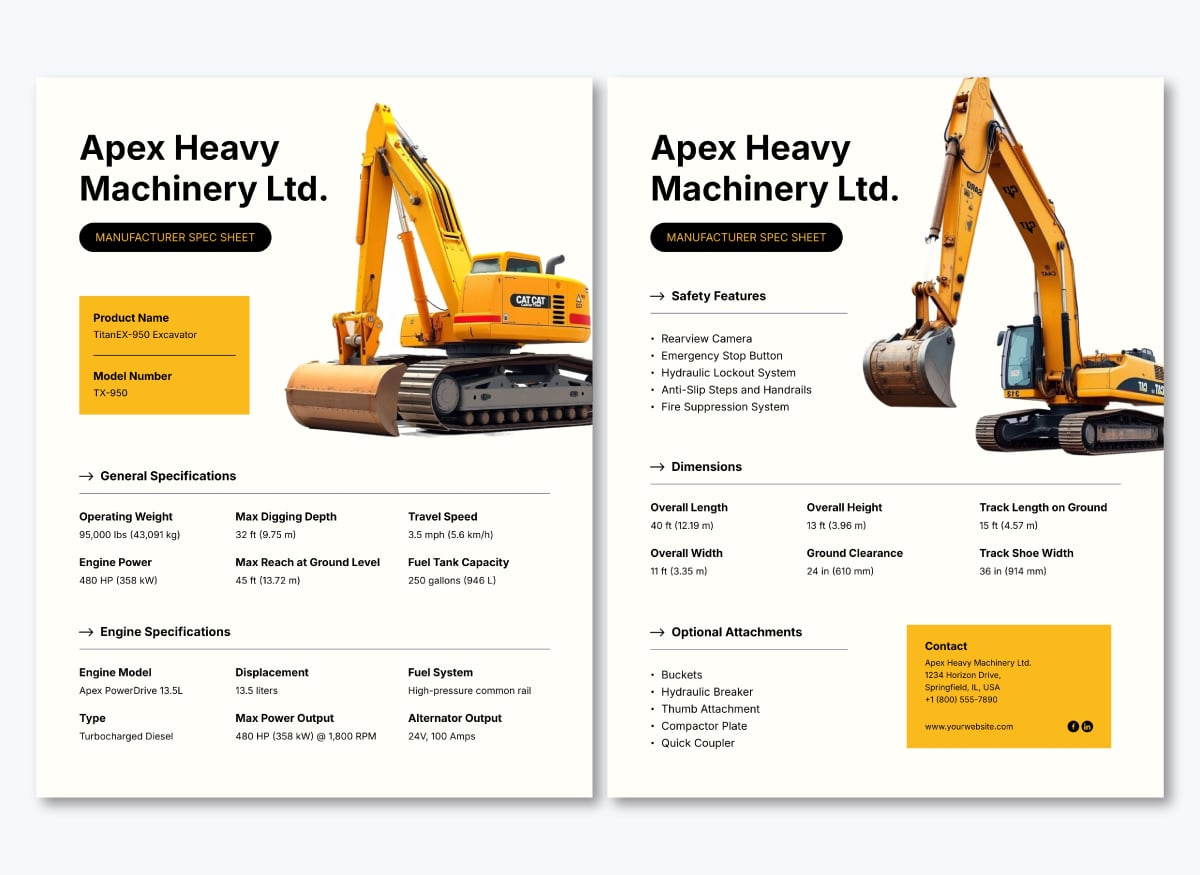
This type of spec sheet often supports a broader product specification document, PRD, or agile workflow by turning requirements into build-ready details.
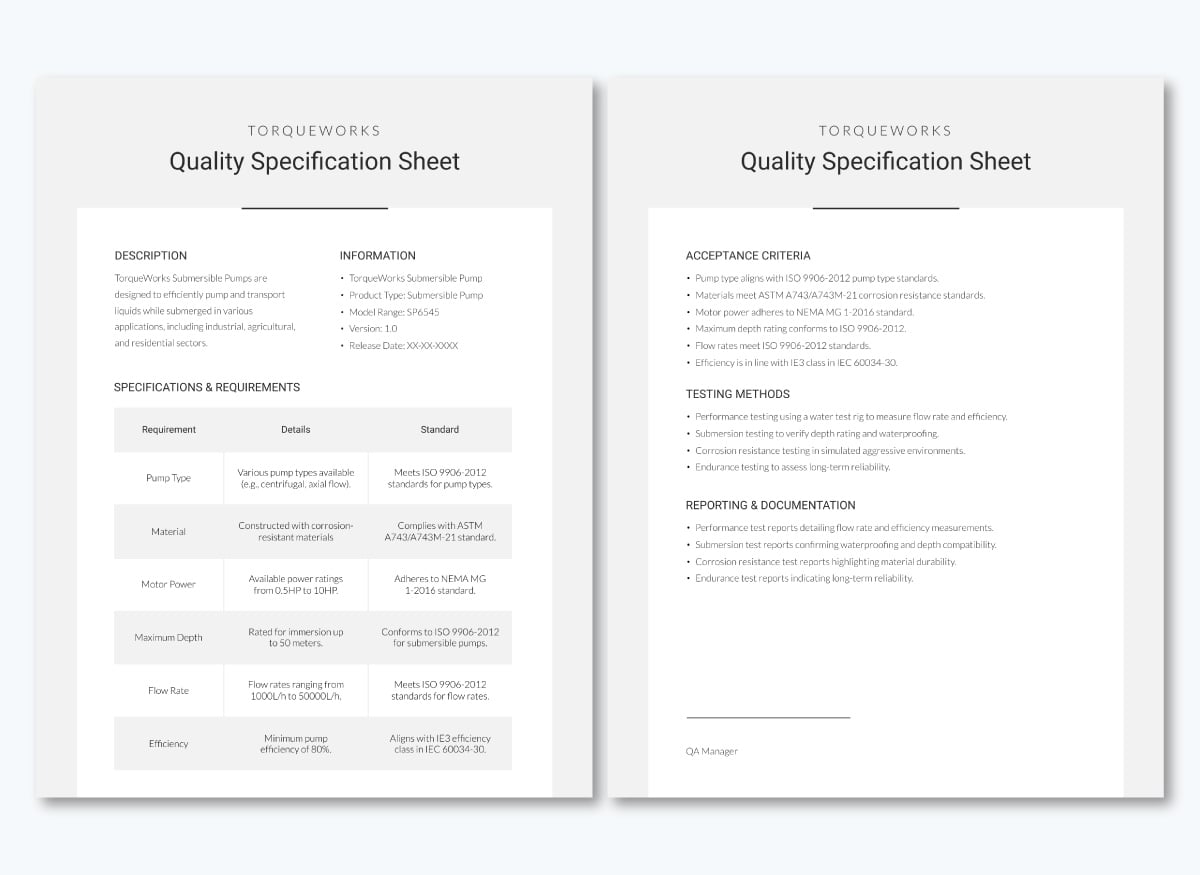
Use this type to define and optimize how well your product must function once built. They set measurable targets such as capacity, speed, accuracy, durability, efficiency or reliability.
Performance specs serve as benchmarks during testing to verify that the final product meets expectations and real-world requirements.
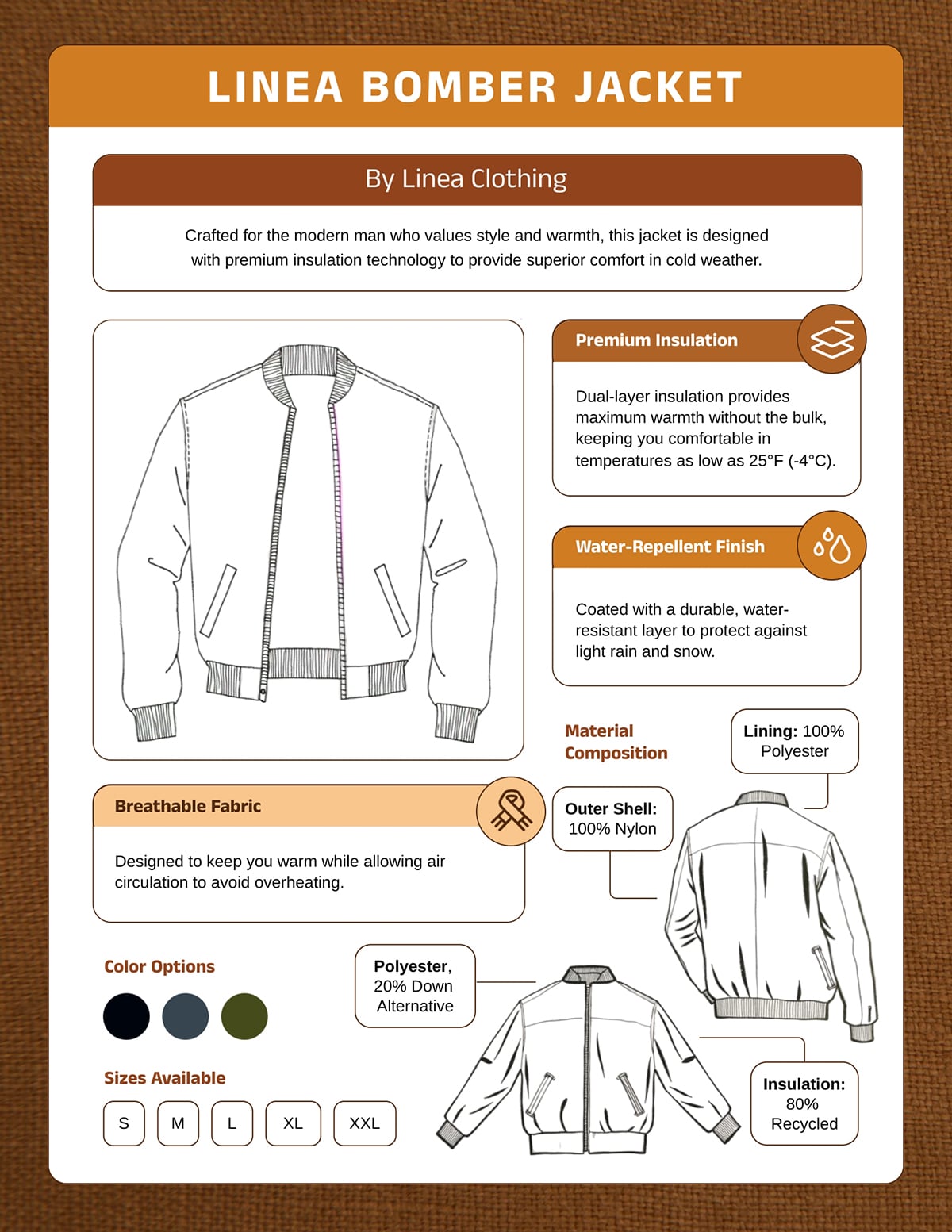
This type defines what a design is intended to do and how people experience and interact with it, rather than only detailing how it is constructed or manufactured.
For fashion design, usability might include how a wrap dress fastens and how adjustable straps allow for fit customization. User experience is about how fabric movement enhances comfort and ease of movement.
The elements in your product specification will depend on the type of specification you’re creating.
However, the following are the typical elements you’ll need to include in your product spec sheet.
Made with Visme Infographic Maker
Looking at excellent product specifications examples can give you practical insight into what works. Here are some strong examples to take notes from:
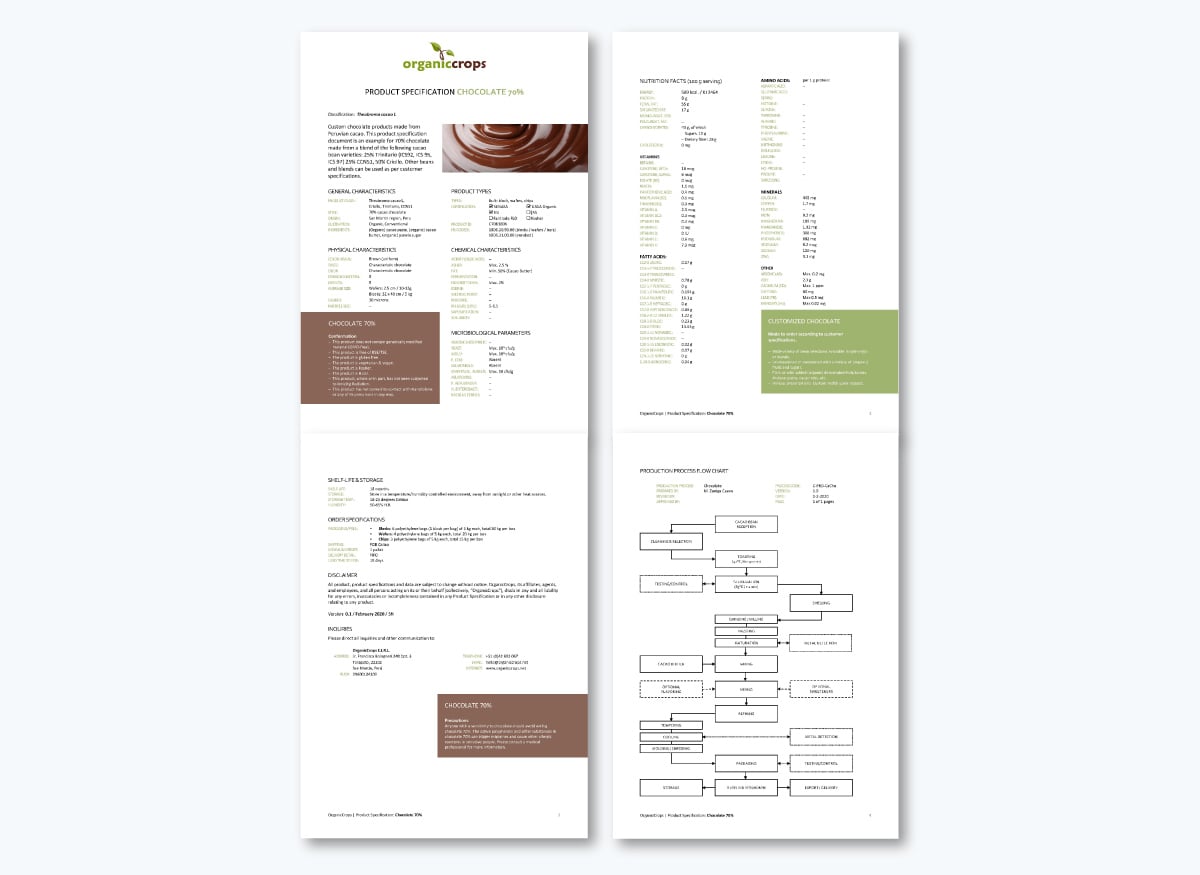
If you’re creating a food-related spec sheet, this is a great example to learn from. It shows a complete product spec for 70% chocolate made from Peruvian cacao.
OrganicCrops sells these chocolates in bulk to manufacturers and distributors worldwide. Their buyers need to know the chocolate is safe and retains its quality throughout its shelf life.
This document provides them with assurance by listing the chocolate’s origin, bean blend, ingredients, certifications, chemical properties, microbiological limits, nutrition facts, storage instructions and a step-by-step production process.
What immediately caught my eye in these spec sheets was the use of process flowcharts to map each production step with precise temperatures and times. It’s like a behind-the-scenes look that shows clients just how much care goes into quality control.
I also like how it highlights limits such as pH range, permitted moisture levels and which natural organisms are acceptable or harmful to the cacao. This makes it easy for food safety inspectors to confirm that everything meets the standard quickly.
Taking a cue from the example above, if you’re creating a spec for food or any regulated product, think of your documentation in three simple layers: Identification, Verification and Protection.
You can also add a process flowchart to help people see how the product is made at a glance. Visme has a flowchart maker that lets you build one in minutes. Pick a template, drag and drop symbols or connectors and you’re done.
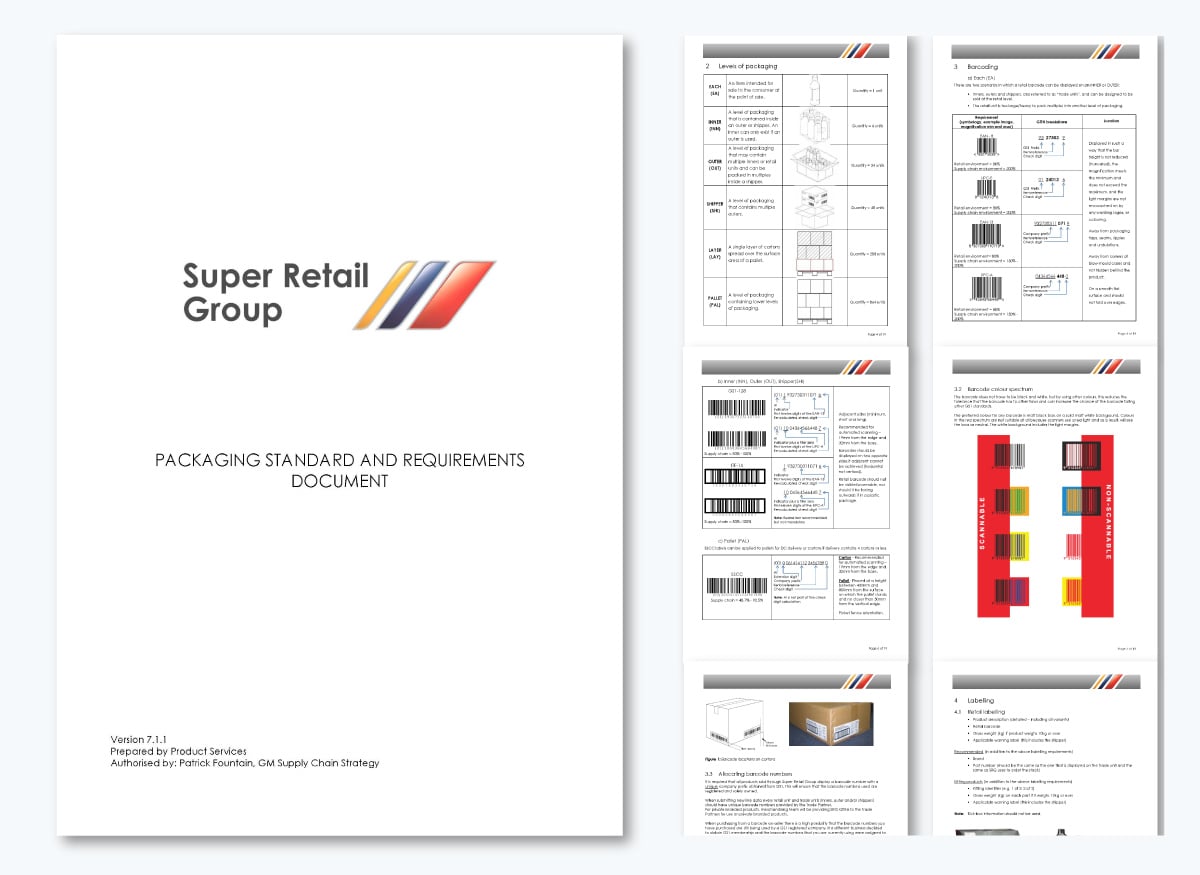
Our next pick is from Super Cheap Auto’s distribution network.
This specification sheet outlines the packaging requirements that all suppliers must follow when shipping products. It explains how items should be boxed, labeled and barcoded to ensure consistent packaging across the board.
What makes this spec practical is that it’s based on what people actually do at work.
I love how it breaks down the packaging, barcoding and labelling procedure with visuals that are easy to interpret. You’ll find pictures showing how products should be packaged at different levels. The barcoding requirement, GTIN breakdown, and placement are clearly explained.
And the label requirements section includes diagrams showing exactly where each label goes on the carton and tables grouping similar requirements for easy comparison. This helps avoid confusion and ensures that every international supplier understands it.
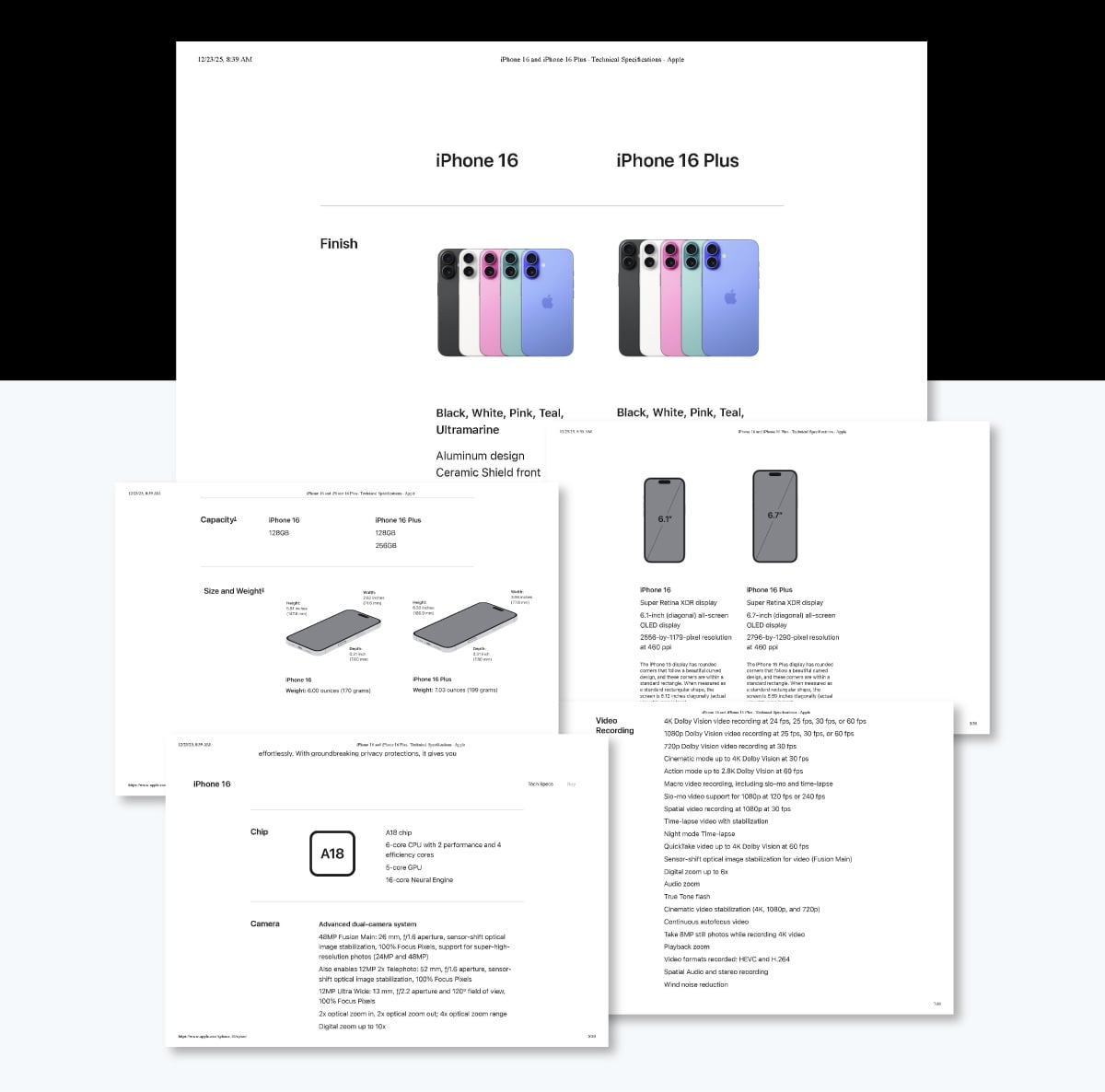
Apple sure does an impressive job with its product specs and the iPhone 16 is no exception.
This spec sheet serves as a guide for both experts and everyday users—including consumers, developers, retailers and regulators. It breaks down everything from the display, camera and processor to connectivity, battery life, materials, environmental impact and compliance information.
This specification stands out because it does two major things most technical documents overlook.
First, it gives context to technical details. For instance, instead of simply saying the display is 6.1 inches, Apple explains how that size is measured and why the actual viewable area is smaller. This helps people understand what the measurement really means and why it’s best for the user.
Another reason why it stands out is that it’s tailored to different users. Every day, consumers get basic information such as screen size, battery life and camera details. At the same time, there are sections specific to developers, resellers and repair teams to access the deeper technical specifications they need.
When writing consumer-facing technical specifications:
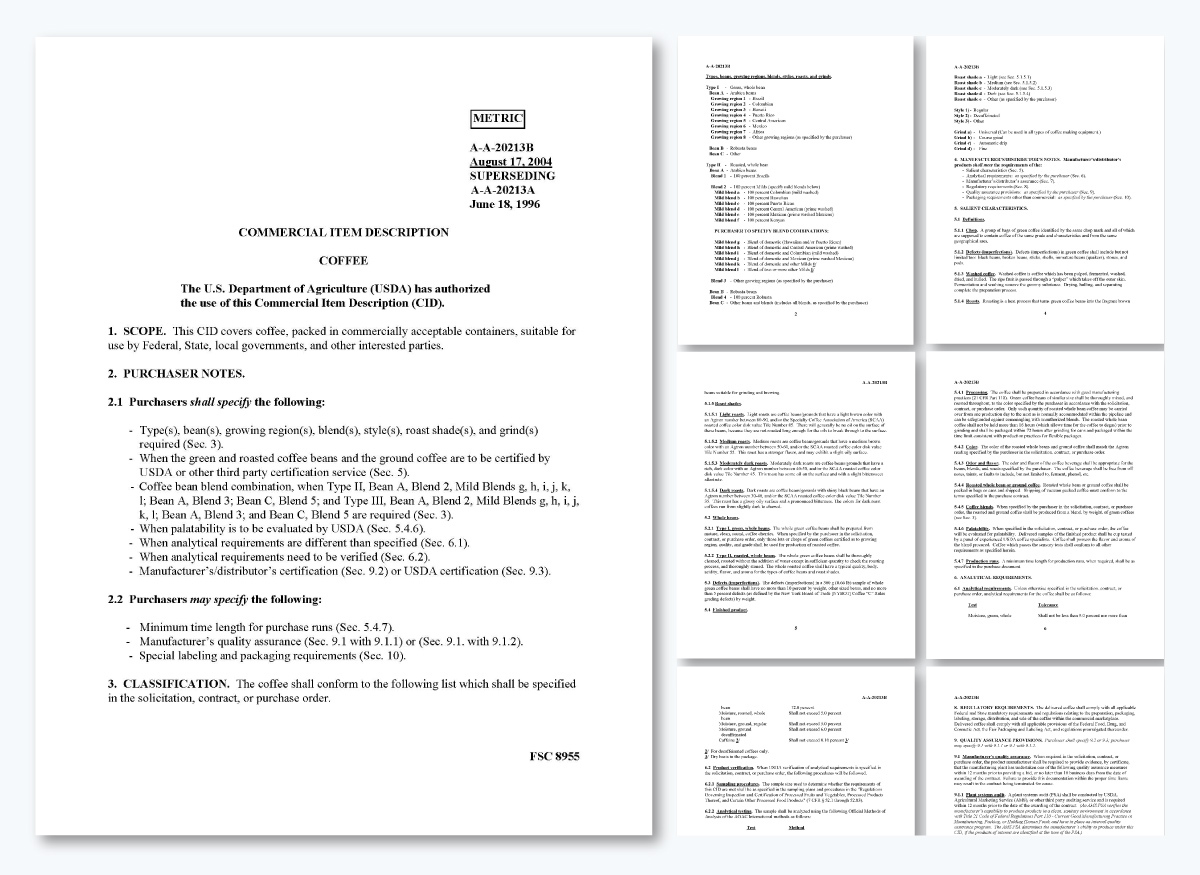
This Commercial item description from the U.S Department of Agriculture (USDA) is a perfect example of how to write your procurement spec sheet, especially when you’re managing agricultural orders.
The spec sheets provide clear definitions for bean types, grinds, blends and roasts, preventing mix-ups and contract disputes when procurement officers place orders.
This product specification uses a simple system to make ordering the exact type of coffee easy.
A smart part of the spec sheet is how it uses precise measurements such as Agtron and SCAA color values and also describes how the beans should look, smell and feel.
For instance, Agtron 80–90 means light brown and dry, while 50–60 means medium-dark, slightly oily, with a mild bittersweet flavor. So if there’s a dispute about a roast value, the sensory description serves as a backup.
When creating a procurement spec, follow these principles:
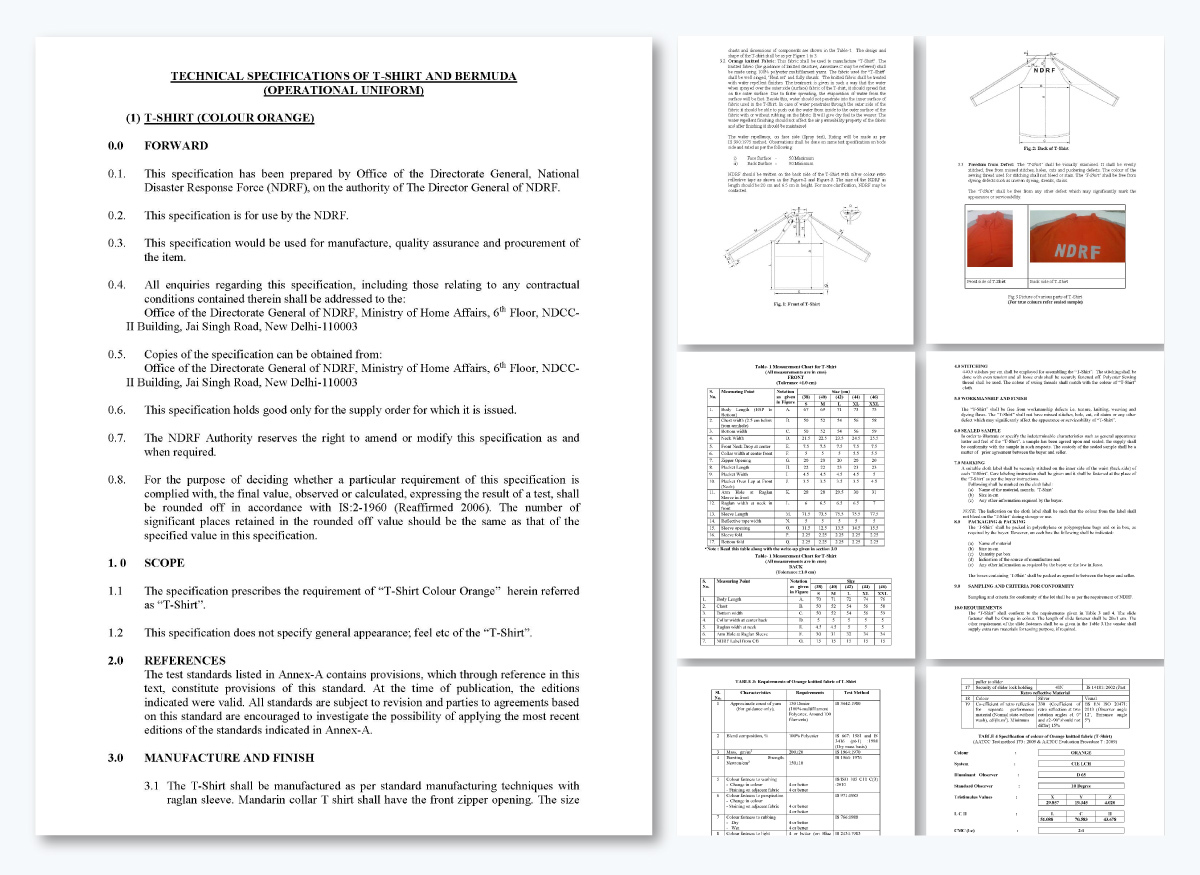
Our last pick is a great example of how to approach spec sheets for niche clothing products.
This one is from India’s National Disaster Response Force and it sets the procurement standards for their T-shirt and Bermuda uniform. It includes all the details suppliers need, such as materials, stitching quality, workmanship, labeling, packaging and any other requirements for making their uniforms.
This specification ensures the supplier has all the details needed to perform the work, covering everything from fabric selection and stitching quality to color standards and more.
Even though this specification sheet contains a lot of text, it’s still easy to read, thanks to its consistent use of visual spacing and logical layout.
One of the standout features of this spec sheet is its smart use of tables and labeled illustrations. The garment dimensions, construction features and branding requirements are clearly presented with these visuals.
These visuals help suppliers quickly understand what the T-shirt should look like, how it should be constructed and the quality standards that must be met.
Here are a few tips to keep in mind when writing a clothing product spec sheet:
Creating a well-designed product specification doesn’t have to be difficult, even for beginners. Visme offers professionally designed product spec templates you can quickly customize.
Here are a few templates you can start with:
[cta_button text="Create your Product Spec Sheet with this easy-to-edit template!" link="https://dashboard.visme.co/visme/create-project/banner/1425294678?vc=In-Text-Blog-CTA" button_text="Edit and Download"][/cta_button]
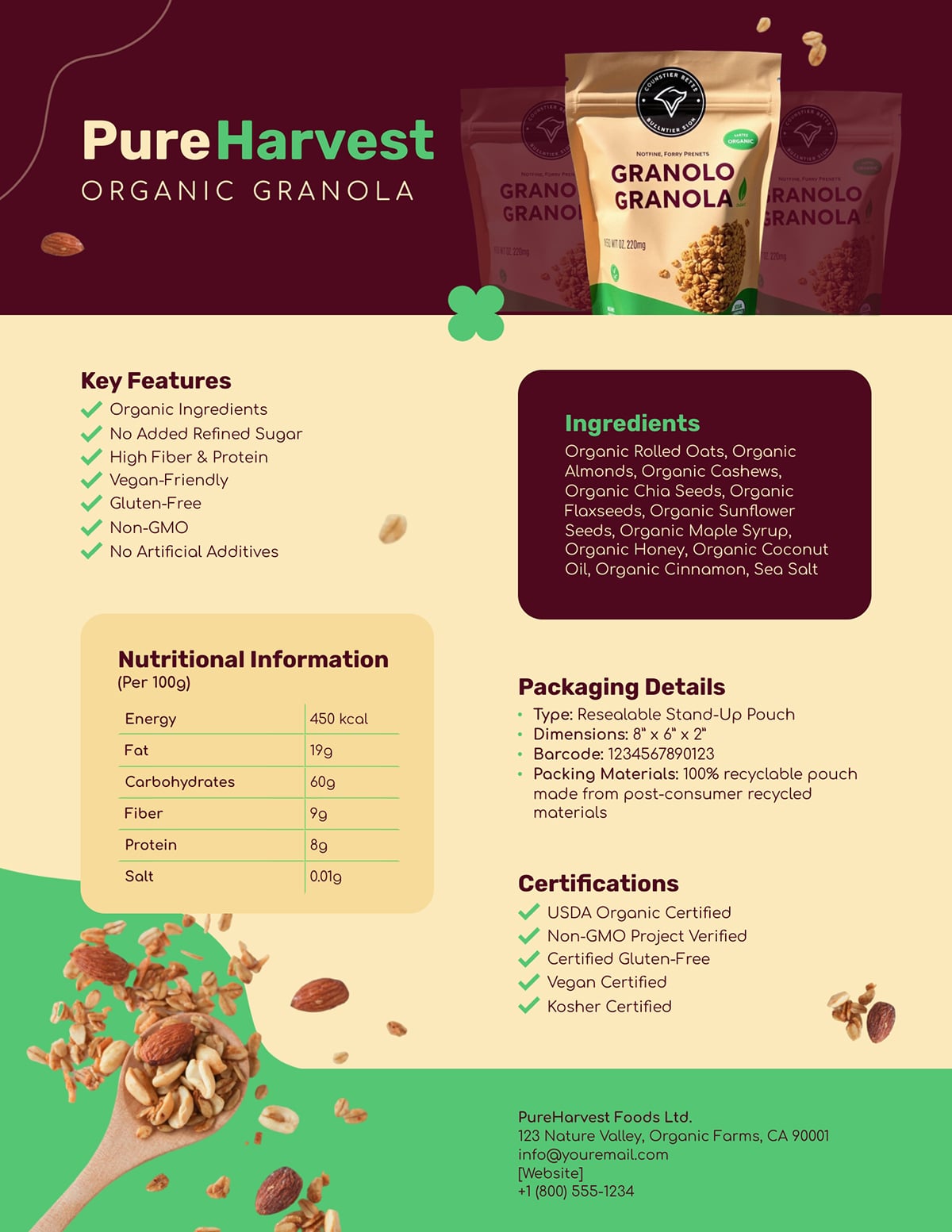
This food spec sheet template keeps everything in one place. It includes sections for ingredients, nutrition per serving, packaging details, quality standards and certifications such as Organic, Kosher or Non-GMO.
Everyone on your team can use it. Quality control can see how to test the product to ensure it’s safe and meets standards. The packaging team can check how many items go into each box and what box sizes to use. Marketing receives the product details it needs to create accurate customer messaging.
With Visme’s Brand Wizard, you can easily customize this design with your branding. Simply upload your URL and it will automatically pull your company’s colors, fonts and logo.
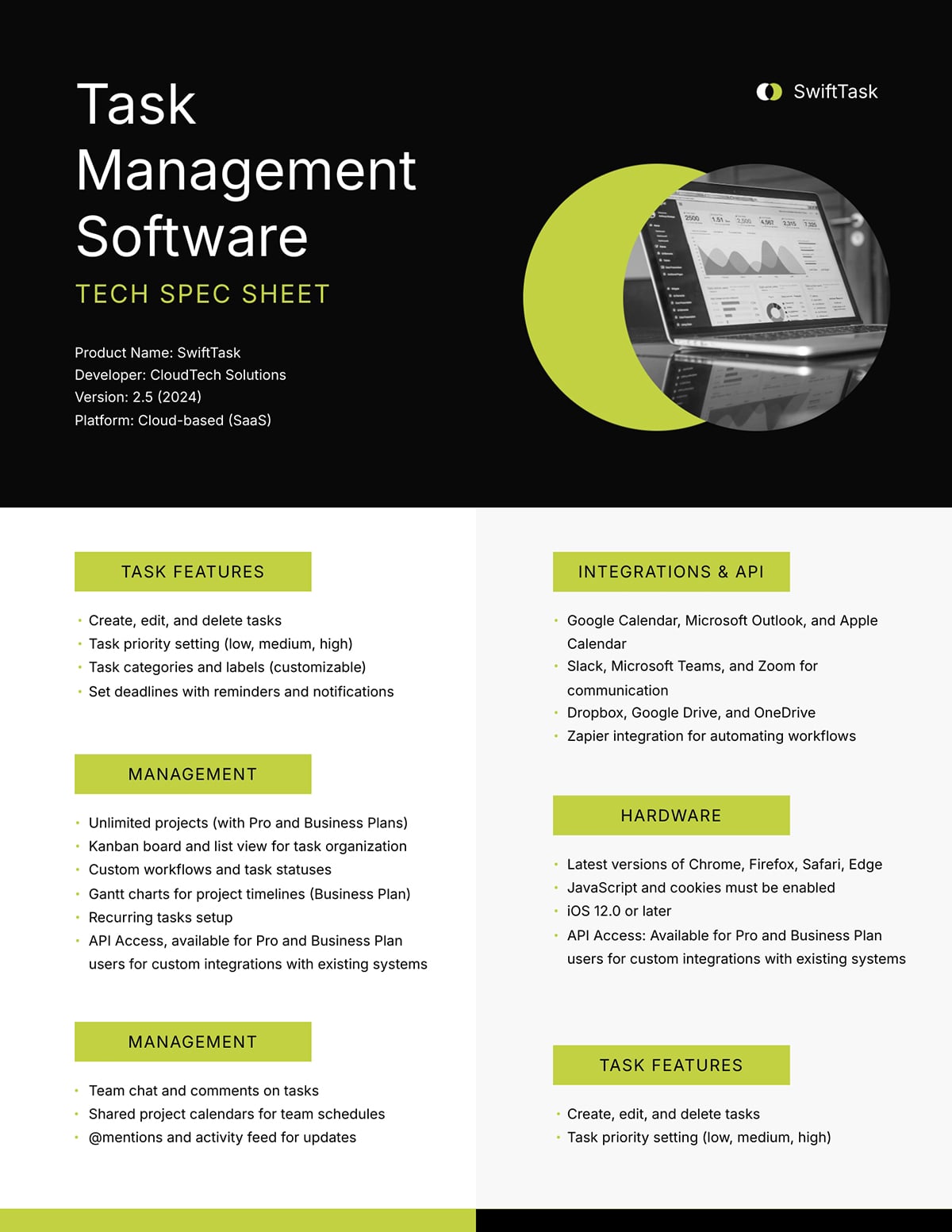
Customers want to know whether your device works with their setup; retailers need feature details; and developers need the technical details to build compatible apps. This tech spec sheet for new products provides each group with what they need without being overwhelming.
It outlines features like hardware specs, API and integration details, management tools and task-specific capabilities, so each audience can quickly find what matters to them.
If you’re working with international suppliers or retailers, use the Visme translator to create specs in various languages. Simply select your text, choose from over 190 languages and you’ll have a translated document immediately.
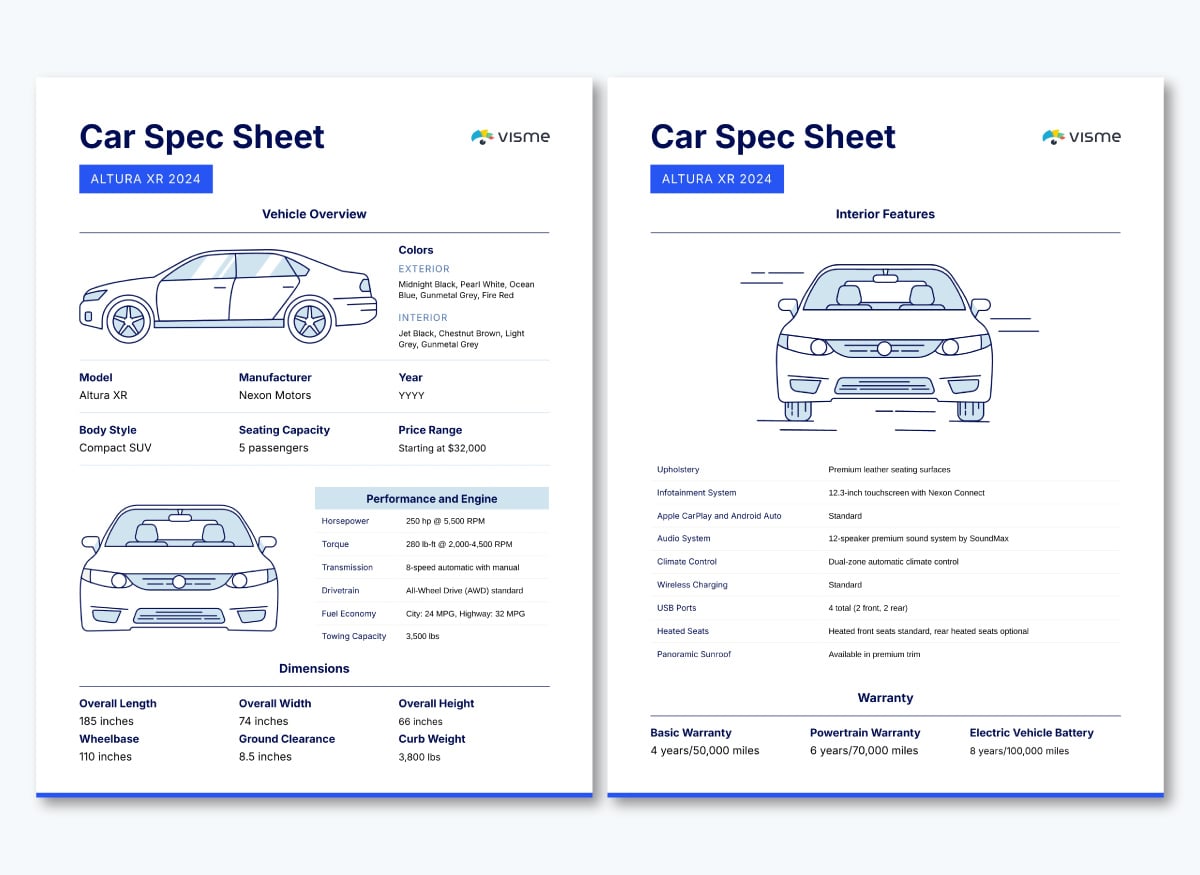
Instead of listing every engine detail, transmission option or feature of your for-sale cars in a long, confusing detail, use this template to organize all the information in a clear, easy-to-skim format.
The template includes front and side views of the car to provide a clear view. It highlights key details such as the model name, starting price and fuel economy. Below that organize the specifications into clear categories: Performance and Engine, Dimensions, Interior Features and Warranty.
If you want to add more information without cluttering the document, you can use interactive elements such as clickable tabs, pop-ups or hover effects to reveal specifications, technical details or additional images. This also keeps the sheet engaging and easy to read.
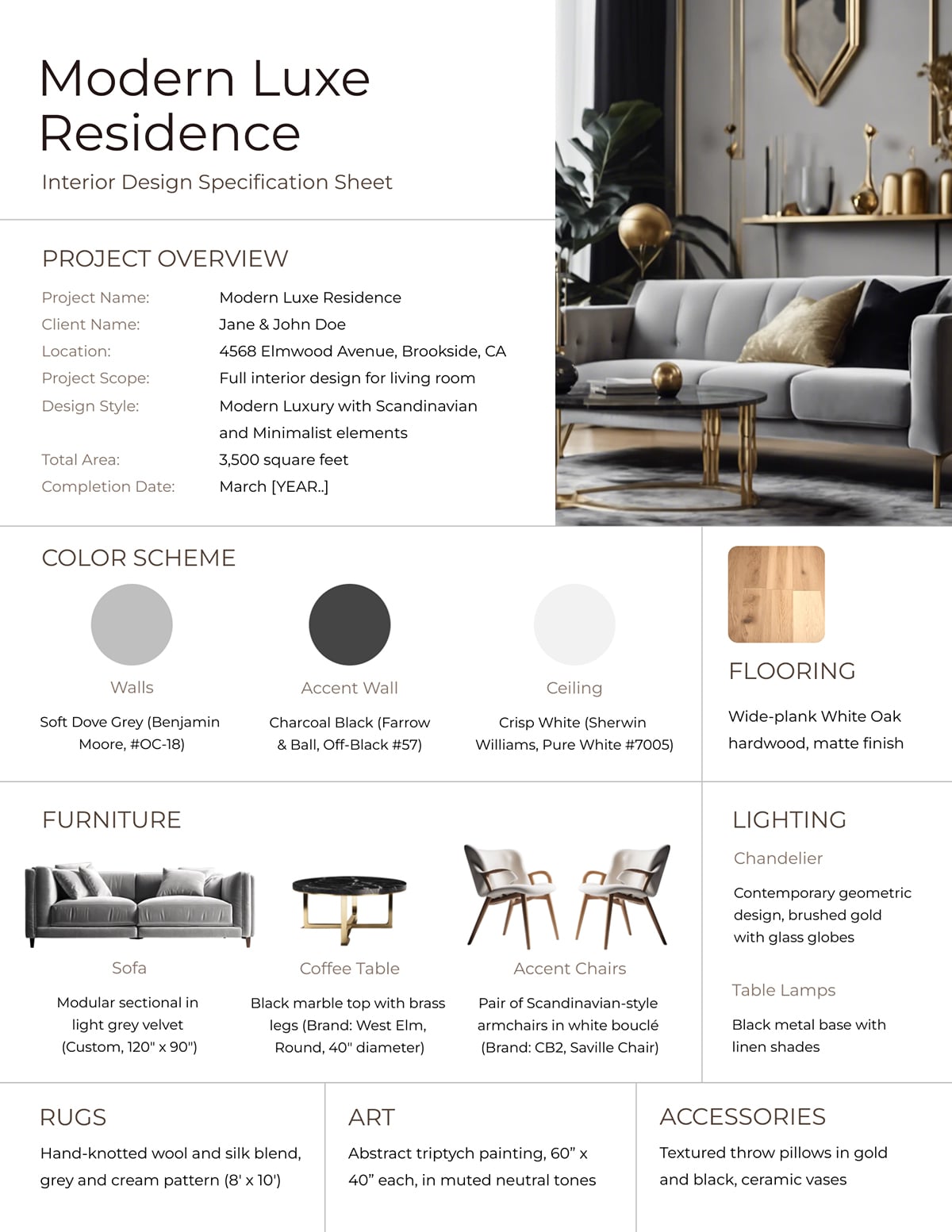
Need a spec sheet to explain your design vision to contractors? This template was designed with you in mind.
The visual section showcases your design through an eye-catching mood board. It highlights details such as the color scheme, flooring and lighting to clearly convey the intended outcome.
You can replace the placeholder images with your own product photos or choose from Visme's stock library to find what suits your needs.
A detailed fashion clothing spec sheet like this helps your clients know exactly what they’re getting. It includes sketches of the front and back views, fabric composition, color options, sizes and other functional details.
Customizing the design is easy. You can add your unique images, brand colors and highlight any other details that make your clothing stand out.
Pro Tip: Don’t have visuals for your spec sheet? Use Visme’s AI image generator to create a relevant, original image. Describe what you want in the prompt box and watch the AI create its magic.
Here’s a simple step-by-step guide to help you create a successful product specification without breaking a sweat:
Every product is designed to address specific user needs and pain points.
Start by identifying the personas that will rely on the document. This could include engineers, product managers, procurement, operations, quality teams, or external partners.
You also need to identify who will use the specification and understand their roles. Their needs and backgrounds should determine how detailed the document is and how it’s organized.
For instance, engineers need technical details, while procurement teams focus on measurable requirements and clear approval criteria. If several groups will use the spec, ensure it’s organized so everyone can easily find the information they need.
You're likely not an expert in every aspect of your product design and development process. That is why it is important to involve the right experts early.
Collect input from specialists who understand materials, performance, safety, testing, cost or regulatory needs. This ensures the spec reflects what is feasible and aligns everyone before development begins.
As Karl Wiegers, author of Software Requirements, emphasizes:
"Business requirements should come from the person who is ultimately accountable for the business value expected from the product. User requirements should come from people who will press the keys, touch the screen or receive the outputs."
Now it's time to organize your information into a clear, usable document. You have several options for creating your product requirements document.
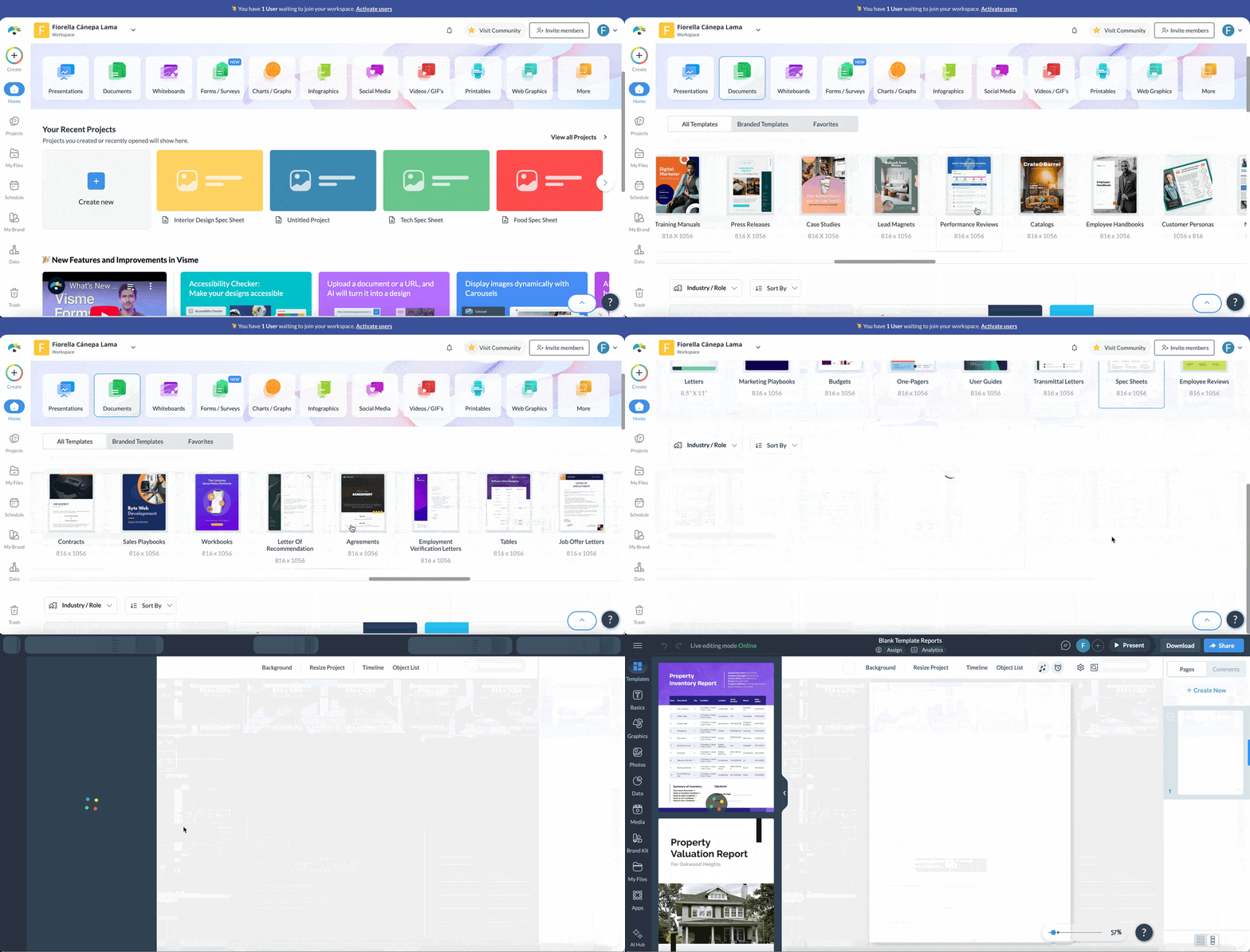
"Create a product specification template for marketing software, including technical specifications, performance metrics, compliance requirements and quality standards."
The AI generates a structured first draft that you can refine and customize. This combines the speed of templates with customization for your specific needs.

Once you have the structure in place, make it your own by adding content and branding.
Use Brand Wizard to extract your brand elements from your website URL and apply them across the entire document in a single step.
Next, replace placeholder text with your actual specifications. If your content feels wordy or unclear, use Visme’s AI Writer to adjust tone, make it concise or improve clarity.

Add visual documentation, since images are crucial in product specifications. Visme’s library provides icons, wireframes, illustrations, sketches, connectors and labeling tools so you can:
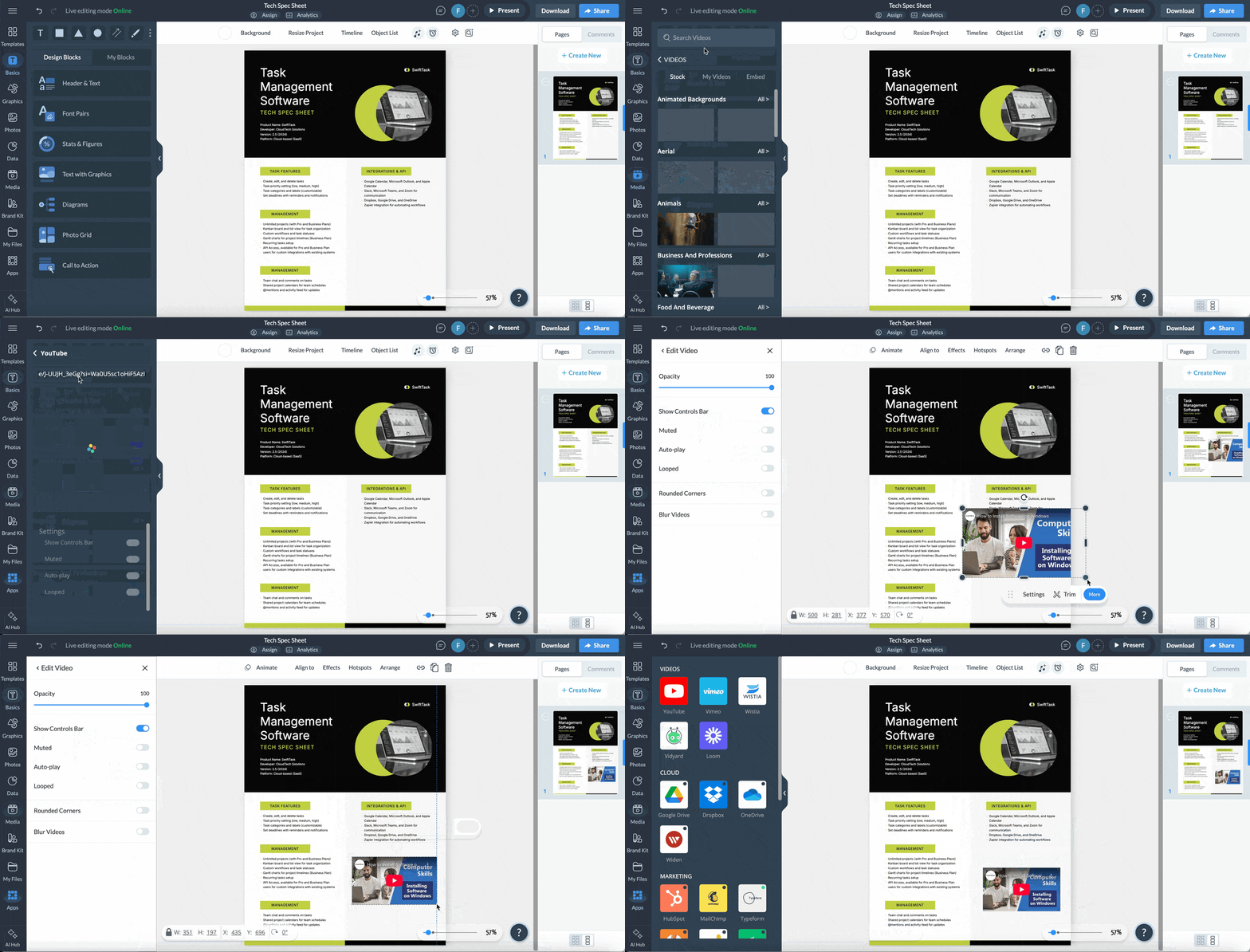
You can also embed supporting materials to make the specification more interactive. Include videos showing assembly procedures, GIFs that demonstrate how features work or links to external test reports and certifications. This keeps all relevant information in one place.
Product specifications rarely get it right on the first draft. They need input from different product teams before they’re final.
Bringing in the right people early helps you pressure-test assumptions, validate product goals, and make sure the spec supports the broader product vision. Engineers can flag technical constraints, operations can highlight feasibility issues, and stakeholders can sanity-check priorities.
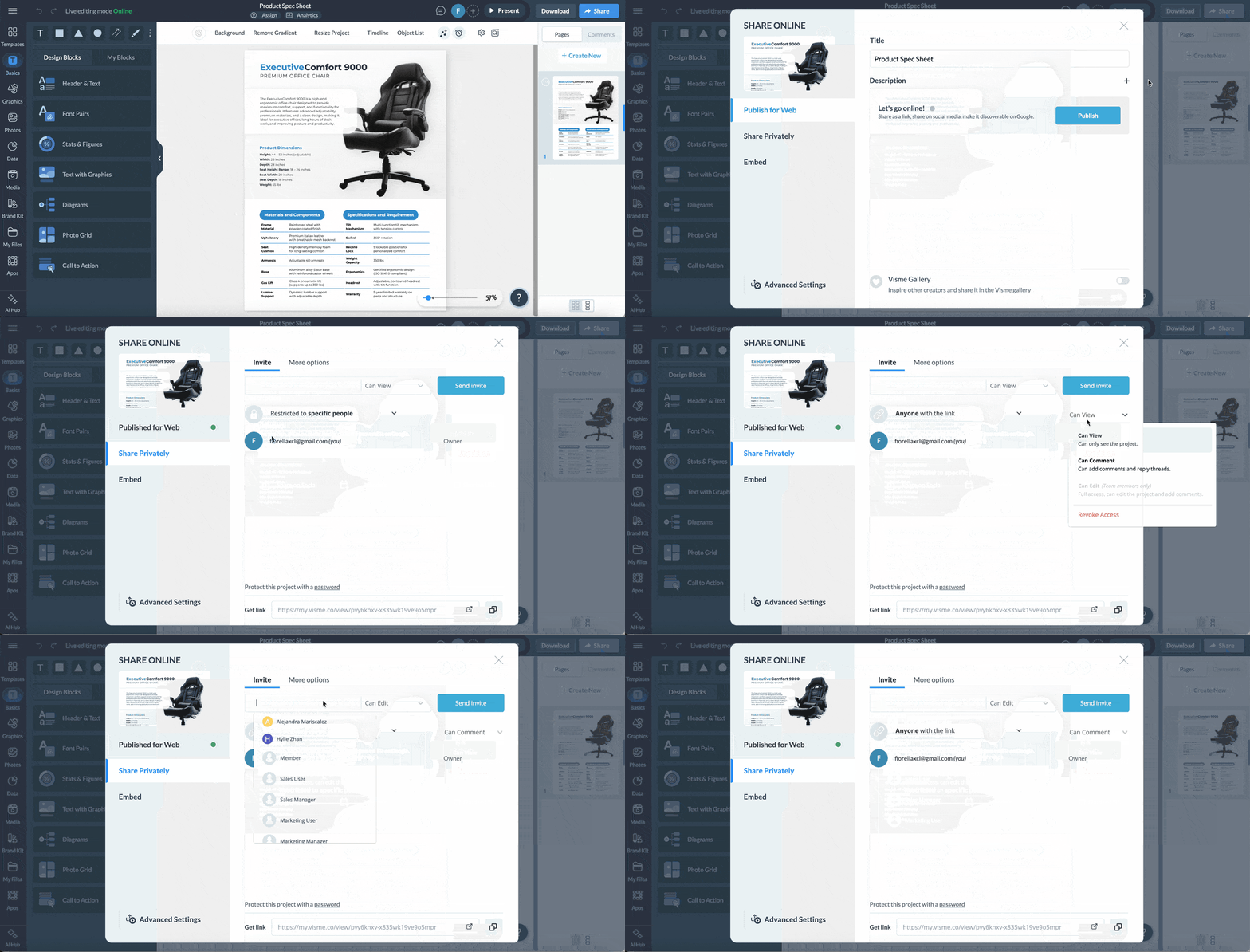
Visme's collaboration features make this review process easier to manage. In real time, you can control who has access, invite feedback, and keep everything in one place:
Collaboration also creates space to incorporate customer feedback, insights from user testing, and lessons learned from user stories before development is locked in. That way, the specification reflects actual customer needs rather than just internal assumptions.

Your specification is now ready to guide production. Visme offers multiple sharing options to fit different scenarios. You can:
Bonus Tip: After sharing, avoid making further changes to the document. As Krushboo Saraf, Ex-senior Product Manager at Amazon, advised:
“Freeze the specification before production begins. Product specs are living documents during development, but once manufacturing starts, changes become expensive. Improvements discovered during production should inform the next version, not disrupt current production.”
Product specifications are important because they ensure products meet requirements, prevent errors and keep teams aligned on what needs to be built.
Another term for a product specification is a “product spec” or “spec sheet.”
Product specifications are usually written by product managers, project managers, engineers, designers or quality teams.
The difference between a product spec and a product requirement is that requirements define what a product must do, while a specification details how it will be built or delivered.
You need visuals or diagrams in a product specification to clarify complex details, show assembly steps and reduce misinterpretation.
Product specs for manufacturing or development should be detailed enough to be measurable, specific and cover all critical features to ensure consistent quality.
Throughout this article, you’ve seen how effective specifications work across industries. Now it’s your turn. The best part? You don’t need to be an expert to create one.
With Visme, you can easily create professional product spec sheets using customizable templates and intuitive tools. Access a wide range of tools like branding kits, data visualization, collaboration tools, workflow tools AI tools and more.
Beyond creating product spec sheets, Visme also helps you create other business assets, including proposals, flyers, infographics, one-pagers, reports, social media graphics, training guides and more.
Ready to try it out? Sign up and start creating impactful product specifications.
Design visual brand experiences for your business whether you are a seasoned designer or a total novice.
Try Visme for free