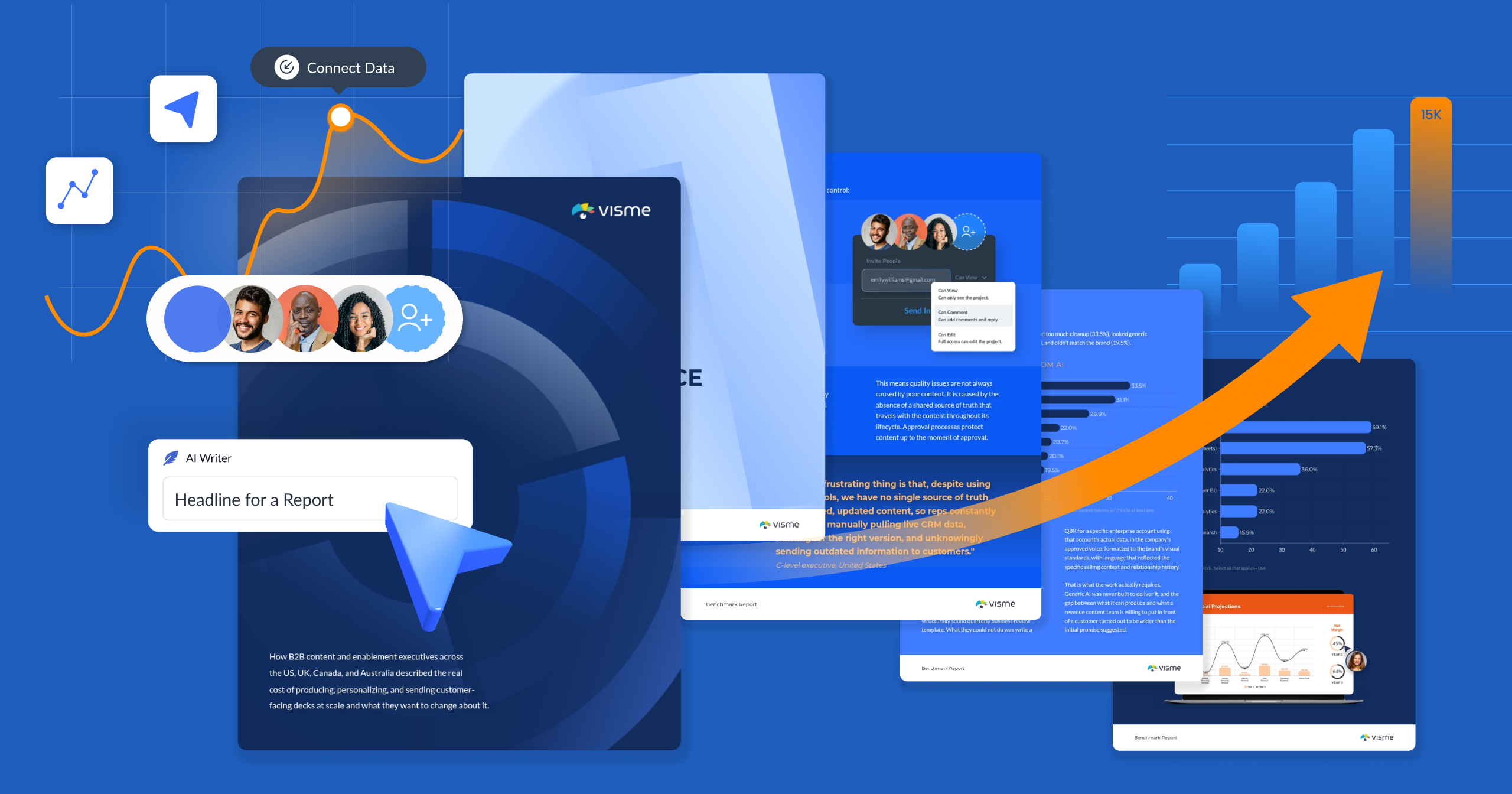


How to Speed Up Sales Content Production: Insights From 164 B2B Revenue Teams

Healthcare marketing has always had more at stake than most industries.
But with AI stepping into the spotlight, the stakes just got higher.
According to NVIDIA's 2026 State of AI in Healthcare report, 70% of healthcare organizations are using AI now, up from 63% last year.
Up to 85% of them say it has already increased their annual revenue.
AI is no longer sitting in the background. It’s woven into key operational and marketing processes, such as market research, content creation, channel distribution, promotion and patient acquisition.
Undoubtedly, it’s changing how healthcare providers connect with patients and how pharma companies communicate with doctors, influencing how every marketing dollar is spent.
So how do you figure out which tools to build, which ones might put your marketing at risk of compliance issues and how to use AI responsibly in such a heavily regulated industry? This guide is here to help with that.
We’ll dive into effective healthcare marketing strategies, useful tools to add to your toolkit, compliance risks to watch for, and real-life examples of health systems winning with AI.
Disclaimer: Visme is not a HIPAA-compliant platform and should not be used to store, process, or transmit protected health information (PHI). Users are responsible for ensuring their use of Visme complies with applicable data privacy and security regulations.
Made with Visme Infographic Maker
The rapid growth of artificial intelligence (AI) is shaking things up in different industries, and healthcare marketing is definitely feeling the impact.
The numbers are hard to overlook.
According to Grand View Research, the global AI in healthcare market size was estimated at $36.67 billion in 2025. It is now projected to reach $505.59 billion by 2033, growing at a CAGR of 38.90% from 2026 to 2033.
The key driver of this growth is demand. Healthcare organizations are under pressure to become more efficient, more accurate and more responsive to patient needs. Artificial intelligence is the most direct path to all three.
The momentum at the leadership level is just as striking. The latest McKinsey survey, conducted in Q4 2024, found that 85% of healthcare leaders from payers, health systems and healthcare services and technology groups were exploring or had already adopted generative AI.
Of those who had already implemented gen AI use cases, 64% reported they anticipated or had already quantified a positive ROI.
NVIDIA's 2026 State of AI in Healthcare report shows adoption accelerating even further. 70% of organizations are now actively using AI, up from 63% in 2025. The use of generative AI and large language models jumped from 54% to 69% in a single year.
Patients are driving demand from the other direction. According to an OpenAI survey, three in five adults in the US say they have used AI tools for health or healthcare in the past three months. They are using it to research symptoms, prepare for clinical visits and make sense of billing and insurance decisions.
OpenAI’s analysis also revealed the following:
The clinical case for AI adoption is just as strong. According to the Harvard School of Public Health, using AI to support diagnoses may reduce treatment costs by up to 50% and improve health outcomes by 40%.
AI adoption in healthcare marketing specifically still lags behind other sectors. A 2025 JAMA Health Forum study found that AI use in healthcare (8.3%) remains lower than in finance and insurance (11.6%), education (15.1%) and professional services (19.2%).
So what’s holding healthcare marketing teams back?
Let’s take a look
Despite these barriers, momentum is building. The organizations pulling ahead are not using AI to cut costs. They are using it to do things their team size would not otherwise be able to do.
A four-person marketing team running targeted campaigns across five service lines. A 50-person department analyzing patient behavior data that would have taken months to process manually. The tool does not change the strategy. It changes what is actually possible to execute. - Unenabasi Godwin Ekeruke, Marketing Expert.
For a deeper look at broader marketing frameworks in healthcare, Visme's healthcare marketing strategies guide is worth bookmarking.
The barriers we’ve shared are what make healthcare marketing complex.
You are operating in a regulated environment and managing multiple audiences (patients, providers, payers and internal stakeholders).
At the same time, you need to prove ROI with content that must be clinically accurate and compliant.
That's not a burden most industries handle.
Artificial intelligence doesn’t necessarily make it less complex. But it removes the bottlenecks that slow your team down. It lets your team get more done without sacrificing compliance.
The table below maps the six areas where AI creates the most direct, measurable value in healthcare marketing, specifically, not marketing.
| Strategic Value | What It Enables | Why It’s Important in Healthcare | ||
|---|---|---|---|---|
| Content Production at Scale | AI drafts, edits, reformats and repurposes content across channels and formats. | |||
| Healthcare teams manage high content volume across service lines, conditions, audiences and compliance requirements. AI cuts production time without sacrificing accuracy. | ||||
| Generic targeting wastes budget. AI enables segmentation by condition stage, care journey position, insurance type and engagement history—not just age and location. | ||||
| Instead of relying on past performance, healthcare marketers can allocate budget based on predicted outcomes. | ||||
| Patients at different stages of care require different messaging. AI enables tailored communication across thousands of contacts simultaneously. | ||||
| Many patient interactions happen outside clinic hours. AI ensures continuous engagement without increasing staffing costs. | ||||
| Brand & Compliance Governance | AI reviews content against approved messaging and flags non-compliant language before publishing. | Healthcare marketing must meet strict regulatory standards. AI helps ensure compliance is built into every piece of content. | ||
| Healthcare marketing teams are often under-resourced. AI reduces manual workload and frees time for strategy. | ||||
| AI-driven insights improve budget allocation, campaign performance and reporting confidence. |
Organizations that see the best return on investment use this AI throughout their entire process. They also ensure that trained people oversee every stage that involves clinical accuracy or patient trust.
Visme gives you the tools to create the actual assets that drive traffic and increase marketing ROI. You’ll find templates for infographics, e-books, case studies, web graphics, short videos, flyers, white papers, SBAR and other healthcare communication.
Add icons, stock photos and other visual elements to simplify complex healthcare information and keep everything consistent with your brand using the Brand Wizard.
And if you’re racing against the clock or need a hand with design, Visme has an entire hub of AI tools, including an AI design generator, AI edit tools, an AI text generator, an AI image generator, AI text-to-speech generator.
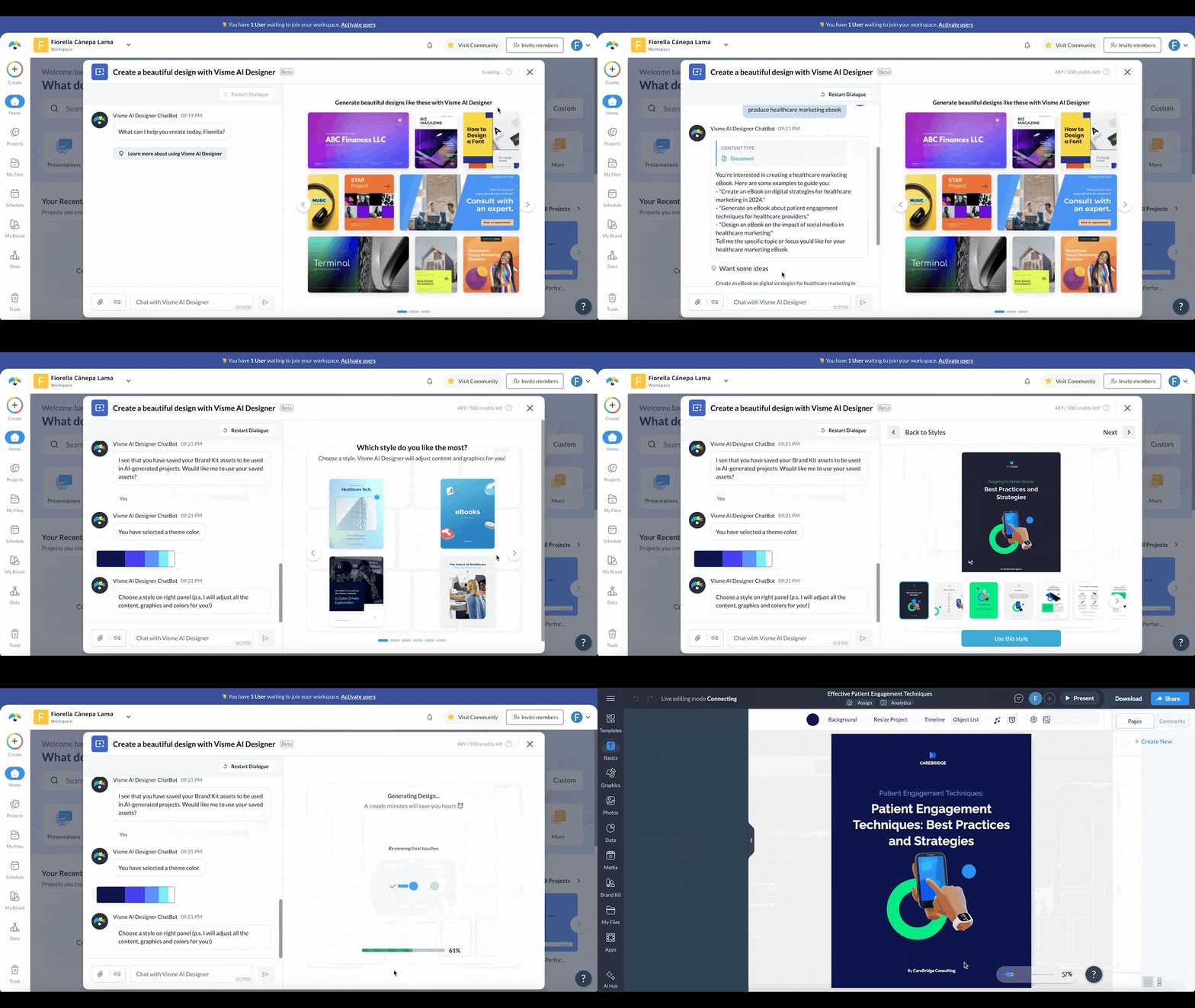
Once the design is ready, download it in PDF, Image and PPTX formats. Or export or publish the final piece as HTML and place it directly on your landing page.
Once you share the content, our analytics tool lets you track who opens it and how long they engage with it.
You understand the potential of healthcare marketing with AI, but perhaps you’re not sure where to start.
In this section, I’ve shared proven AI healthcare marketing strategies, plus see real-world examples of different tactics in action. I’ve also included a walkthrough video that shows how to build your own healthcare marketing plan.
A patient managing type 2 diabetes and a patient researching bariatric surgery are both on your website. They want completely different things.
Most health systems send them the same email, the same homepage and the same follow-up sequence. AI fixes that.
When AI is connected to your CRM, patient portal data and campaign analytics, it can automatically route the right pre-approved content to the right person. The marketing team is not writing a hundred versions of every email. They are writing the master version, setting the rules and letting the system personalize delivery.
Endeavor Health (formerly Northshore-Edward-Elmhurst Health), a large Chicago-area health system, is a good example of what this looks like at the operational level. The organization used IQVIA's NLP technology to process unstructured patient notes and extract social determinants of health data, things like food insecurity, social isolation and lack of transportation.
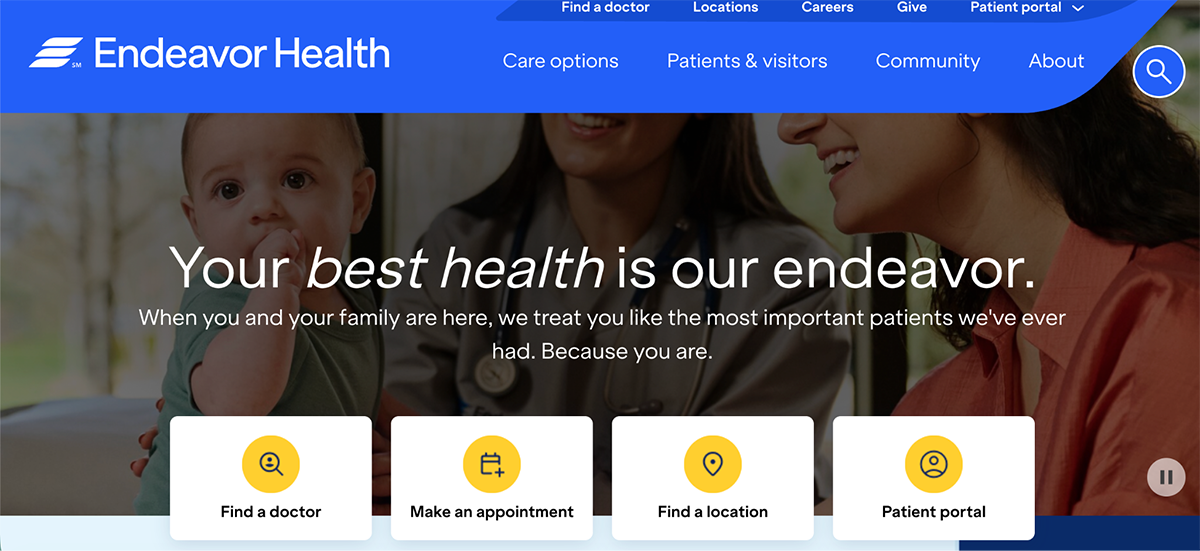
Before the tool, emergency department social workers spent 80% of their time reviewing charts to determine who needed help. After implementation, they flipped that ratio: 80% of their time went to actually helping patients.
The system identified and categorized SDOH factors across thousands of records that would have taken months to review manually. The result was more targeted outreach, more relevant care plans and a direct contribution to the organization's work on closing a 22-year life expectancy gap across their service population.
Alfred Whitehead, EVP of Applied Sciences at Klick Health, sees this kind of intelligence as the upstream foundation for everything healthcare marketing does next:
"It's very exciting for us in healthcare—this idea of having an AI that spends time thinking and reading and can do things like read 2,000 scientific papers and synthesize them and put the ideas together and give you sort of the deep insights there to share. I think when that gets applied to social media, it's going to be super interesting to see how that changes how we develop messages or segments for our consumer audiences." — Alfred Whitehead, EVP Applied Sciences, Klick Health
Pro Tip: When AI unearths valuable insights during research, it helps create better customer segmentation and more relevant messages throughout the entire sales process. Keep in mind that AI-driven personalization is only as good as your data hygiene. If your CRM is full of outdated or incomplete records, the model and results will reflect that. So, make sure to tidy up your data before building anything on top of it.
Most healthcare marketing teams are allocating budgets based on what worked last quarter. Predictive analytics lets you allocate based on what is likely to work next quarter.
By running AI models across patient acquisition history, referral patterns, campaign performance data and market demographics, marketing teams can answer questions that used to require a six-week research cycle:
The adoption data shows how far this has spread. According to Health Affairs (2025), 65% of US hospitals are now using predictive models.
The American Hospital Association puts hospital predictive AI adoption at 71% in 2024.
In fact, predictive analytics in hospitals has been shown to reduce readmission rates by 10 to 20%, with downstream effects on both outcomes and revenue.
The lesson is not just that predictive analytics works. It is that the insight has to leave the dashboard. Predictive models that sit on your team's dashboard aren’t going to move the needle.
To drive decisions, the output needs to be communicated clearly to the people who control spending. That is where Visme's data visualization tools for healthcare teams come in. You get 33+ chart and graph types in both 2D and 3D formats: bar charts, scatter plots, funnel charts, heat maps, geographic maps, waterfall charts, Gantt charts and more. Every chart is fully customizable with your brand colors and data labels.
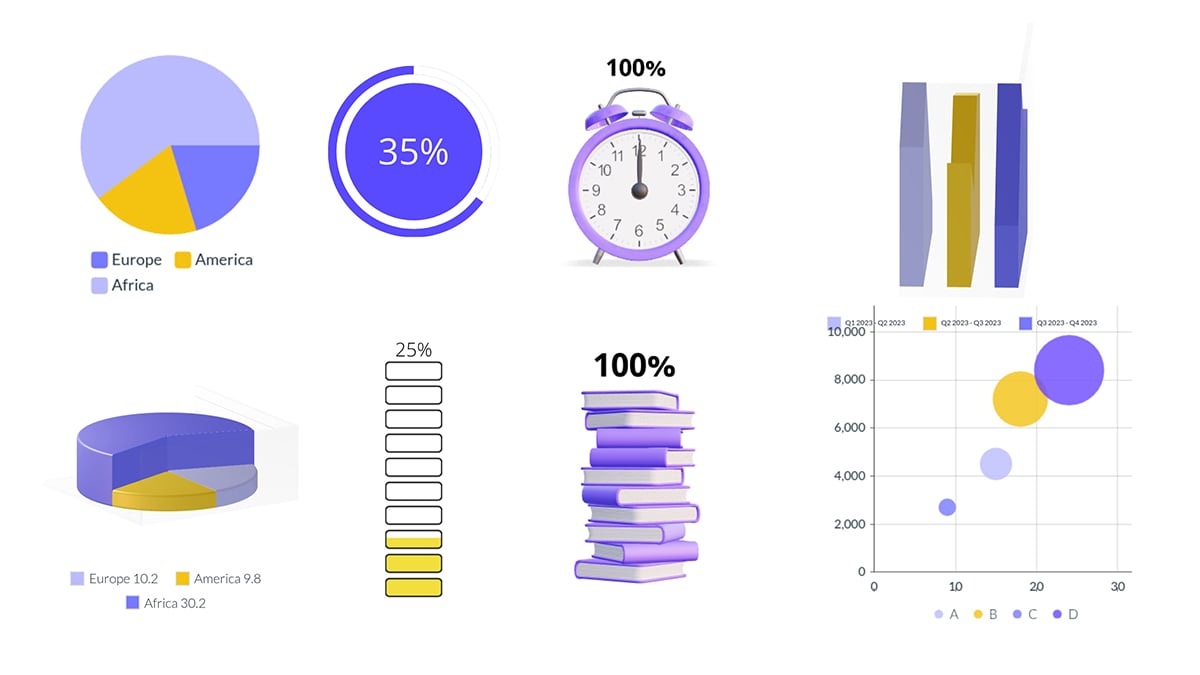
Publish a chart as a standalone visual, embed it inside a report, presentation or case study. Include it in a patient-facing or provider-facing document or share it as a live web link that updates automatically when the underlying data changes. Your CMO, board member or payer partner can look at the output and know what steps to take.
No-shows cost the US healthcare system upwards of $150 billion every year.
In individual health systems, they waste clinical capacity, disrupt scheduling and leave patients without care after already experiencing significant delays..
The problem compounds when missed appointments go unfilled and patients whose condition worsens in the gap return through more expensive care settings.
Healthcare no-show rates in the U.S range from 5.5% to as high as 50%, with a global average around 23.5%.
AI-powered scheduling and conversational tools reduce no-shows by an average of 42%.
These tools:
At scale, this changes the financial performance of an entire clinic network.
But scheduling is only one piece of what these tools do.
Patients who feel their doctor visits are too short are about three times more likely to switch providers. The average clinical appointment runs around 15 minutes. Physicians also feel that the allotted time is inadequate for most patients.
The visit would feel longer if the physician were present for all of it, not split between the patient and a keyboard.
AI ambient listening tools address this directly. The technology sits in the background during a consultation and records the conversation, allowing the physician to focus entirely on the patient. After the visit, the doctor reviews an AI-generated note for accuracy rather than spending 20 minutes typing from memory.
Apollo Hospitals, one of Asia's largest healthcare groups, deployed Augnito's Spectra voice AI for clinical documentation across its system. Doctors using the tool saved an average of 44 hours per month on administrative tasks. Provider productivity increased by 46%. The system delivered a 21x return on investment in the first six months of deployment.
From a marketing perspective, every one of these interactions is a brand touchpoint. The patient who calls at 9 pm and gets a clear, helpful response from your AI agent is forming an opinion about your organization. And that opinion influences whether they book the appointment, whether they show up and whether they recommend you to someone else.
Healthcare teams can reinforce that experience with patient-facing content that is just as clear and accessible as the voice tools themselves.
Use Visme's patient education and public outreach templates to create condition explainers, post-visit instruction guides, appointment prep materials and onboarding content in accessible formats.
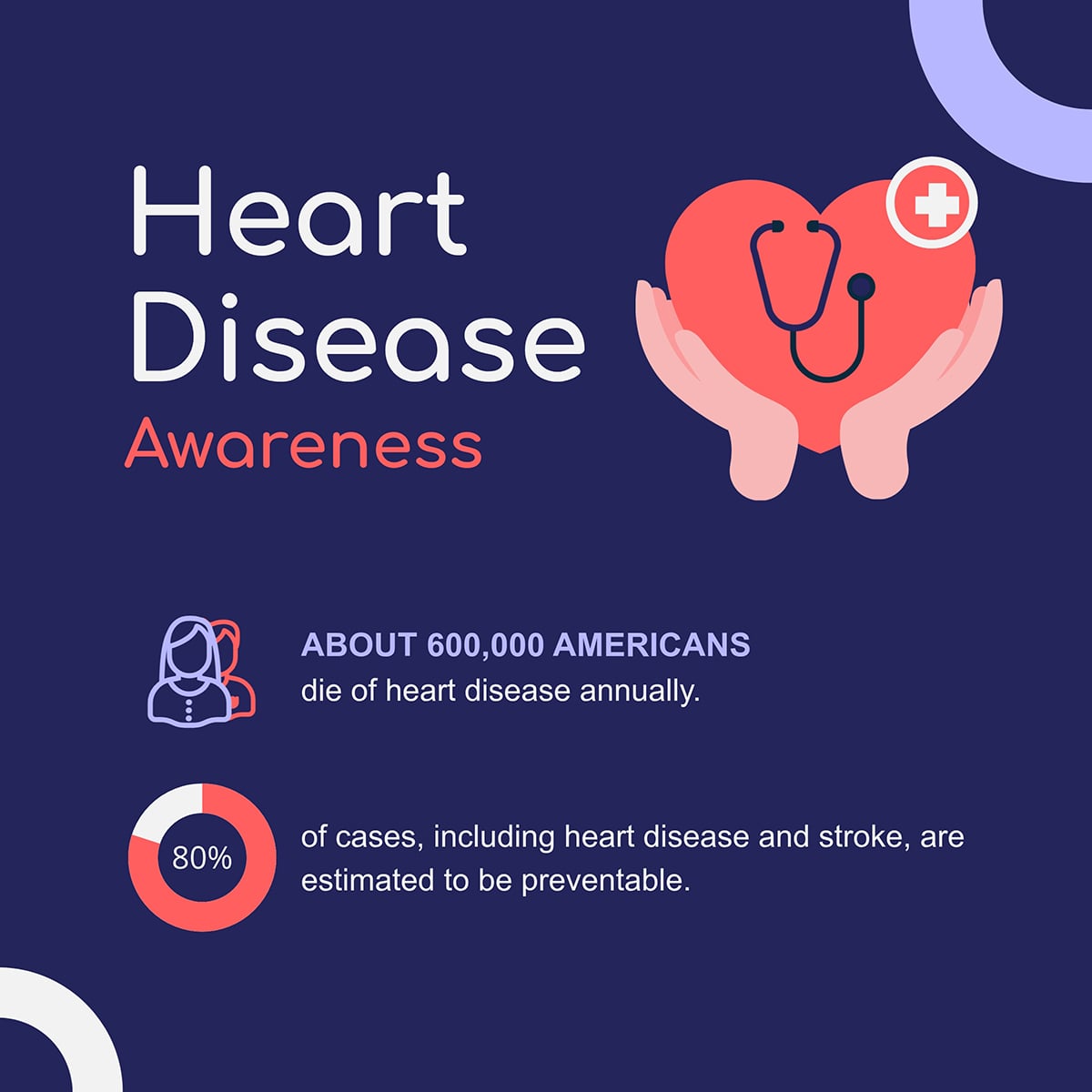
To make it accessible to a larger audience, translate with Visme's AI Text-to-Speech tool. Type your script, choose a voice, adjust the tone and generate a realistic voiceover in seconds.
That audio clip can be included in a patient education video, a narrated presentation, an infographic walkthrough or a learning module, without a recording studio or a voice actor.
Incorporate interactivity and animations, slide transitions, embedded forms, quizzes, clickable hotspots and navigation menus to build content that does not just inform patients but actually guides them through it.
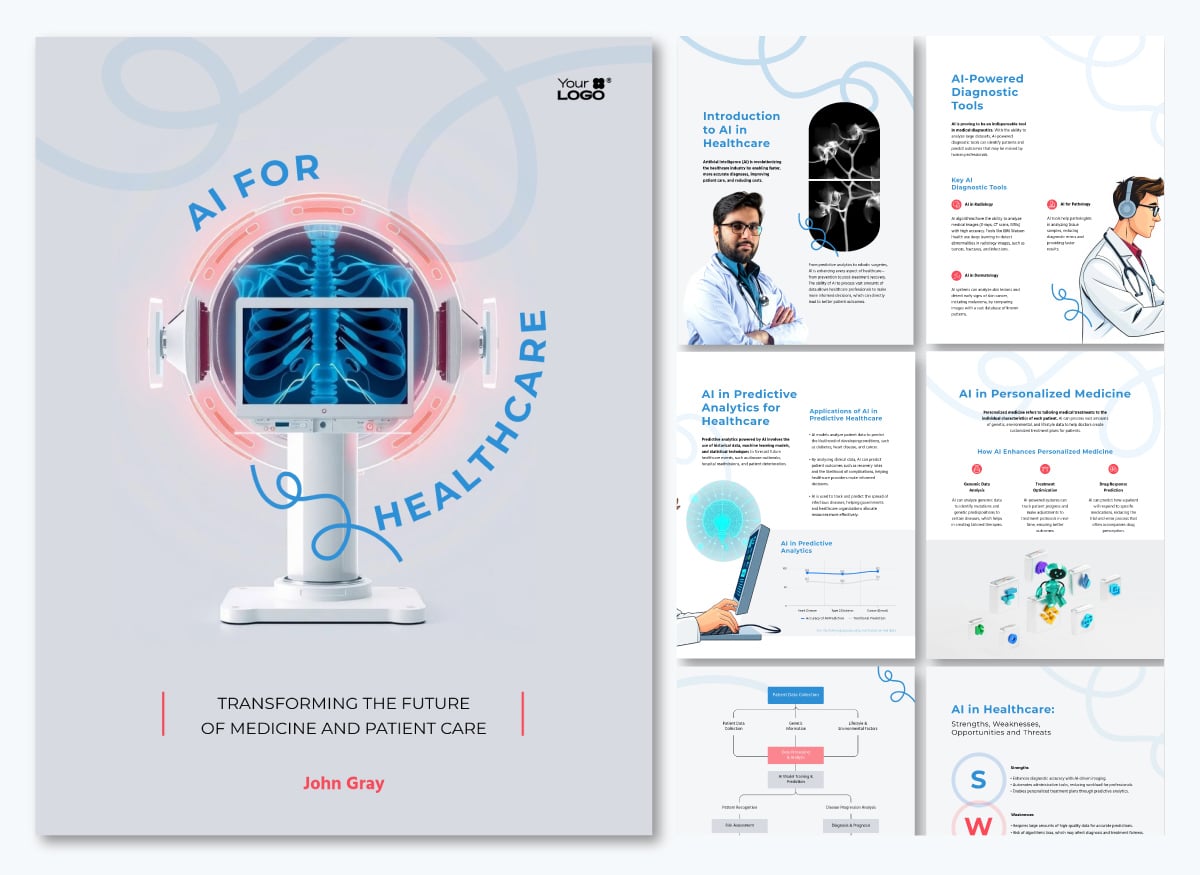
A post-discharge instruction guide becomes a narrated walkthrough that a patient can follow at home. A medication explainer becomes a short audio-visual piece that their family can watch with them. The same tool your team uses to design the asset generates the voice that delivers it.
Pro Tip: If you're using voice agents for patient interactions, make sure you have a HIPAA-compliant setup and a solid Business Associate Agreement (BAA) with your vendor. Check on both of these before launching any system that deals with scheduling, intake or patient records. Also, it's a good idea to be open about it. Patients tend to respond better when they know they're chatting with an automated system right from the beginning.
Something significant is happening in how patients find healthcare providers and most marketing teams have not yet caught up.
For decades, showing up on Google meant winning the patient acquisition game. That is no longer the complete picture.
Patients are now starting their healthcare searches on ChatGPT, Gemini and Perplexity before they ever visit a health system's website. They ask conversational questions. The AI answers them directly.
In many cases, no website visit happens at all. If your content is not being cited by these models, you are invisible to a growing portion of your target audience, regardless of how well you rank on Google.
Here are some stats to put this into context. ChatGPT grew from 2.8 billion visits in April 2024 to 5.6 billion in December 2025.
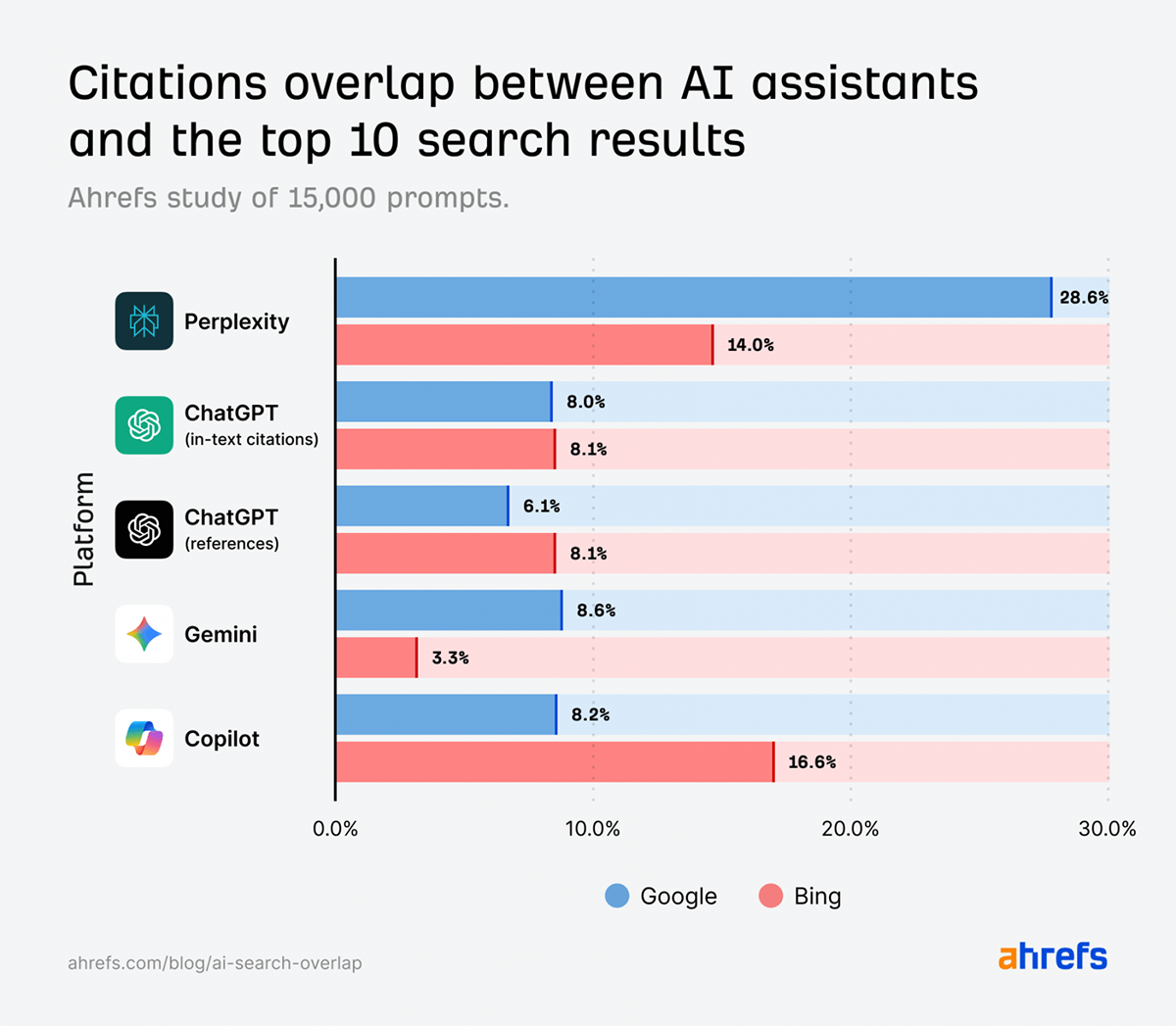
ChatGPT's results overlap with Google's organic results only 12% of the time. Your top-ranking Google pages are not automatically being cited in AI answers. You need a separate AI healthcare marketing strategy.
This has given rise to Generative Engine Optimization or GEO. It sits alongside traditional SEO, not as a replacement.
Here’s how to tap into the huge potential of this shift in search behavior
Made with Visme Infographic Maker
GEO in healthcare carries a specific risk that most general marketing content on this topic ignores.
AI models sometimes misinterpret clinical information, strip away important safety caveats or surface outdated treatment guidelines.
If your content is being cited in an AI answer that misrepresents your organization's clinical position, you may have no visibility into it and no immediate ability to correct it.
This is why your content needs the same clinical review process as any other patient-facing material. Enforcing quality checks in your content production process helps manage risk. Of course, content that is precise, well-sourced, and unambiguous is also less likely to be paraphrased incorrectly by an AI model.
Audit how your organization currently appears in AI-generated answers across ChatGPT, Gemini and Perplexity. Search your service lines, your physicians' names and your top conditions. What comes up? Is it accurate? Is it yours? That audit tells you where the gaps are before you spend anything on fixing them.
Pro Tip: Make the content creation and audit process a collaborative effort. Invite multiple team members to leave comments and approve content. Assign different parts of the content to different people to work on using the workflow feature and then use version history to track every change.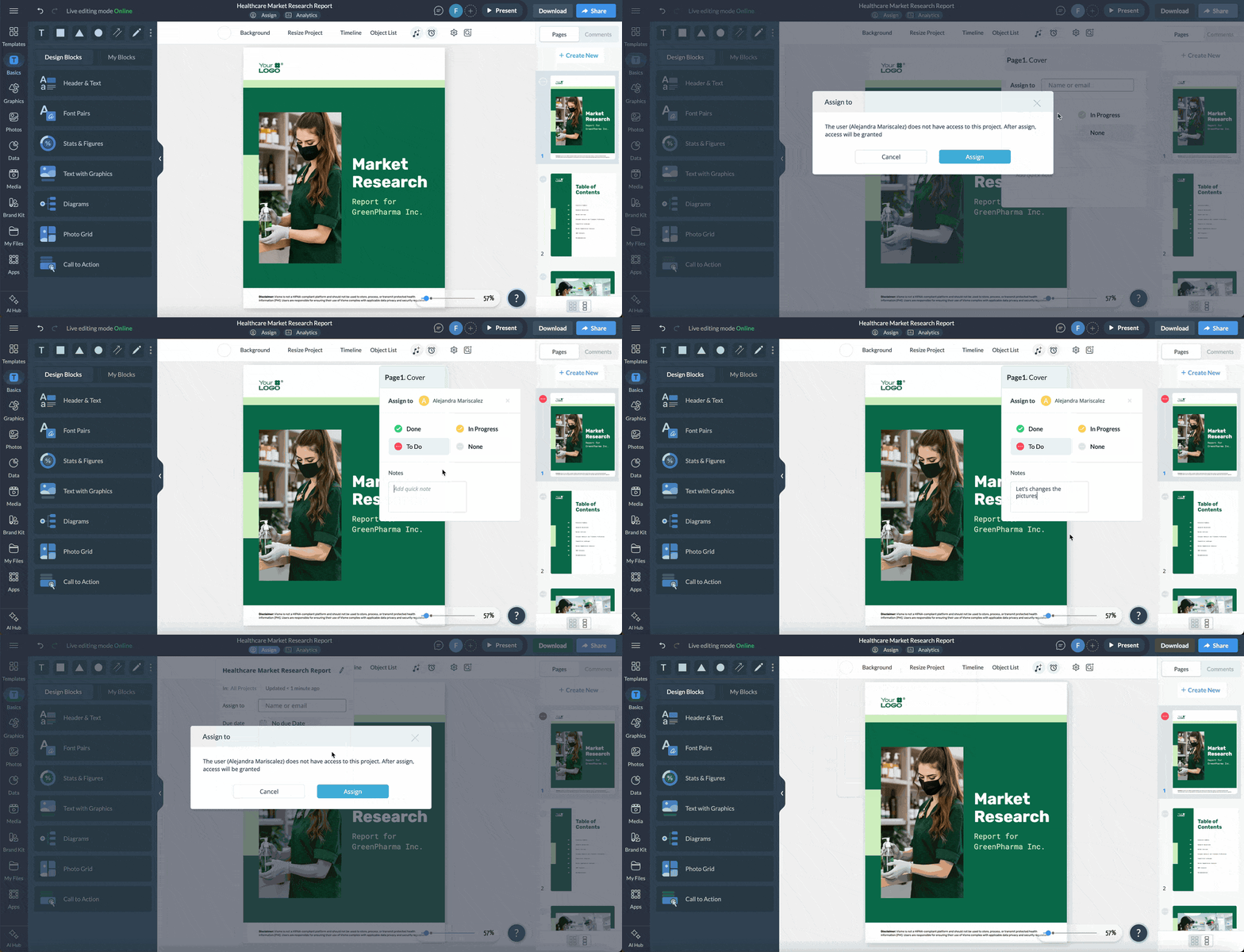
Here is a focused comparison organized by category, built for healthcare marketing teams evaluating their stack right now.
| Tool | What It Does | Healthcare Marketing Use | Ratings& Reviews |
|---|---|---|---|
| Visme | AI writing, design and long-form content generation inside Visme’s platform | Sales and marketing enablement materials, patient education, provider communications and campaign content | G2: 4.6/5 (475+) |
| Capterra: 4.4/5 (320+) |
| Tool | What It Does | Healthcare Marketing Use | Ratings |
|---|---|---|---|
| Salesforce Health Cloud + Einstein | CRM with AI-powered segmentation, journey orchestration and predictive scoring | Patient journey mapping, campaign personalization and lead scoring | Gartner: 4.2/5 (52) |
| HubSpot Marketing Hub | All-in-one marketing platform with AI-driven automation and analytics | Inbound campaigns, lead nurturing and provider engagement | G2: 4.4/5 (14,500+) |
| Capterra: 4.4/5 (15+) |
| Tool | What It Does | Healthcare Marketing Use | Ratings |
|---|---|---|---|
| Nuance (Microsoft) | Enterprise-grade AI voice and conversational AI platform | Patient scheduling, post-visit follow-ups and clinical documentation support | Gartner: 4.6/5 (8) |
| Hyro | Healthcare-focused conversational AI platform | Chatbots, appointment scheduling and FAQ automation | G2: 4.9/5 (20) |
| Google CCAI | AI-powered contact center platform with voice and chat capabilities | Multilingual patient support, intake and call routing | G2: 4.5/5 (25+) |
| Tool | What It Does | Healthcare Marketing Use | Ratings |
|---|---|---|---|
| Tableau | Data visualization platform with AI-powered predictive insights | Campaign dashboards, patient acquisition modeling and performance tracking | Gartner: 4.4/5 (4,650+) |
| G2: 4.4/5 (3,500+) | |||
Health CatalystHealthcare-specific analytics and personalization platformPatient engagement, service line marketing and outcome trackingG2: 5/5 (2)
| Tool | What It Does | Healthcare Marketing Use | Ratings |
|---|---|---|---|
| Adobe Target | AI-powered personalization and A/B testing platform | Personalized web experiences and content for patients and providers | G2: 4.1/5 (65+) |
| Visme Dynamic Fields + Analytics | Dynamic content personalization with built-in engagement tracking | Personalized patient education materials, reports and campaign assets | G2: 4.6/5 (475+) |
| Capterra: 4.5/5 (700+) | |||
| Tool | What It Does | Healthcare Marketing Use | Ratings |
|---|---|---|---|
| Veeva CRM | Life sciences CRM with AI capabilities for HCP engagement | Pharma and device rep enablement, prescriber targeting and call planning | Gartner: 4.4/5 (25+) |
| G2: 4.2/5 (25+) | |||
| G2: 4.7/5 (1,600+) | |||
| Capterra: 4.5/5 (700+) |
Here are three organizations using AI in healthcare marketing in ways that are working and what you can take from each.
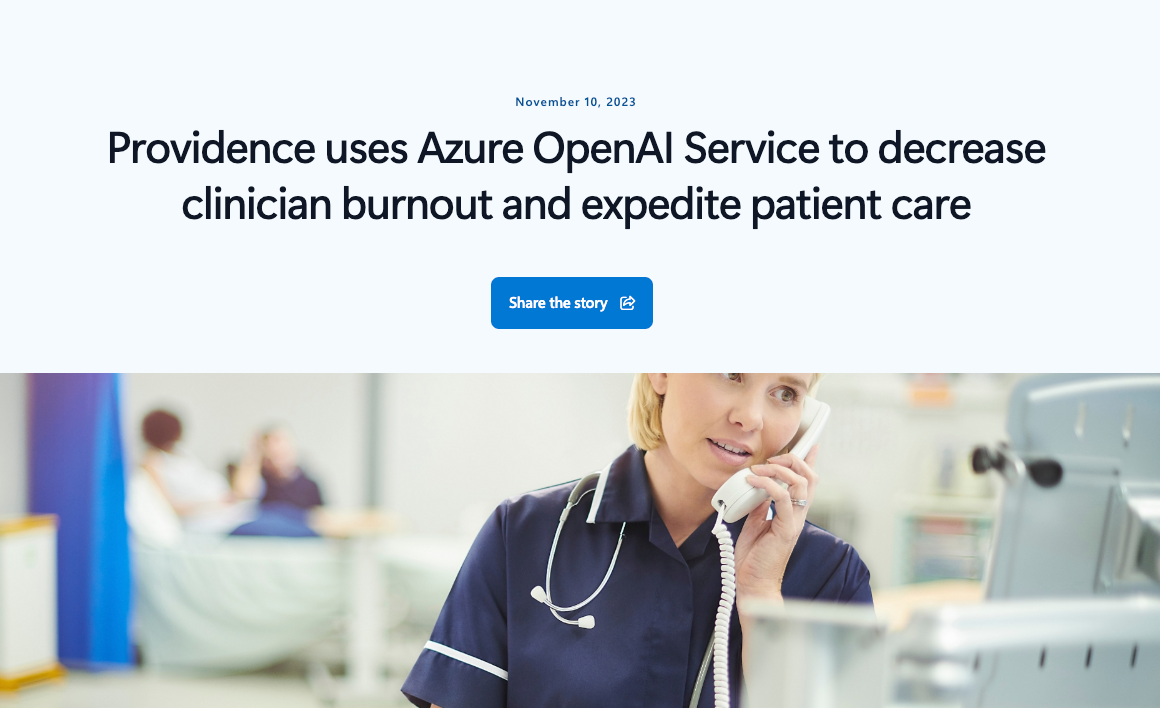
Providence runs 51 hospitals and 1,085 clinics across seven states with 117,000 caregivers. When patient electronic messaging tripled after COVID-19, medical assistants were processing thousands of messages in order of arrival with no way to prioritize urgent ones.
Providence built ProvARIA on Azure OpenAI Service, an NLP-powered triage tool integrated directly into their EHR workflow. It classifies incoming messages by content and urgency and automatically routes them to the right caregiver. A refill request goes to a pharmacy technologist. A message flagged for concerning symptoms jumps to the front of the queue.
The pilot covered 27 doctors and nurse practitioners, processing 10,000 messages per month. Turnaround time improved by 35%. The system now covers 145 clinics and 650 providers, processing 5,000 messages per day.
Patient communication is where trust is won or lost. A patient who sends a message about a concerning symptom and waits two days for a response does not just feel frustrated. They start looking for another provider. Providence's AI triage system means urgent messages reach the right person faster, same-day appointments get offered more consistently and caregivers are no longer buried in administrative noise when a patient genuinely needs them.
Every one of those outcomes shapes how patients perceive the organization. Faster, more accurate responses at the communication layer directly improve the experience that drives retention and referrals.
Look at where patient communication creates the most friction in your organization. Overloaded inboxes, slow response times and inconsistent message routing are problems most health systems share. An AI triage layer does not replace your care team. It ensures your care team spends time on the communications that actually require them.
Cleveland Clinic uses AI across clinical operations, administrative workflows and patient engagement simultaneously. AI monitors patient vitals and flags sepsis risk in real time. It handles medical coding to reduce errors and free up staff. An AI scheduling system manages over 700 operating rooms, automatically pulling surgeon availability and flagging robot-usage conflicts across facilities.Inside patient rooms, virtual nursing tools connect patients with care teams through a video platform integrated with the EHR. The system automatically updates patient information, reducing manual charting and documentation errors.
Patient experience is the most powerful marketing channel a health system has. A patient who feels monitored, cared for and well-informed during a stay does not just leave satisfied. They come back. They refer family members and leave reviews that influence every patient considering your system. Cleveland Clinic's AI investments are clinical decisions that produce marketing outcomes.
The operational efficiency gains matter too. When AI handles coding, scheduling and documentation, clinical staff have more time for the interactions that shape how patients feel about their care. That directly affects the metrics healthcare marketers care about most: patient acquisition, retention and word-of-mouth referral.
Map your patient experience against the moments where trust most commonly breaks down. Long waits, inconsistent communication, billing confusion and discharge gaps are all places where AI can intervene. Fixing those moments becomes your most credible marketing investment.
Humana is tackling Medicare Advantage marketing from two directions.
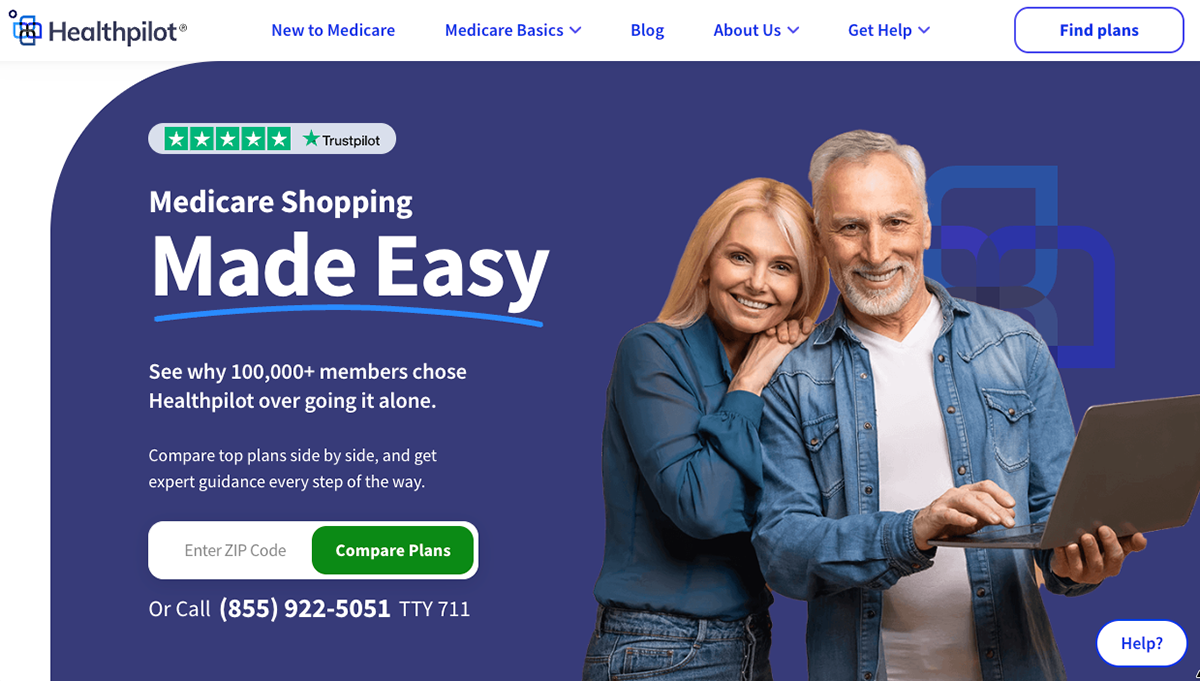
For acquisition, Humana invested in Healthpilot, an AI platform that matches Medicare-eligible consumers to the right plan based on their health profile, provider preferences, pharmaceutical needs and cost priorities. Most users complete enrollment without ever needing a support agent. The friction that kills conversions at the most expensive stage of the funnel is removed before a human steps in.
For retention, Humana deployed Agent Assist, built with Google Cloud, across its call center. The tool supports 20,000+ workers handling 80 million calls per year. It summarizes conversations in real time, surfaces eligibility and benefits information automatically and generates call summaries so agents can stay focused on the member.
Acquisition and retention are the same budget problem in payer marketing. The health pilot reduces enrollment drop-off. Agent Assist reduces the frustrating support experiences that drive members to switch plans at the next open enrollment. Both show up in the same metric: member growth.
Identify your two biggest drop-off points. Where do prospects abandon enrollment? Where do existing members disengage? Start with one AI tool solving one specific problem at each of those moments.
AI is moving way faster than most healthcare governance structures can keep up with were built to handle. It does not pause for a legal review, flag a clinical inaccuracy before it reaches a patient or distinguish between a general wellness claim and one that triggers FDA scrutiny. That gap between how quickly AI operates and the oversight it needs is where many compliance issues kick off.
Jodi Amendola, President and Founder of Amendola Communications, one of the leading PR and communications firms in digital health, is direct about the limits of AI in healthcare content:
"AI is fantastic for research and prompting creativity. Our writers use it to generate ideas and turn up angles they might not have thought of otherwise. But we don't use it to write for several reasons. One, it's still too prone to errors and 'hallucinating' facts. We specialize in digital health technology and life sciences marketing and we simply cannot afford inaccuracies. Good, compelling writing contains a human element that AI cannot duplicate. Humans respond to humans." — Jodi Amendola, President & Founder, Amendola Communications
In a field where a single inaccurate clinical claim can trigger regulatory action or patient harm, human review cannot be optional
Here are the five compliance and ethics areas every healthcare marketing leader needs to understand before expanding AI use.
Healthcare marketing is tightly regulated, particularly when it involves medical claims, treatment outcomes or drug promotion. AI tools may generate language that unintentionally crosses the line from general wellness messaging into regulated medical claims.
For example, a tool might describe a product as “proven to cure,” “clinically guaranteed,” or “safe for everyone.” Those phrases can trigger scrutiny by agencies such as the U.S. Food and Drug Administration or the Federal Trade Commission, which oversee healthcare advertising and marketing claims.
In August 2024, the FTC finalized a rule explicitly banning fake and AI-generated consumer reviews and testimonials, with fines of up to $51,744 per violation. The agency has already taken enforcement action against companies using AI to produce deceptive health-related content. For pharma and medical device companies, FDA promotional guidelines apply to every piece of marketing material, regardless of who wrote the first draft.
Before any AI-assisted content goes live, your workflow needs four things in place:
AI should support drafting and research, but final messaging must always pass through regulatory review before publication.
AI tools need data to produce personalized outputs. In healthcare marketing, that creates an immediate compliance risk.
Uploading patient case summaries, engagement records or CRM data to a general-purpose AI platform may constitute a HIPAA violation. Protected health information cannot be sent to an external AI system without a valid Business Associate Agreement in place with that vendor.
Many popular AI platforms do not offer BAAs by default. Some exclude healthcare data from their standard terms entirely. The consequences of getting this wrong are costly.
For example, the Change Healthcare breach in 2024 affected 190 million individuals, the largest healthcare data breach in US history. A separate breach involving an agentic AI workflow vendor exposed the records of 483,000 patients across six hospitals. According to the AMA, physicians' AI usage nearly doubled in 2024. HIPAA compliance risk has scaled with it.
Before any AI tool touches your marketing data, confirm three things.
Generative AI hallucinates. That is not a bug that will be patched in the next update. It is a fundamental characteristic of how large language models work.
They produce confident, fluent text based on patterns in their training data. When that training data contains gaps, errors or outdated information, the output reflects that, without any flag or warning to the reader.
In healthcare marketing, the stakes differ from those in most industries. A patient reading an AI-generated condition explainer, medication guide or symptom checker is making real decisions based on that content. A misleading statistic or incorrect treatment description does not just damage your brand. It can influence a patient to delay care, avoid a necessary medication or pursue a treatment that is wrong for their situation.
Every piece of AI-generated content that’s health-related needs to be:
Consumer marketing is built around persuasion. Healthcare marketing has to be built around something more careful than that. Patients engaging with health content are often frightened, confused or in pain. They are not browsing. They are looking for reassurance and guidance.
AI-generated messaging that exploits those emotional states through urgency tactics, over-personalization based on sensitive health signals or manufactured empathy crosses an ethical line that healthcare organizations cannot afford to ignore.
This includes being honest about when AI is involved. A patient who receives a message that appears to come from their care team but was generated by an AI system has been misled about its nature. That erodes exactly the trust that healthcare marketing depends on to function. Clear disclosure of AI use in patient-facing communications is an ethical standard.
The Pew Research Center found that 60% of Americans would be uncomfortable with their provider relying on AI in their own care.
That number shows how patients approach every AI-assisted interaction, from a chatbot on your website to a personalized email to an AI-generated condition guide.
Trust is the foundation of healthcare marketing. Patients need confidence that the information they see comes from credible, accountable sources.
If AI is used in content creation, research or patient engagement tools, organizations should maintain transparency about:
Transparency helps build trust and stops people from thinking that medical advice is being churned out without any actual supervision.
Three predictions grounded in what is already happening and where the signals are clearly pointing.
The conversation around AI in healthcare has shifted.
At HLTH 2025, the dominant theme was not whether to use AI. It was about how to scale it responsibly across the organization. The focus has moved from isolated pilots to enterprise-wide deployment and agentic AI is at the center of that shift.
Agentic AI refers to systems that can autonomously take multi-step actions. They don’t just generate a response; they execute an entire workflow.
In healthcare, that means a system that can
The numbers show this trend is picking up speed. According to Deloitte's 2026 US Health Care Outlook Survey, 61% of healthcare executives are already implementing agentic AI projects or have budgets set aside for them.
Plus, 85% plan to pump more money into it over the next couple of years and 98% expect their investments to lead to at least a 10% cost reduction in that same timeframe.
For marketing teams, agentic AI is shifting the function from just running campaigns to orchestrating the whole patient journey.
Instead of scheduling a campaign to go out at a specific time, an agentic system watches how patients behave, identifies the best moment to reach out, selects the right message, sends it, tracks how patients respond and automatically directs them to the next step.
That is not automation in the traditional sense. It’s more like a patient engagement system running on autopilot.
Gartner predicts that by 2026, 80% of healthcare providers will be jumping on the conversational AI bandwagon. By early 2026, AI voice agents and digital health tools had secured $1.8 billion in funding, accounting for 60% of all digital health venture capital during that period. The push for this isn’t just excitement about new tech; it's more about the need to fix ongoing problems.
Average hold times in healthcare call centers are over 11 minutes and during peak hours, 57% of calls are abandoned. Plus, clinical staff are spending more than 13.5 hours a week just on paperwork. These are not problems you can hire your way out of.
Research from the National Center for Biotechnology Information highlights generative AI voice agents as a vital addition to the healthcare team. They can manage routine follow-ups, check how patients are sticking to their meds, make post-discharge calls and help with care navigation—stuff that human teams simply can't keep up with.
For those in healthcare marketing, this is pretty important.
Every time a patient interacts with your scheduling system, billing line or care navigation tool, it influences their perception of your organization. It's crucial for the marketing team to be involved early in designing voice agents, not just IT and operations.
In 2025, shadow AI really took off in healthcare settings. Staff started using unauthorized AI tools to cope with burnout and heavy workloads, often without any oversight from their organizations. A 2025 survey of healthcare professionals found that just 18% were aware of any official policies about using AI and only 20% knew if their organization had checked AI tools for compliance.
Wolters Kluwer Health's predictions for 2026 suggest that this year will push healthcare leaders to establish clear AI governance. The proactive ones will create what the CTO calls "AI safe zones," which are controlled spaces where staff can experiment with approved tools and data. As state regulations pick up the pace, organizations with solid governance frameworks will have an edge because they'll be better prepared for the new requirements.
For healthcare marketing, this is crucial because areas such as campaign approvals, content reviews and patient data use can be risky when AI is used without proper guidelines.
Marketing teams that integrate governance into their AI workflows now—setting clear policies about what tools can access what data, having documented human review processes for clinical content and establishing approval processes for anything that goes to patients—will move faster and face less legal trouble than those who wait and react later.
Several startups are gaining significant traction. Abridge and Nuance (Microsoft) lead in clinical documentation AI. Hyro and Notable Health are among the leaders in conversational AI for patient engagement.
Flatiron Health dominates in oncology data and analytics. DeepScribe and Suki are growing fast in ambient AI for clinical workflows. Track Rock Health, CB Insights and Fierce Healthcare for the latest signals. The landscape moves quickly.
AI is used across the full healthcare marketing funnel. Applications include AI-powered content creation and optimization, predictive audience segmentation, AI voice agents for patient scheduling and engagement, personalized email and digital campaigns, performance analytics and attribution modeling and automated brand compliance review.
The most effective implementations pair AI tools with human oversight, particularly for content that makes clinical claims.
The seven most prominent AI applications in healthcare today are:
The global AI in healthcare market was valued at approximately $22.45 billion in 2023. It is projected to grow at a CAGR of 37% and reach over $187 billion by 2030, according to Grand View Research. This makes AI in healthcare one of the fastest-growing segments in the technology sector.
On the technology side, Google Health, Microsoft (via Nuance and Azure Health) and Amazon Web Services are major infrastructure players. Among health systems, Mayo Clinic, Cleveland Clinic and Kaiser Permanente are among the most advanced in AI deployment.
In pharma, Pfizer, AstraZeneca and Roche have made significant AI investments. Specialist vendors like Tempus and Flatiron Health lead in data-driven oncology AI.
AI enables personalization at scale, delivering the right message to the right person across the patient or provider journey. It improves targeting precision through predictive audience modeling. It speeds up content production while maintaining brand and clinical standards. It provides deeper analytics on campaign performance and ROI. And it enables always-on conversational engagement through voice agents and chatbots.
The core role of AI in healthcare marketing is to help organizations reach the right people with the right message more efficiently than manual methods allow, without sacrificing compliance or clinical accuracy.
The primary risks of AI in healthcare marketing include:
Mitigation requires human editorial oversight, proper data governance frameworks, HIPAA-compliant tool selection and regular AI audits and bias reviews.
That is a lot to take in. We covered AI trends reshaping healthcare marketing, the strategies that deliver incredible results, the tools worth adding to your stack and the compliance risks that can derail even a well-intentioned AI rollout.
Now it is time to execute. And that starts with giving your team the right tools to build content that earns patient trust, meets compliance standards and scales without adding headcount.
Visme gives healthcare marketing teams everything they need in one place. Create patient education materials, provider-facing presentations, data dashboards, social media graphics, campaign assets and leadership reports without juggling five different platforms.
You get access to millions of design assets, an extensive library of healthcare templates, AI writing and design tools, brand management features and collaboration workflows that keep your entire team aligned, from content creators to compliance reviewers.
Ready to see what that looks like for your team? Connect with sales to explore how Visme can help you build smarter, faster and more compliant healthcare marketing content.

Design visual brand experiences for your business whether you are a seasoned designer or a total novice.
Try Visme for free